Table of contents
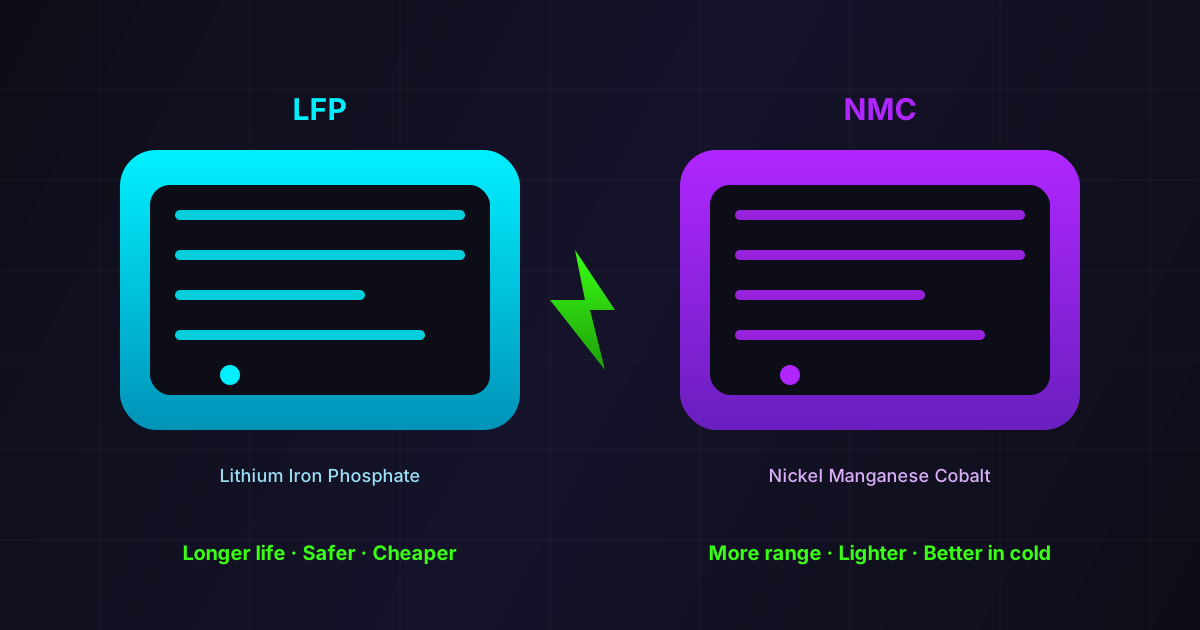
In 2026, almost every new electric car, scooter and e-bike is powered by one of two battery chemistries: LFP (lithium iron phosphate) or NMC (nickel manganese cobalt). The choice between them quietly determines the most expensive part of your vehicle - the battery pack - and it is rarely explained at the dealership.
Here is the promise of this guide: by the end, you will know exactly which chemistry fits your driving style, your climate and your budget. You will learn how lifespan, safety, cold-weather behavior and price actually compare in 2026 - and how to spot which battery you are about to buy without relying on the brochure.
Let's start with the two candidates, then put them head to head.
What is an LFP battery?
LFP (lithium iron phosphate, LiFePO4) is a lithium battery chemistry that uses iron and phosphate as the cathode material. It trades raw energy density for exceptional stability, longevity and low cost.
- No cobalt, no nickel - cheap and ethically simpler to source.
- 3,000-5,000 charge cycles - roughly double the rated life of most NMC packs.
- Happily charges to 100% - no daily-charging guilt.
What is an NMC battery?
NMC (nickel manganese cobalt) is a lithium battery chemistry that layers nickel, manganese and cobalt in the cathode. It packs more energy into a smaller, lighter cell - at a higher cost and a lower safety margin.
- Higher energy density - more range per kg, which is why premium long-range EVs prefer it.
- 1,000-2,000 charge cycles - less total lifetime capacity.
- Needs a 20-80% charging window - to preserve longevity.
The LFP vs NMC battery comparison table
Here is the full side-by-side in a format you can screenshot and save:
| Specification | LFP battery | NMC battery |
|---|---|---|
| Full chemistry | Lithium iron phosphate | Nickel manganese cobalt |
| Energy density | 90-160 Wh/kg | 150-260 Wh/kg (winner) |
| Cycle life | 3,000-5,000+ (winner) | 1,000-2,000 |
| Thermal runaway threshold | ~270°C (winner) | ~150-200°C |
| Cold weather range loss | -20 to -30% | -10 to -20% (winner) |
| Price per kWh (2026) | ~$75-95 (winner) | ~$95-120 |
| Charging to 100% | Recommended (winner) | Avoid / 80% cap |
| Weight | Heavier | Lighter (winner) |
| Best suited for | City cars, scooters, e-bikes, budget EVs | Long-range & performance EVs |
EV battery lifespan: which chemistry lasts longer?
This is the biggest practical difference between the two chemistries. Battery lifespan is measured in charge cycles: one cycle is roughly one full discharge and recharge.
An LFP pack rated for 4,000 cycles can realistically outlive the vehicle. At 250 miles per cycle, that is roughly a million miles of rated capacity. NMC packs, rated at 1,500-2,000 cycles, usually lose meaningful capacity around the 200,000-mile mark and degrade faster if you routinely charge to 100%.
LFP typical life
10-15+ yrs
or 3,000-5,000 cycles
NMC typical life
8-12 yrs
or 1,000-2,000 cycles
Safety: the difference nobody talks about
Lithium batteries store a lot of energy in a small space, and under extreme damage they can enter thermal runaway - an uncontrollable chain reaction that releases heat and fire.
LFP cells resist runaway until roughly 270°C and tolerate overcharging, physical punctures and internal short circuits far better. NMC cells can fail around 150-200°C. Every car battery is protected by a battery management system (BMS) and crash shielding, so modern fires are rare in both - but on pure chemistry safety, LFP is the clear winner.
Cold weather: where NMC pulls ahead
Low temperatures slow the chemical reactions inside every lithium cell. LFP is the more temperature-sensitive chemistry and can lose 20-30% of usable range in winter, versus roughly 10-20% for NMC.
The important nuance: the loss is temporary, not permanent. Preconditioning the battery before you drive, parking in a garage and using scheduled charging all recover most of the lost range. If you live in a genuinely cold climate and rely on every mile of range, NMC is the more forgiving choice.
Related read: 10 Tips to Maximize Your EV Range in Winter
Price and cost per kWh in 2026
Because LFP cells contain no nickel or cobalt, they are significantly cheaper to produce. In 2026, battery pack prices sit around $75-95 per kWh for LFP versus $95-120 per kWh for NMC.
On a 60 kWh pack that is a real difference of $1,500-2,500 in manufacturing cost - and much of it shows up in the sticker price. It also means cheaper replacement packs, lower insurance premiums in some markets and better long-term resale value. For price-sensitive buyers, LFP is the rational choice.
Energy density and real-world range
NMC's core advantage is energy density: 150-260 Wh/kg versus 90-160 Wh/kg for LFP. In plain English, an NMC pack gives more range for the same weight and volume.
That is why flagship long-range EVs - the 400+ mile models - still use NMC, and why performance cars that need to stay light do too. LFP cars compensate with bigger, heavier packs. For daily commutes of 200 miles or less, the practical range difference rarely matters.
The verdict: which battery is best in 2026?
For the majority of buyers: LFP.
LFP wins the value battle on every axis that matters most to real owners: lower price, roughly double the lifespan, better safety and zero daily charging compromise. Unless range, weight or freezing winters dominate your use case, an LFP vehicle is the smarter 2026 purchase.
Choose LFP if you
- • Commute 200 miles or less daily
- • Want the lowest total cost of ownership
- • Plan to keep the vehicle 8+ years
- • Charge at home and can preheat in winter
Choose NMC if you
- • Need 400+ miles of range regularly
- • Live in a consistently freezing climate
- • Need the lightest possible vehicle
- • Want the fastest 10-80% charging speeds
5 mistakes to avoid when choosing a battery
What nobody tells you before you buy:
- 1Judging by the brochure number. WLTP/EPA ranges assume ideal conditions. An LFP "300-mile" car in January can act like a 220-mile car. Always ask what the range is in your climate.
- 2Treating "LFP" as the only battery. Chemistry varies by manufacturer, cell quality and cooling system. Two LFP cars can degrade very differently.
- 3Charging an NMC car to 100% every day. It accelerates degradation. Daily driving should stay in the 20-80% band unless you need the full range for a trip.
- 4Ignoring the battery warranty terms. Check the cycles or years covered and what the capacity-retention clause says. This is the contract that protects your biggest EV cost.
- 5Assuming all scooters and e-bikes use the same cells. The same LFP/NMC logic applies at every scale - a 500 Wh e-bike pack follows the exact same trade-offs as a 60 kWh car pack.
Frequently asked questions
Which is better: LFP or NMC battery?
There is no universal winner. LFP batteries win on lifespan, safety and cost, while NMC batteries win on energy density, range and cold-weather performance. For most city cars, scooters, e-bikes and budget EVs in 2026, LFP is the smarter value pick. If you need maximum range or drive in freezing climates, NMC still has the edge.
How long does an LFP battery last?
LFP batteries are typically rated for 3,000 to 5,000 charge cycles, which translates to 10 to 15+ years of normal driving. That is roughly double the cycle life of most NMC packs and one of the main reasons LFP resale value holds up so well.
Is LFP battery safer than NMC?
Yes. LFP chemistry has a much higher thermal runaway threshold (around 270°C) and is more tolerant of overcharging and internal damage. NMC typically fails around 150-200°C. No battery is fireproof, but LFP is measurably the safer chemistry.
Does LFP battery degrade faster in cold weather?
LFP loses more usable capacity than NMC in freezing temperatures - expect roughly 10-20% more range loss in winter. The cells themselves do not permanently degrade from cold; the loss is temporary. Battery preheating and preconditioning mitigate most of the impact.
Can I charge an LFP battery to 100%?
Yes, and you should. Unlike NMC, LFP batteries do not suffer meaningful degradation from being charged to 100%, so manufacturers actively recommend it. A regular top-up to full is safer for LFP than for NMC cells, which prefer a 20-80% window.
Why do cheaper EVs use LFP batteries?
LFP cells contain no cobalt or nickel, two of the most expensive and geopolitically sensitive battery metals. That makes LFP packs significantly cheaper to produce, which is why budget cars, scooters and entry-level EVs adopted them first.
Which battery is best for 2026: LFP or NMC?
For 2026, LFP is the best value for most buyers: it is cheaper, lasts longer, is safer and charges happily to 100%. Choose NMC only when long range in a compact, lightweight or cold-weather vehicle is your absolute priority - or when you need the fastest 10-80% charging speeds.
Bottom line: LFP vs NMC in 2026
Both chemistries are excellent in 2026. NMC still wins on raw range, weight and winter driving; LFP wins on price, lifespan, safety and everyday convenience. For the overwhelming majority of drivers - especially city dwellers, scooter and e-bike owners, and anyone keeping a vehicle for a decade - LFP is the battery to choose.
Ready to apply this to a real purchase? Compare vehicles by range, price and battery type side by side before you visit a dealer.