Electric Cars
EV Range Dropping Suddenly: How to Diagnose and Fix It
Your range estimate drops suddenly, for example from 180 km last week to 140 km this week on the same route and with the same driving, even though nothing obvious has changed.
What causes it
Most sudden range drops are not a failing battery pack. They usually come from simple causes such as cold weather, low tire pressure, a stuck brake, or a charger that never finished, so the estimate reflects a smaller usable charge.
EV Range Dropping Suddenly: How to Diagnose and Fix It
Your dashboard said 180 km last week. This week it says 140, same route, same driving. Nothing obvious changed, which is exactly what makes unexpected range loss so annoying. In the next 20 to 30 minutes you can work through a structured check, separate real battery problems from boring causes like cold weather or a soft tire, and know when to stop and hand the car, scooter or e-bike to a professional. Most sudden drops are not a dying pack. They are a tire, a temperature swing, a stuck brake or a charger that never finished.
What you need before you start
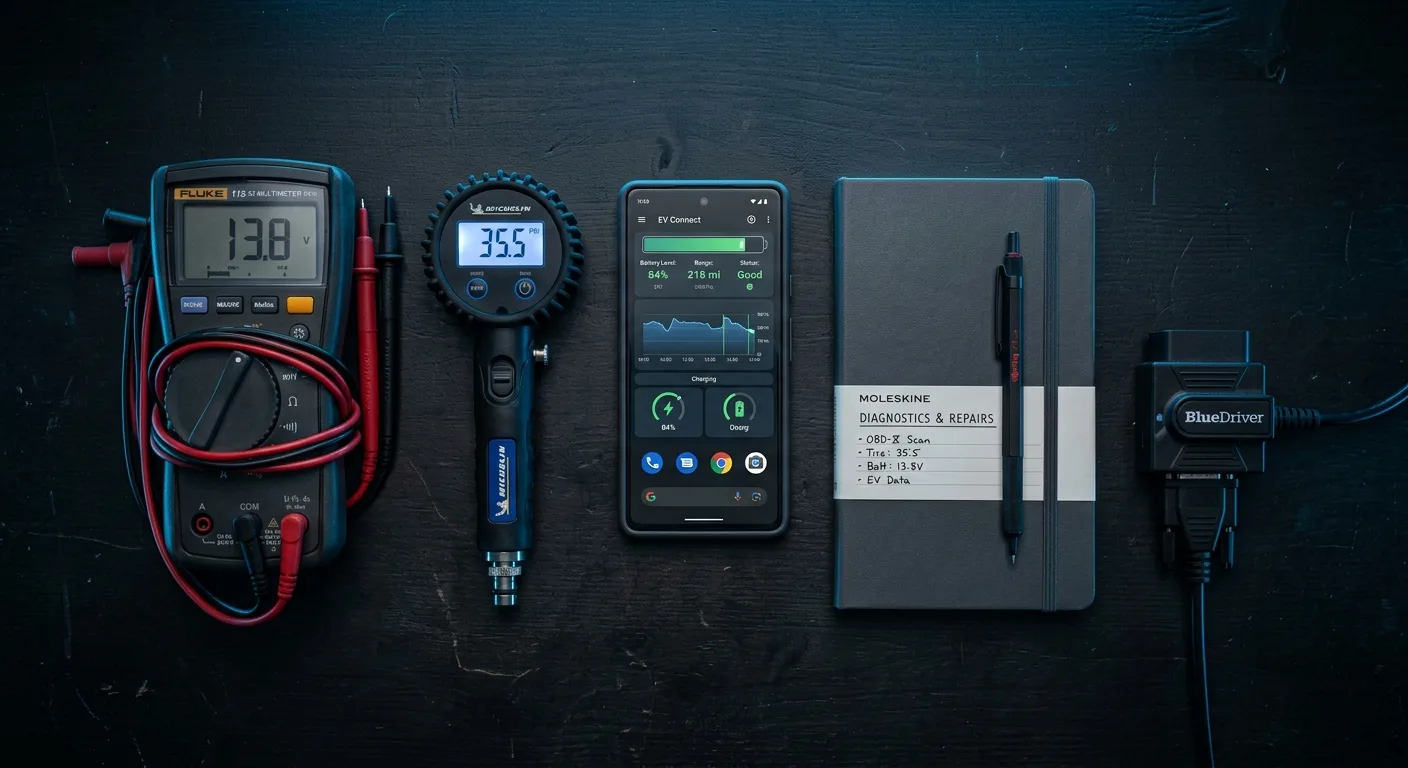
- Your usual charging app or the car's own app, to read state of charge and charging history.
- A tire pressure gauge. A cheap one is fine.
- A phone for photos of the dash, the charge screen and any warning light.
- Your recent trip or consumption screen (many EVs show kWh per 100 km, or Wh per km on smaller machines).
- The owner's manual, or the tire pressure sticker on the door jamb or frame.
- No account or subscription needed for any of this.
Step 1: Write down the baseline before you touch anything
Note the current range estimate, the state of charge, the outside temperature and the trip meter. Then note what "normal" looked like two weeks ago. A drop from 180 km to 140 km is a 22% loss, which is worth chasing. A drop from 180 to 170 km in colder weather is probably just physics.
Do this first because memory is unreliable. You want a number to compare against after each fix, and you want to know whether the loss is sudden (days) or gradual (months). Sudden loss points to a fault or a change in use. Gradual loss points to battery age, tires or driving style.
Tip: take a photo of the dash. Range estimates swing by a few km between drives and you will forget the exact figure.
Step 2: Check the weather and the season
Cold is the single most common cause of unexpected range loss, and it hits smaller vehicles hard. Lithium packs lose usable capacity in the cold, and cabin or battery heating draws power. On an e-bike or scooter the effect is even more visible because the pack is small.
Look at the temperature on the days the range dropped. If it fell by 10°C or more, expect a noticeable percentage loss; on many EVs a rough 10-30% swing between mild and cold weather is normal, though the exact figure varies by model and chemistry, so verify against your own manual or owner forums.
Tip: if you park outside, a cold-soaked pack can read low for the first few km and recover as it warms. Judge range over a full charge cycle, not the first drive.
Step 3: Check tire pressure and rolling resistance
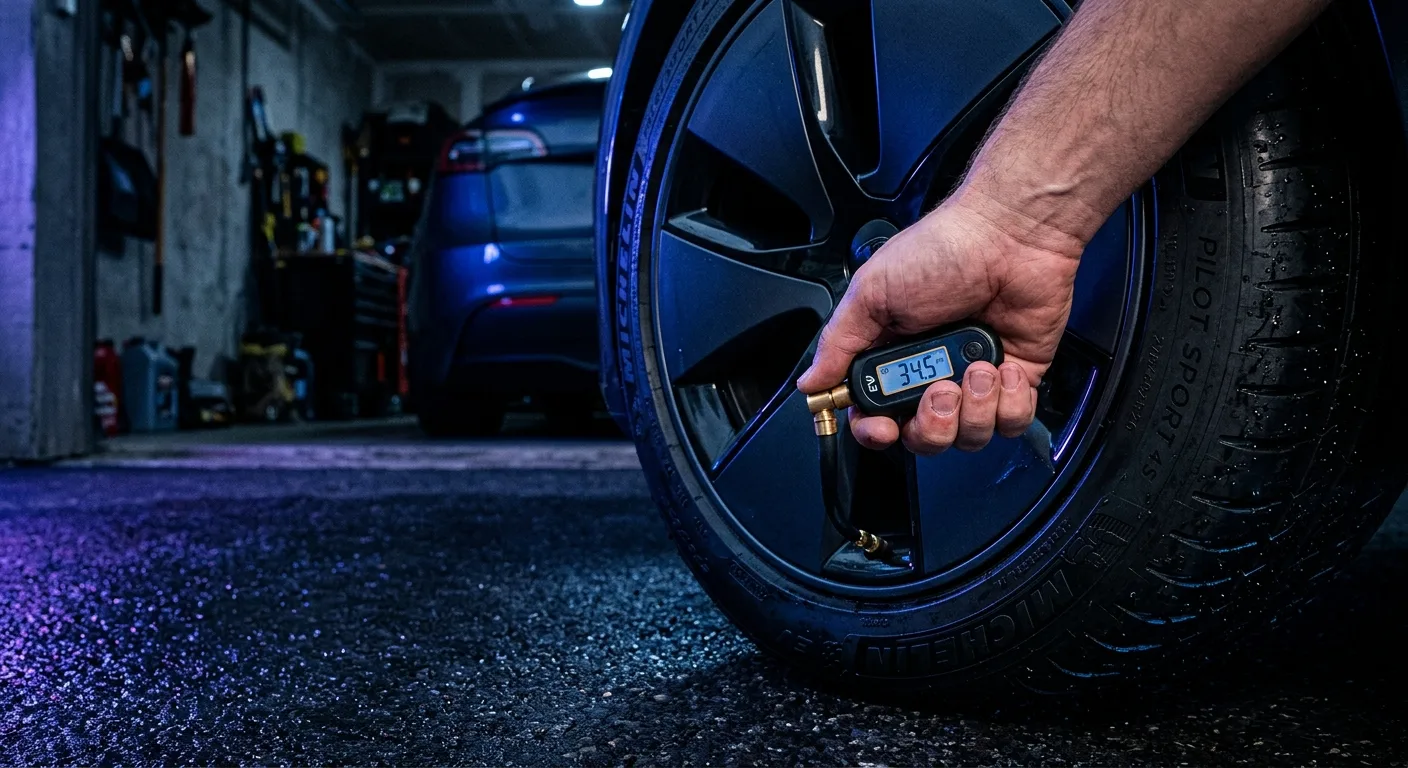
Soft tires are the most overlooked cause of range loss on cars, scooters and motorcycles. Under-inflation increases rolling resistance and drags the range down. Grab the gauge and check all tires cold, against the sticker in the door jamb or on the frame.
Also spin each wheel by hand on a scooter or e-bike. A brake pad rubbing the disc, or a bearing that grinds, will cost you range. On a car, feel for a wheel that is hotter than the others after a drive, which can indicate a dragging brake.
Tip: inflate to the pressure on the sticker, not the number molded on the tire sidewall. The sidewall figure is a maximum, not a target.
Step 4: Look at your driving and route
Ask honestly: did anything change? More highway speed, more hills, more passengers, a roof rack, a new commute with more stops. On an e-bike, did you switch to a higher assist level or start carrying a loaded pannier?
Speed matters more than most people expect. Air drag rises with the square of speed, so a jump from 90 to 120 km/h on a car, or from a gentle pedal to full throttle on an e-bike, can cut range sharply.
Tip: reset the trip consumption meter, drive your normal route once, and read the kWh/100 km or Wh/km figure. Compare it to what you saw before. If consumption is up, the problem is the way the vehicle is being used, not the battery.
Step 5: Check charging behaviour and the charger itself
A pack that never fully charges will show less range. Plug in and watch the last part of the charge. Does it reach 100%, or stop early? On smaller machines, does the charger get hot and cut out?
Check the charger, the cable and the plug for damage, and try a different outlet or a different charger if you have one. On a car, check the charging schedule or departure timer: a timer that stops at 80% will look like range loss if you forgot you set it.
Tip: if the vehicle only charges to a lower percentage than before and stays there, that is a charging fault, not a range fault. Stop and get it checked.
Step 6: Read the warnings and the app data
Look at the dash for any warning light, turtle icon, or reduced-power message. Open the app and check for stored alerts and charging history. Many EVs log the reason for a reduced range estimate, such as a battery temperature warning or a cell imbalance flag.
Do not guess at error codes. If you see one, look it up in your manual or a model-specific guide rather than assuming the worst. For fuse and warning-light basics, the EV diagnostic and fuse guides are a sensible starting point.
Tip: note the exact code text and the conditions when it appeared. That single detail saves a technician an hour and saves you money.
Step 7: Separate low-voltage checks from high-voltage work
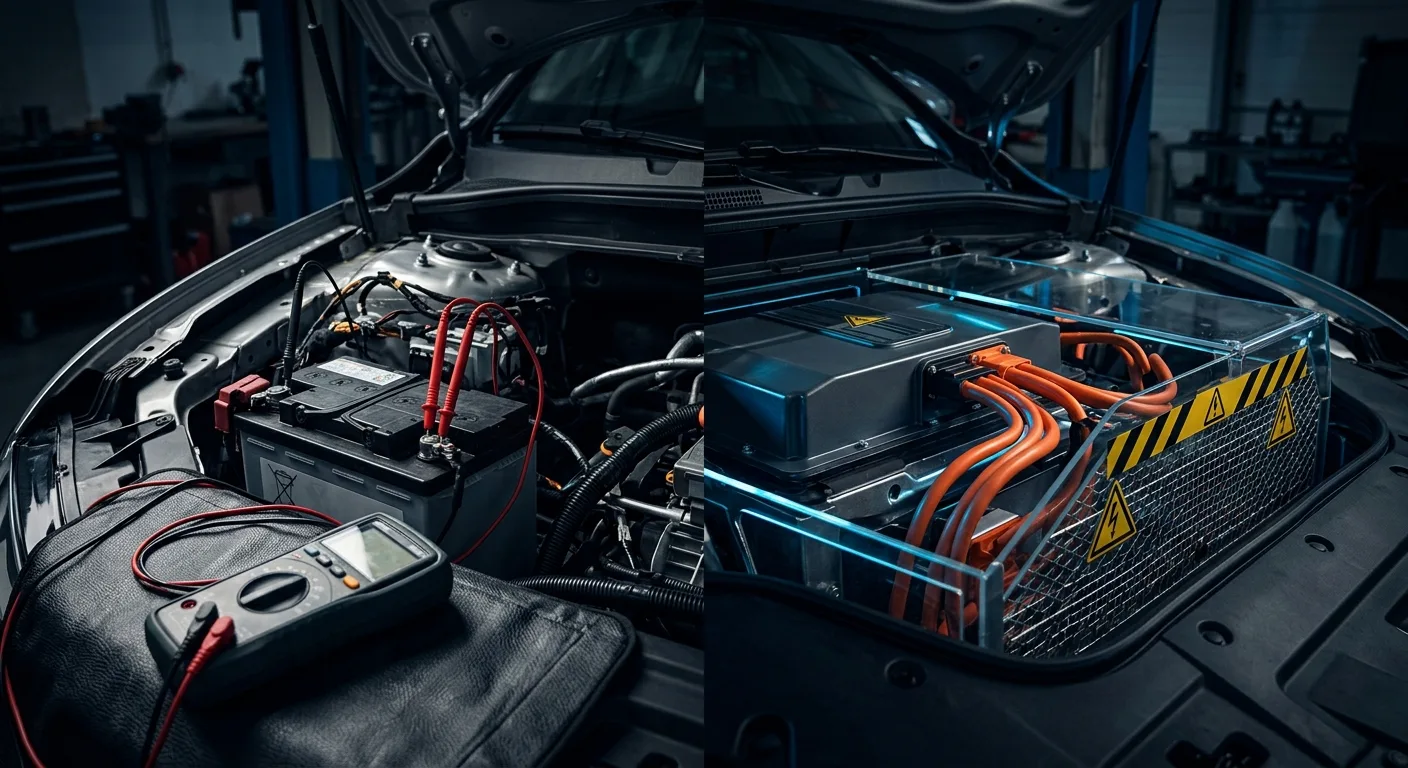
Here is the line you must not cross.
Low-voltage (12V) work a careful owner can do: check the 12V auxiliary battery terminals for corrosion, confirm the 12V battery is not flat (a weak 12V battery causes strange behaviour on many EVs), check fuses you can safely reach, and inspect visible wiring for damage. Always disconnect the 12V negative terminal before touching anything, and never work on a live circuit.
High-voltage traction battery work always requires a qualified professional. That includes opening the pack, testing individual cells, replacing modules, and anything involving the orange high-voltage cables. Do not probe, open or "just look inside" a traction pack. The voltage can kill you, and there is no safe shortcut.
Stop and call a qualified technician if: you smell burning or a sweet chemical odour, see swelling or damage to the pack, get a high-voltage or insulation warning, or the vehicle refuses to charge at all.
Step 8: Run a controlled range test
Pick a mild day, charge to 100%, reset the trip meter and drive a known route at steady speed. Note the distance covered and the energy used. Do the same route again in a week. This gives you two comparable numbers instead of a guess.
If the controlled test matches your old figures, the earlier drop was weather or driving. If it is still low, you have evidence to take to a technician.
Tip: log the result in a note on your phone, with date, temperature, route and consumption. Patterns show up fast.
Step 9: Compare against the model's real-world figures
Before you panic, check whether your range is actually abnormal for the model. Browse the EV model directory to see what other owners of the same car, scooter or bike report, and use the free EV calculators and tools to work out expected consumption for your route and conditions. If your figures sit inside the normal band for that model in your climate, the "loss" may be normal all along.
Pro tips
- Judge range in kilometres or miles per full charge, never off a single dashboard estimate. The estimate is a guess that moves with temperature and recent driving.
- Charge to 100% occasionally on cars with lithium packs that support it, so the battery management system can recalibrate. Follow your manual; some chemistries prefer a lower daily limit.
- Keep a simple log. Three numbers (date, temperature, consumption) will diagnose most range complaints.
- On e-bikes and scooters, store and charge the pack indoors in cold months if the manual allows it. A cold pack both charges slower and delivers less.
- Check tires monthly, not yearly. It is the cheapest range fix there is.
- If you are shopping and comparing models, look at the head-to-head EV comparisons for real-world range notes before you commit.
Common pitfalls
- Blaming the battery first. Tires, cold weather and a dragging brake cause more sudden drops than cell failure. Check the cheap stuff before the expensive stuff.
- Trusting one dashboard reading. Range estimates bounce around. Measure over a full charge cycle.
- Ignoring a warning light because the vehicle still drives. A reduced-power or high-voltage warning is your cue to stop and get it checked, not to keep going.
- Opening the traction pack. This is the one mistake that can be fatal. High-voltage work is for qualified technicians only.
- Forgetting a charging schedule. A timer set to stop at 80% looks exactly like range loss. Check your settings before you book a service.
Useful resources
For step-by-step fault finding across cars, scooters, e-bikes and mopeds, the EV troubleshooting guides cover the common failures in plain language. The EV blog has season-by-season advice on range and charging. For any figures, always cross-check your own owner's manual rather than a forum post.
FAQ
Is sudden range loss always a bad battery? No. Cold weather, low tire pressure, a dragging brake, a charging timer and a change in route all cause the same symptom. Work through the checks above before assuming the pack is failing.
How much range loss is normal in winter? It varies by model, chemistry and how you heat the cabin. A rough 10-30% drop between mild and cold weather is common on many EVs, but verify against your manual and other owners of the same model.
Can I test the traction battery myself? You can check the 12V auxiliary battery, fuses and visible wiring. You must not open or probe the high-voltage traction pack. That work requires a qualified technician.
My e-bike range halved overnight. What first? Check tire pressure, brake rub and the assist level, then the temperature where the pack is stored. If it still halves on a warm day at the same assist level, get the pack and charger checked.
When should I stop and see a technician? Any burning smell, swollen or damaged pack, high-voltage warning, or a vehicle that will not charge. Stop, do not drive, and call a qualified technician.
A final word
Unexpected range loss feels alarming, but most cases trace back to something simple: a soft tire, a cold morning, a timer you forgot. Work the steps in order, keep a short log, and you will either fix it yourself in an afternoon or walk into a workshop with evidence that gets you a straight answer. Either way, you are in control of the diagnosis.