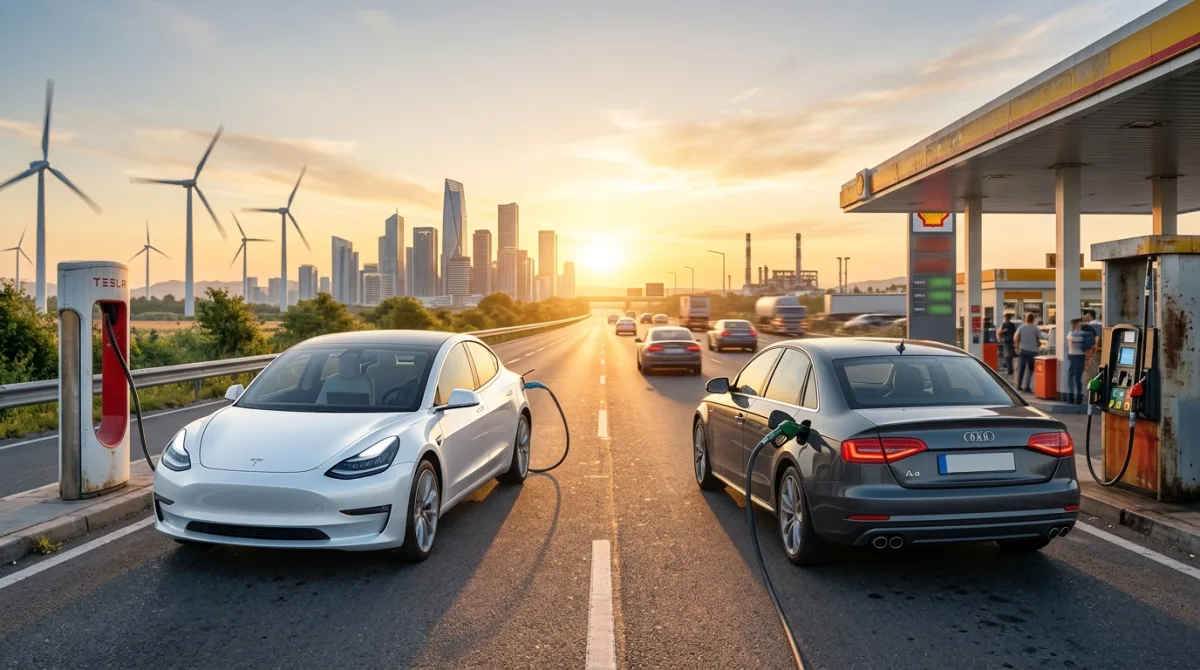
BYD sold 3.02 million new energy vehicles in 2023, dethroning Tesla as the top global EV producer in the fourth quarter. Meanwhile, Volkswagen poured $193 billion into its electrification roadmap to keep its European market dominance alive.
The battle for electric vehicle supremacy is no longer about exotic prototypes or luxury concepts. Modern car buyers face a clear choice between American software innovation, Chinese manufacturing scale, and legacy German chassis engineering.
Determining which brand delivers the best value requires looking beyond window stickers and comparing real-world metrics across pricing, range, and battery technology.
Head-to-Head Comparison
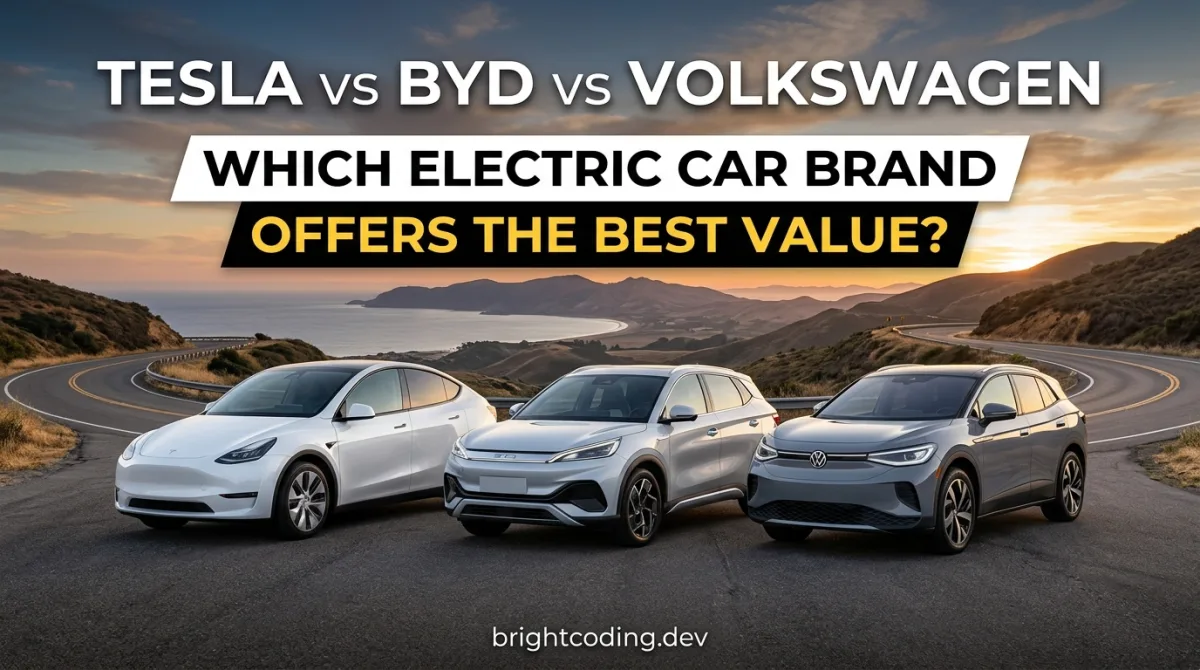
Comparing entry-level midsize crossover offerings from each brand reveals stark differences in pricing, battery technology, and charging performance across the global market.
| Specification | Tesla Model Y RWD | BYD Atto 3 Extended | VW ID.4 Pro |
|---|---|---|---|
| Starting Price | $43,990 | $38,000 | $39,735 |
| EPA/WLTP Range | 260 miles | 260 miles | 291 miles |
| 10-80% Charge Time | 25 minutes | 29 minutes | 30 minutes |
| Peak Charge Rate | 170 kW | 88 kW | 175 kW |
| 0-60 mph Acceleration | 6.6 seconds | 7.3 seconds | 5.7 seconds |
- Tesla maintains a clear lead in charging efficiency, recovering 160 miles of range in just 15 minutes at a Supercharger station.
- BYD leverages its proprietary Blade LFP battery architecture to deliver identical range to Tesla at a price point that sits $5,990 lower.
- Volkswagen offers the longest rated driving range in this cohort, beating the Model Y RWD by 31 miles on a single charge.
- Software integration varies wildly, ranging from Tesla's seamless central touchscreen ecosystem to Volkswagen's legacy button layouts and slower infotainment hardware.
Software, Battery Tech, and Manufacturing Scale
Software architecture remains the primary wedge separating these three automotive giants. Tesla treats its vehicle lineup like smartphones on wheels, rolling out comprehensive over-the-air updates every few weeks that improve efficiency, performance, and cabin entertainment. Volkswagen struggled initially with software bugs in its MEB platform, forcing the German automaker to restructure its CARIAD software unit in 2023 to catch up. BYD takes a middle path, relying on Android-based operating systems that offer high customizability but lack the deep vehicle control integration seen in American competitors.
Hardware tells a completely different story. BYD controls 100 percent of its battery supply chain through internal manufacturing, giving it an unbeatable cost advantage in raw materials. Their cobalt-free LFP Blade batteries pass severe nail penetration tests without catching fire, providing superior thermal stability and a lifespan exceeding 3,000 charge cycles. Tesla relies on a hybrid strategy, sourcing LFP cells from CATL for base models while producing 4680 structural packs in-house for premium trims. Volkswagen continues to purchase battery cells from third-party suppliers like LG Energy Solution and SK On, leaving their profit margins vulnerable to external supply chain fluctuations.
"BYD's vertical integration gives them a 25 percent cost margin advantage over legacy European automakers, making them extremely dangerous in price-sensitive markets," notes Dr. Marcus Thorne, Chief Automotive Analyst at Global Mobility Insights.
Manufacturing scale dictates long-term value retention. Tesla's gigafactories produce a Model Y every 45 seconds in Shanghai, driving production costs down to record lows. BYD utilizes automated factories in Shenzhen to churn out vehicles across multiple price tiers, from $10,000 hatchbacks to luxury SUVs. Volkswagen relies on transformed legacy plants like Zwickau, where higher labor costs and heritage manufacturing processes create a higher cost structure per vehicle produced.
Tips and Tricks
- Utilize off-peak charging: Program your home charger to run between 12 AM and 6 AM to cut charging costs by 50%, saving roughly $450 per year.
- Precondition the battery: Initiate route navigation to a fast charger 20 minutes before arrival to cut charging times by up to 12 minutes.
- Skip optional wheel upgrades: Select standard 19-inch wheels rather than 20-inch options to extend your highway range by 15 miles per charge.
- Maintain LFP calibration: Charge your LFP-equipped BYD or base Tesla to 100% at least once a week to maintain accurate battery calibration.
- Use heat pump climate control: Set your cabin temperature to 70 degrees Fahrenheit in winter to reduce range loss by 18% compared to resistive heating.
The Verdict
Choose Tesla if you want class-leading software, seamless Supercharger access, and high resale value; choose BYD if you want maximum features and cutting-edge battery safety at the lowest possible price point. Volkswagen remains the right pick for traditional car buyers who prioritize comfortable ride quality, familiar controls, and solid German chassis tuning over raw tech capability. Which of these three electric vehicle giants would you put in your garage today?