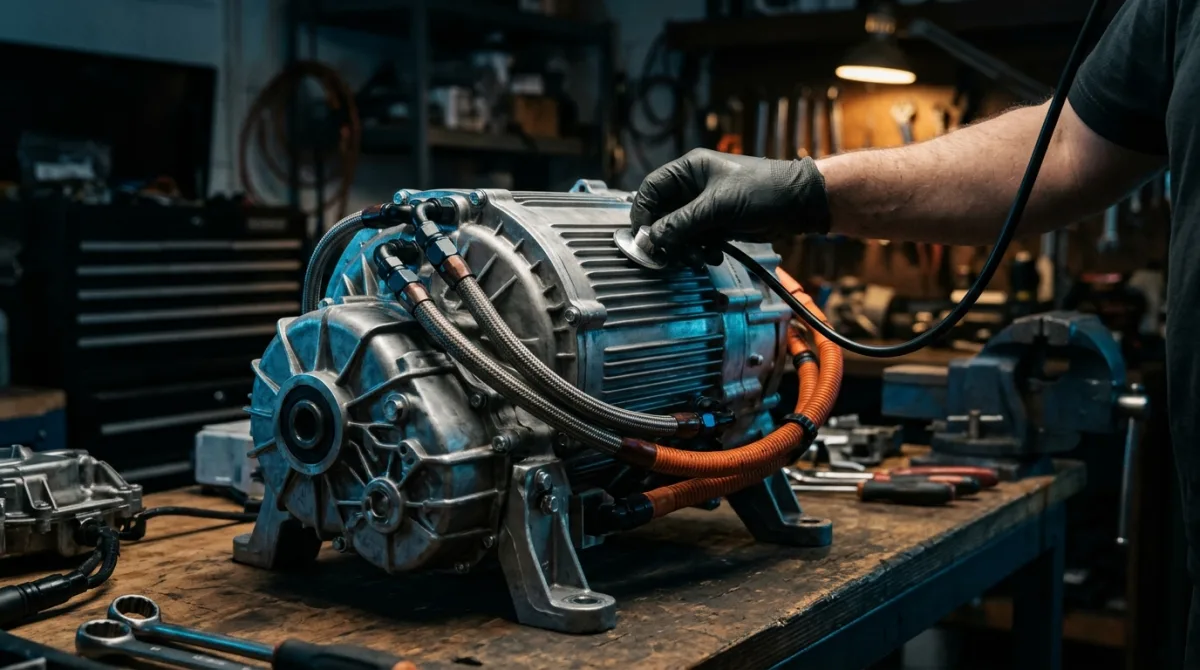
Electric Cars
Electric Car Motor Making a Whining Noise: Causes and Fixes
A high-pitched whine starts up from under the floor or behind the rear seats while driving, rising and falling with your speed. It might be faint or loud enough to make you turn the radio up, and you cannot tell whether it is normal EV motor noise or the first sign of an expensive failure.
What causes it
EV motors spin at very high speeds, and the reduction gearbox between the motor and the wheels naturally produces a gear whine that no engine rumble masks. A whine that is new, getting louder, or tied to a specific symptom usually has an identifiable cause, and most of the time it is cheaper to fix than a new motor.
You are driving along and a high-pitched whine starts up from somewhere under the floor or behind the rear seats. It rises and falls with your speed. It might be faint, or it might be loud enough to make you turn the radio up. Either way, if your electric car motor is making a whining noise, you want to know one thing fast: is this normal, or is something expensive about to fail?
Here is the short answer: some motor noise is completely normal in an EV, because there is no engine rumble to mask it. But a whine that is new, getting louder, or tied to a specific symptom usually has an identifiable cause, and most of the time it is cheaper to fix than a new motor.
This guide walks through the likely causes, what you can safely check yourself, and the point where you should stop and hand the car to a qualified technician.
Is a whining noise from an electric car motor normal?
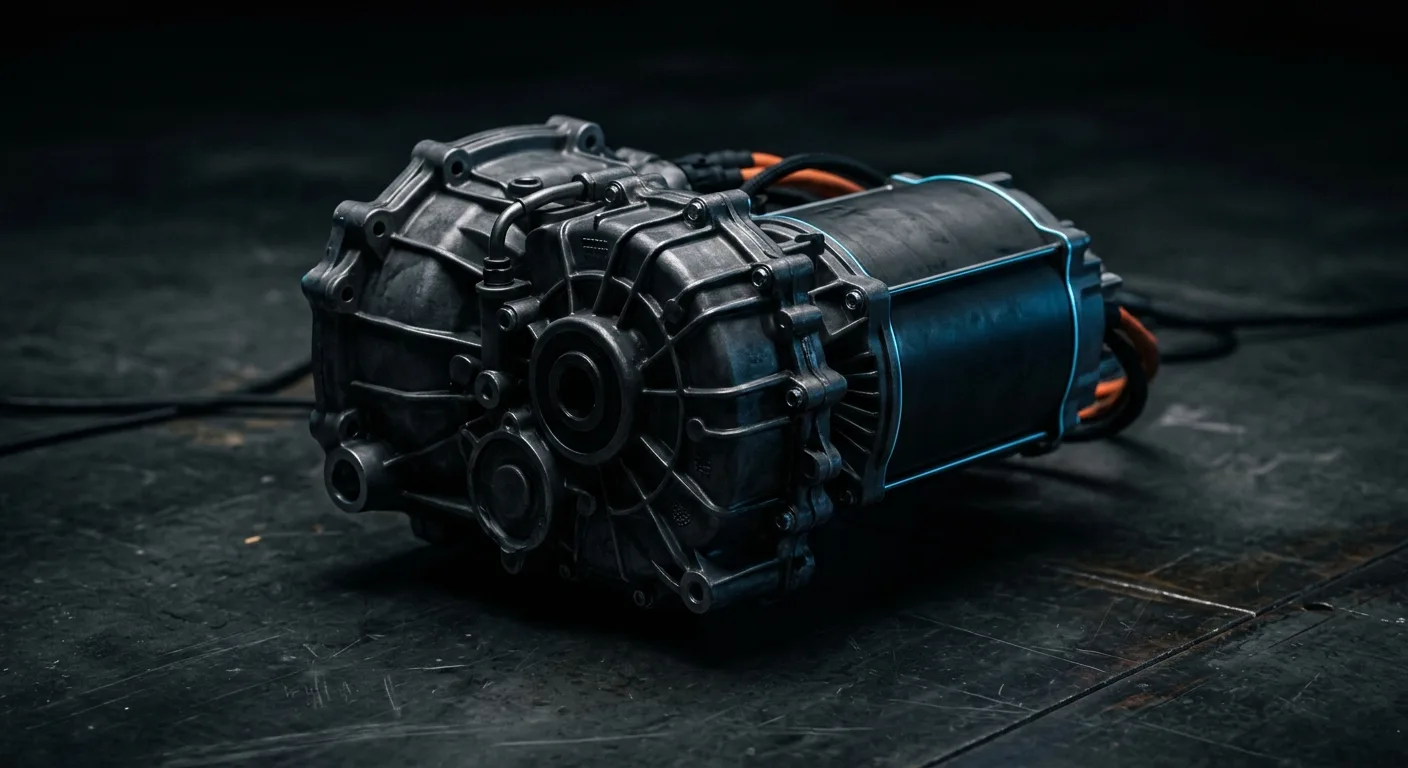
Often, yes. EV motors spin at very high speeds, and the reduction gearbox that sits between the motor and the wheels produces a characteristic gear whine. Many owners describe it as a soft whistle or a hum that changes pitch with speed. That is the drivetrain doing its job.
What is not normal: a whine that appears suddenly, gets louder over weeks, changes with acceleration rather than speed, or comes with vibration, warning lights, or a burning smell. Those are flags worth investigating.
The tricky part is that the quiet cabin of an EV makes you notice sounds a petrol car would have buried. So a "new" whine is sometimes just a sound that was always there. The best test is comparison: does it sound the same as it did last month, or has it changed?
Why is my electric car motor whining? The common causes
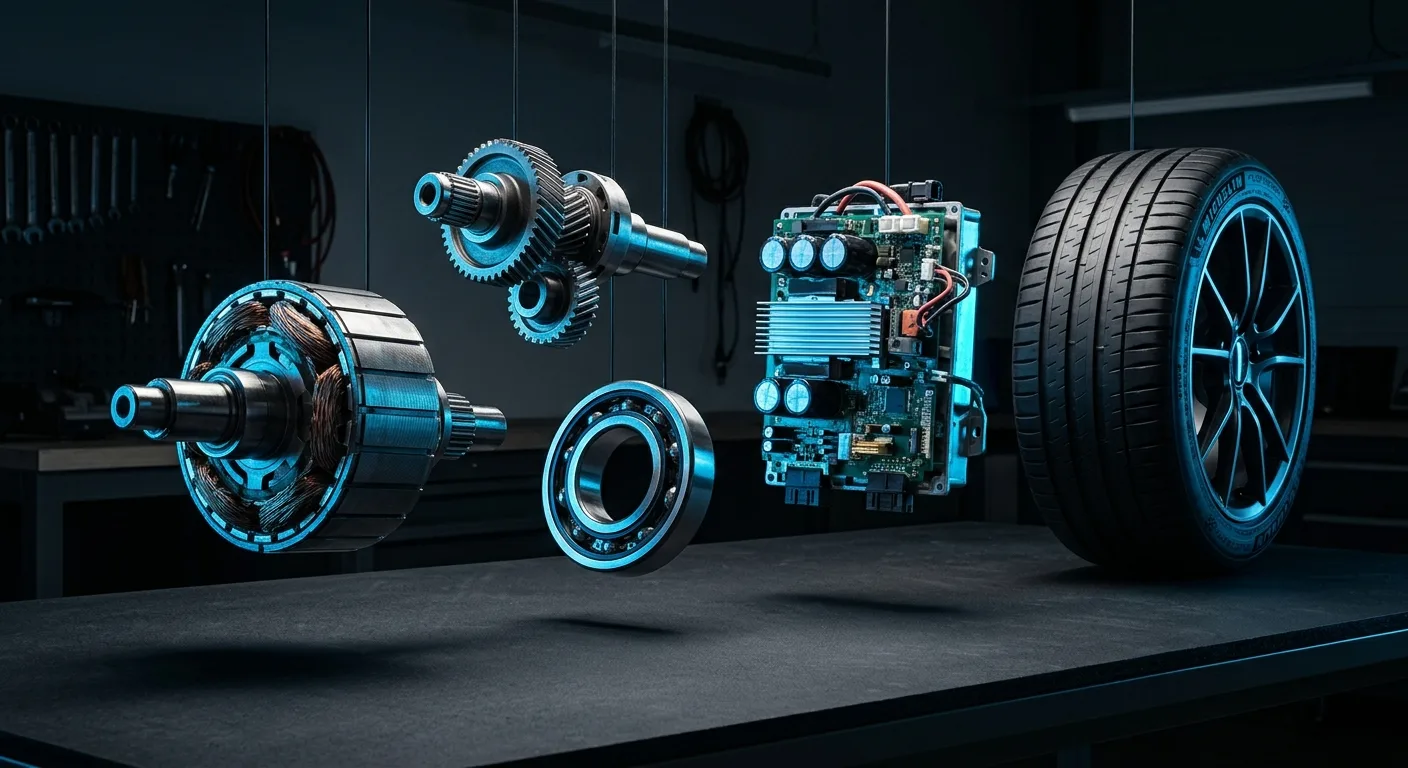
Let's separate the causes by where the sound actually comes from. "Motor noise" is often really gearbox, bearing, or inverter noise.
1. Normal gear and motor whine
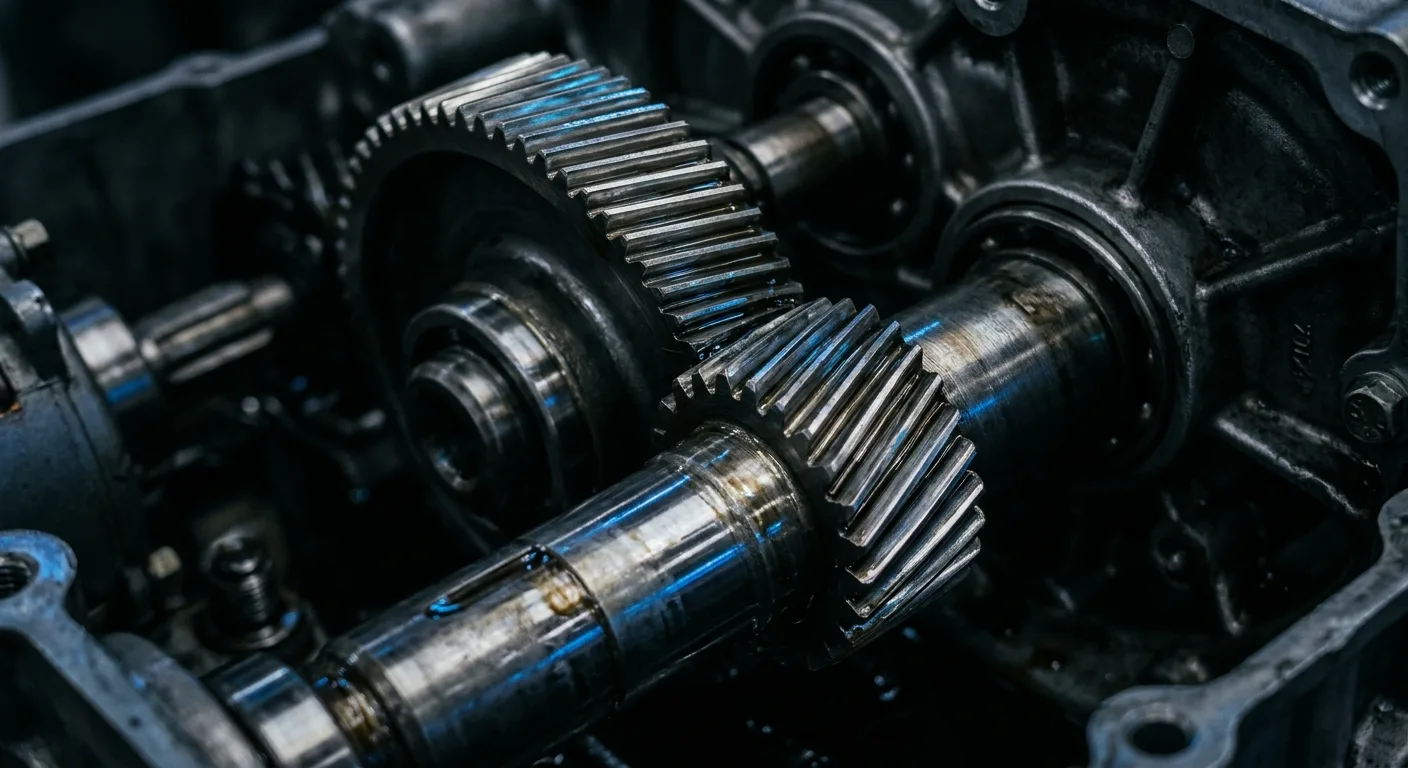
The single-speed reduction gear in most EVs has straight-cut or helical gears that whine at certain speeds. This is designed-in and harmless. If the pitch tracks your speed smoothly and never worsens, you can usually leave it alone.
2. Worn or dry bearings
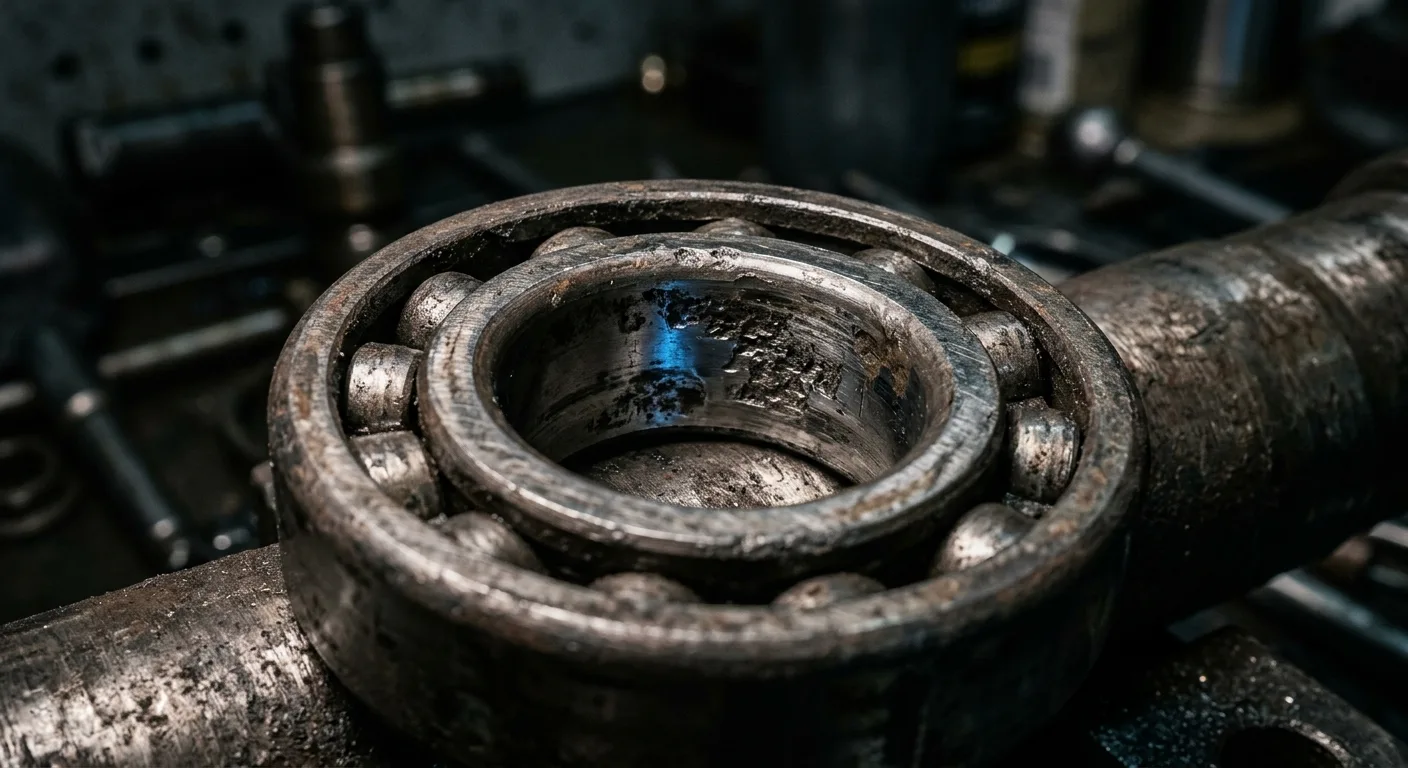
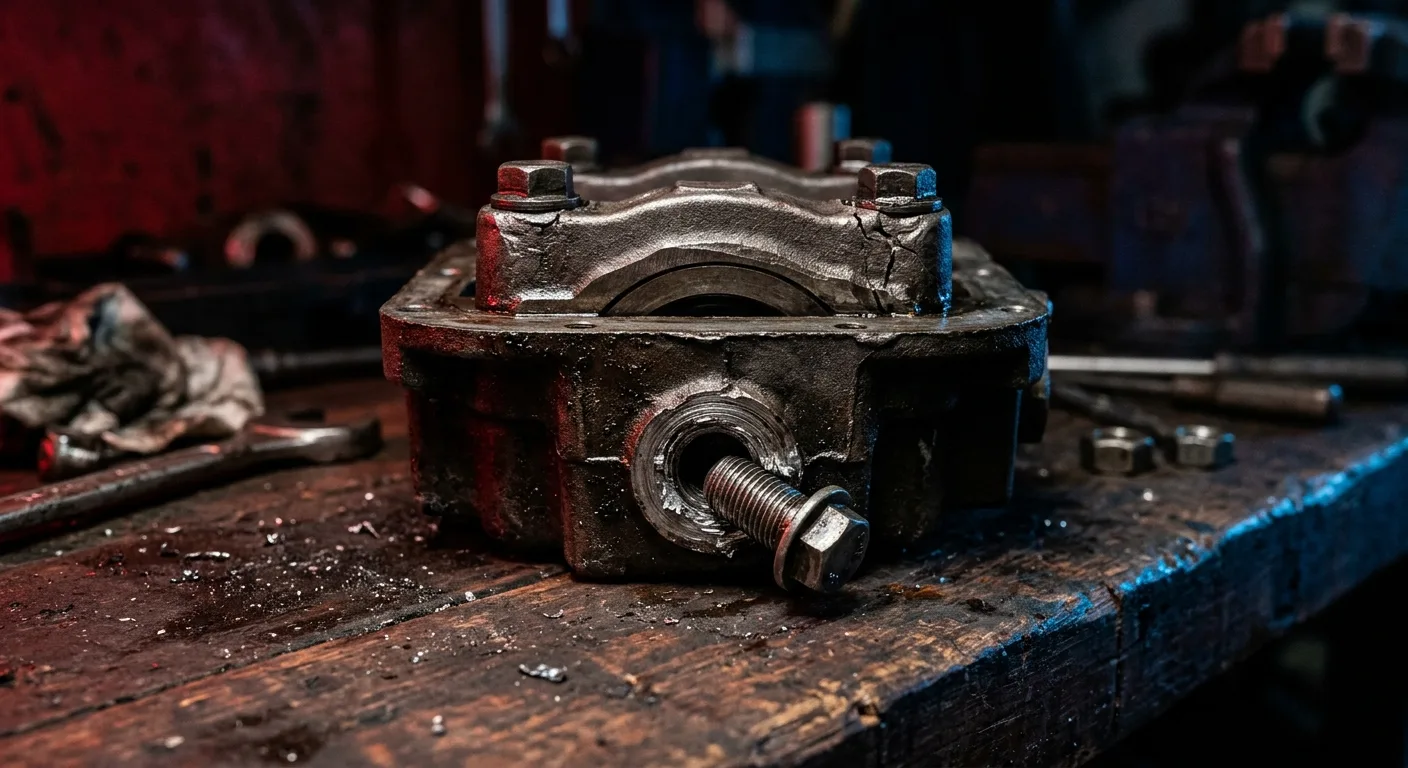
Bearings inside the motor or gearbox can wear over time. A failing bearing typically gives a grinding or rumbling edge to the whine, and it may get worse when you turn or load the drivetrain. This is a genuine repair item.
3. Low or degraded gearbox oil
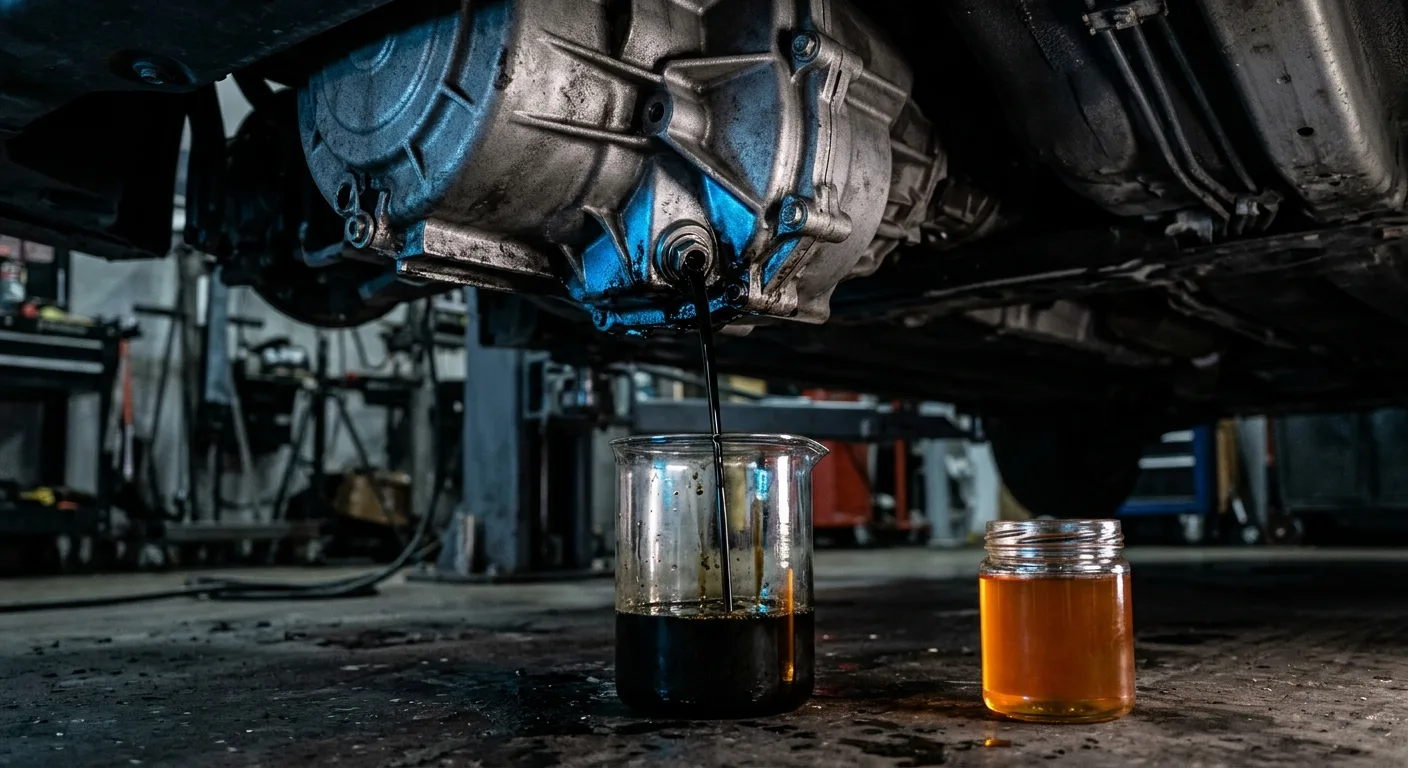
Some EV reduction gearboxes use oil that should be checked at service intervals. Low oil or old oil increases friction and noise. It is a cheap fix if caught early and an expensive one if ignored.
4. Inverter or motor electronics noise
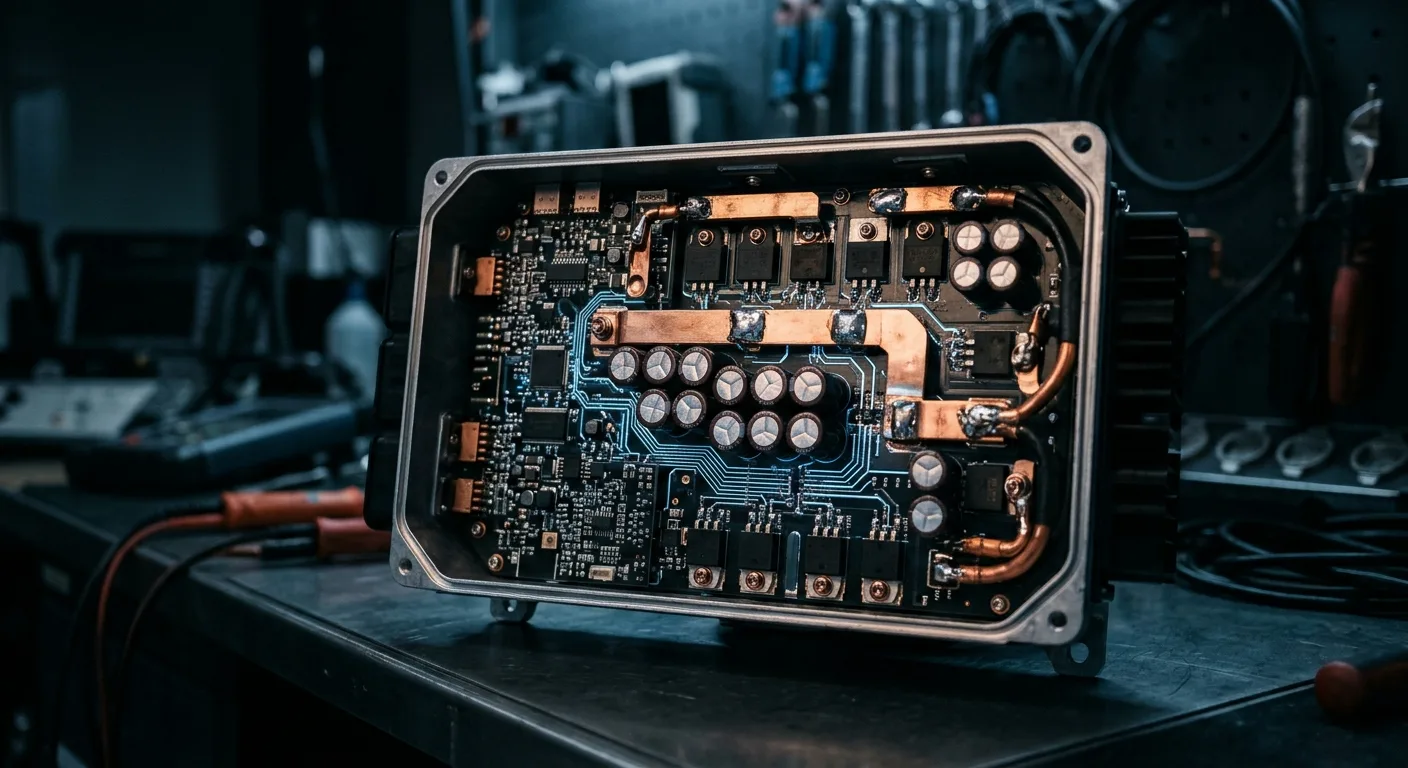
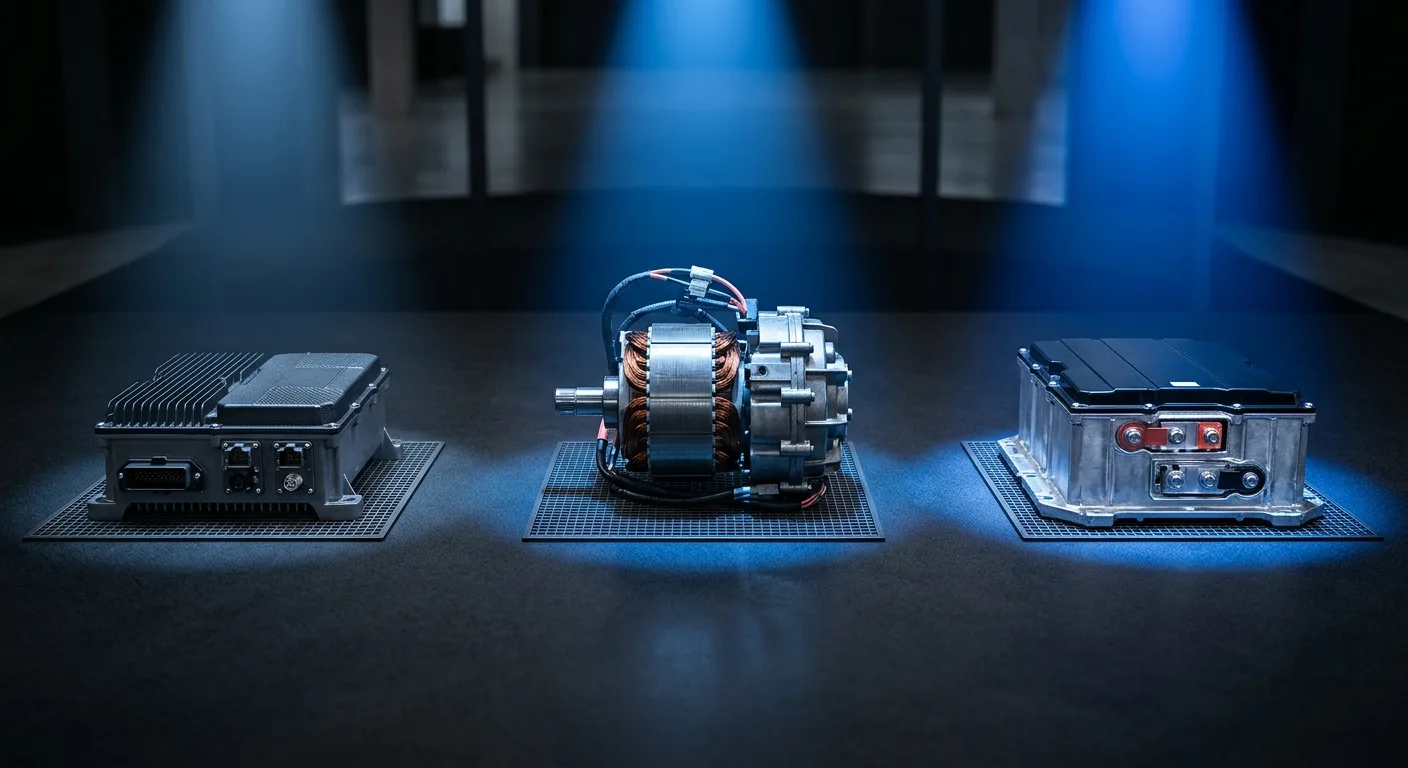
The power electronics that drive the motor can produce a high-frequency electrical whine, sometimes more noticeable at low speeds or during regenerative braking. This is often normal, but a sudden change can point to an electronic fault.
5. Tyres, wheel bearings, or brakes
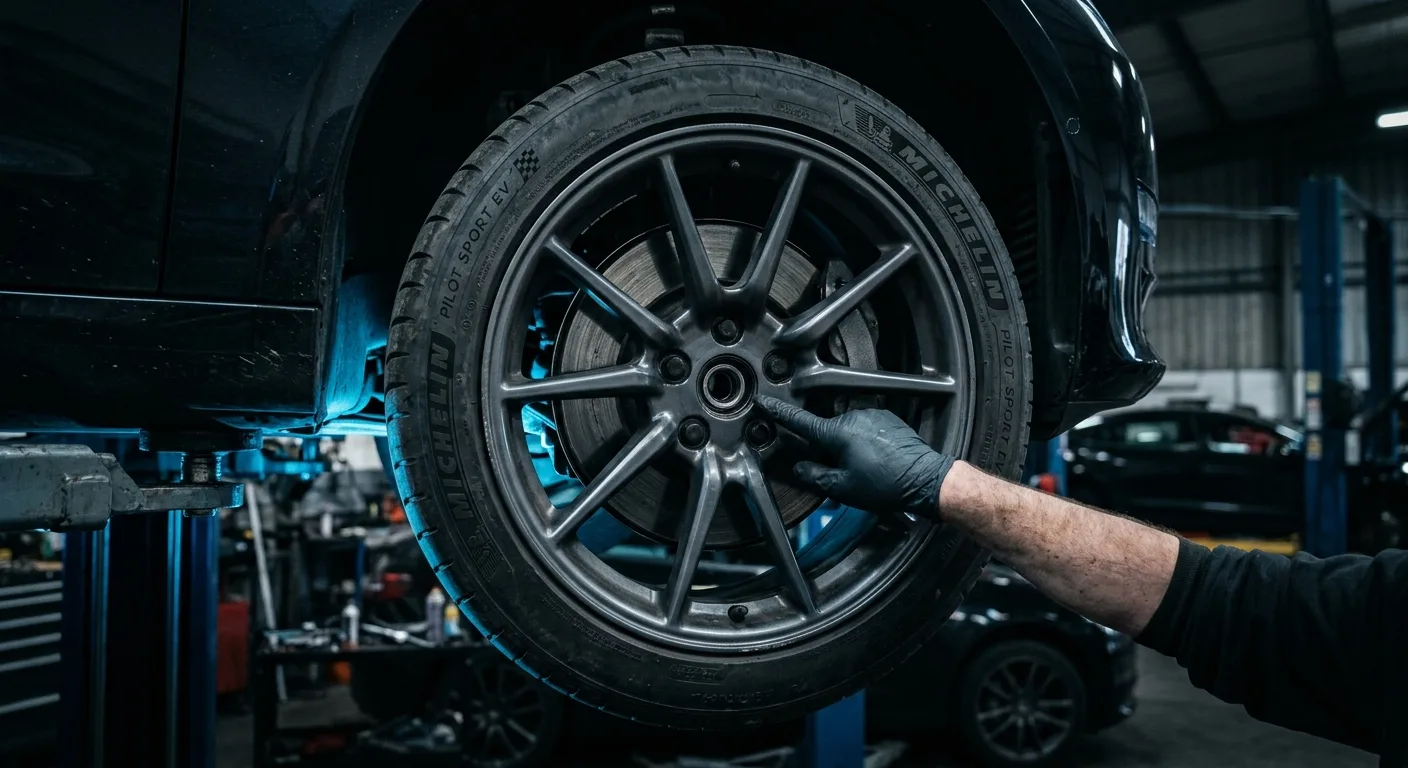
A whine that seems to come from the motor can actually be a wheel bearing, a dragging brake caliper, or uneven tyre wear. These are common and worth ruling out first because they are cheaper to fix.
6. Loose mounts or trim
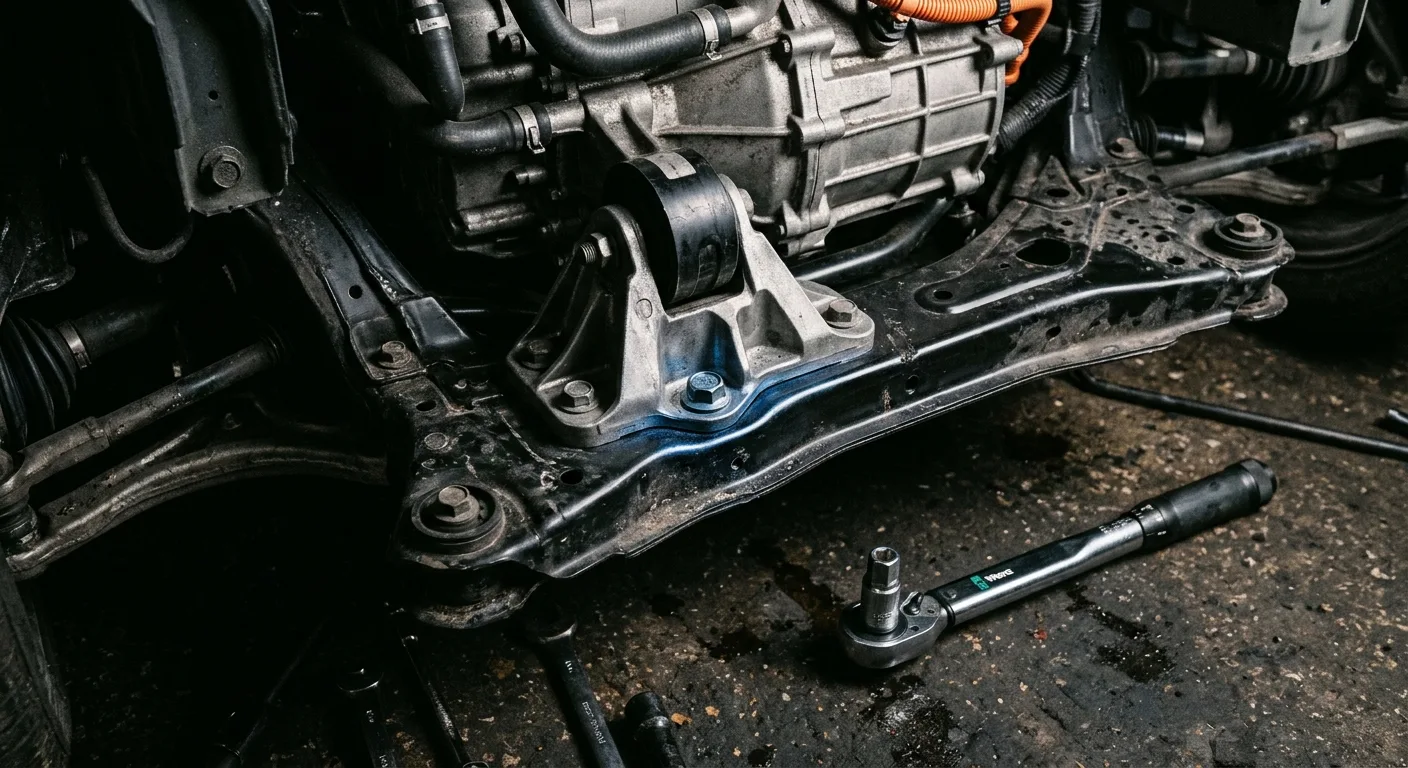
Sometimes the "motor whine" is a vibration transmitted through a worn motor mount or a piece of loose underbody trim resonating at speed. Annoying, but not a drivetrain failure.
What can I safely check myself?
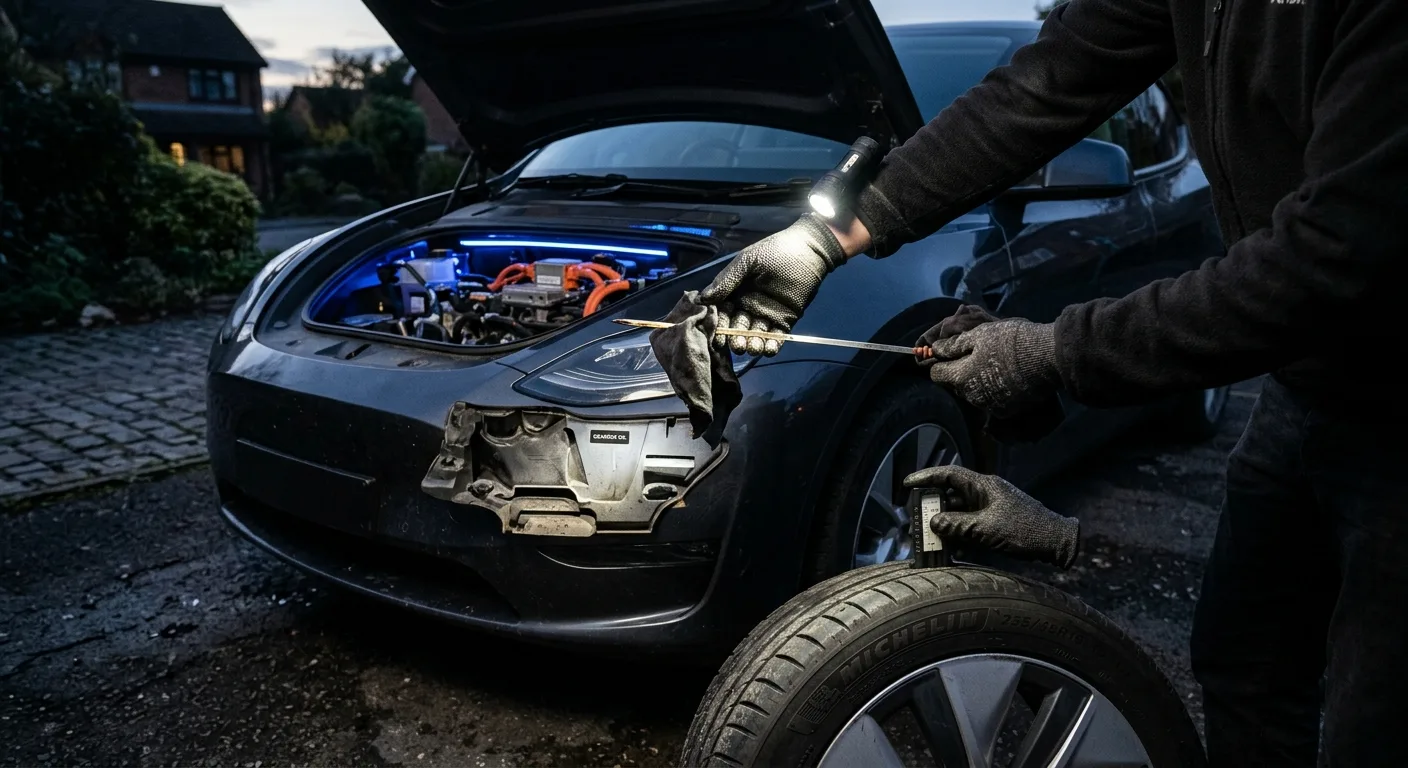
Start with the low-voltage and visual checks. Nothing here requires opening the high-voltage system.
Safety first: Never jack up the car on a slope, never crawl under a vehicle supported only by a jack, and never touch orange high-voltage cables or open the battery or motor housings. High-voltage work is for qualified technicians only. If you are unsure, stop.
A safe order of checks:
- Note exactly when the noise happens. Speed range, acceleration vs. coasting, turning, braking. Write it down.
- Check tyre pressures and look for uneven wear on all four tyres.
- Look for loose underbody trim or mudflaps that could vibrate at speed.
- Listen for the noise during a slow, empty-car-park drive with the windows down, so you can localise it.
- Check your 12V battery health if you have a simple tester. A weak 12V battery can cause odd electrical behaviour, though it rarely causes a drivetrain whine on its own.
- Review your service history for the last gearbox oil check.
If the noise is clearly mechanical, worsening, or accompanied by vibration or warning lights, book a technician. Our EV diagnostic and fuse guides can help you interpret what the car is telling you before you go in.
What are the repair options, and what do they cost?
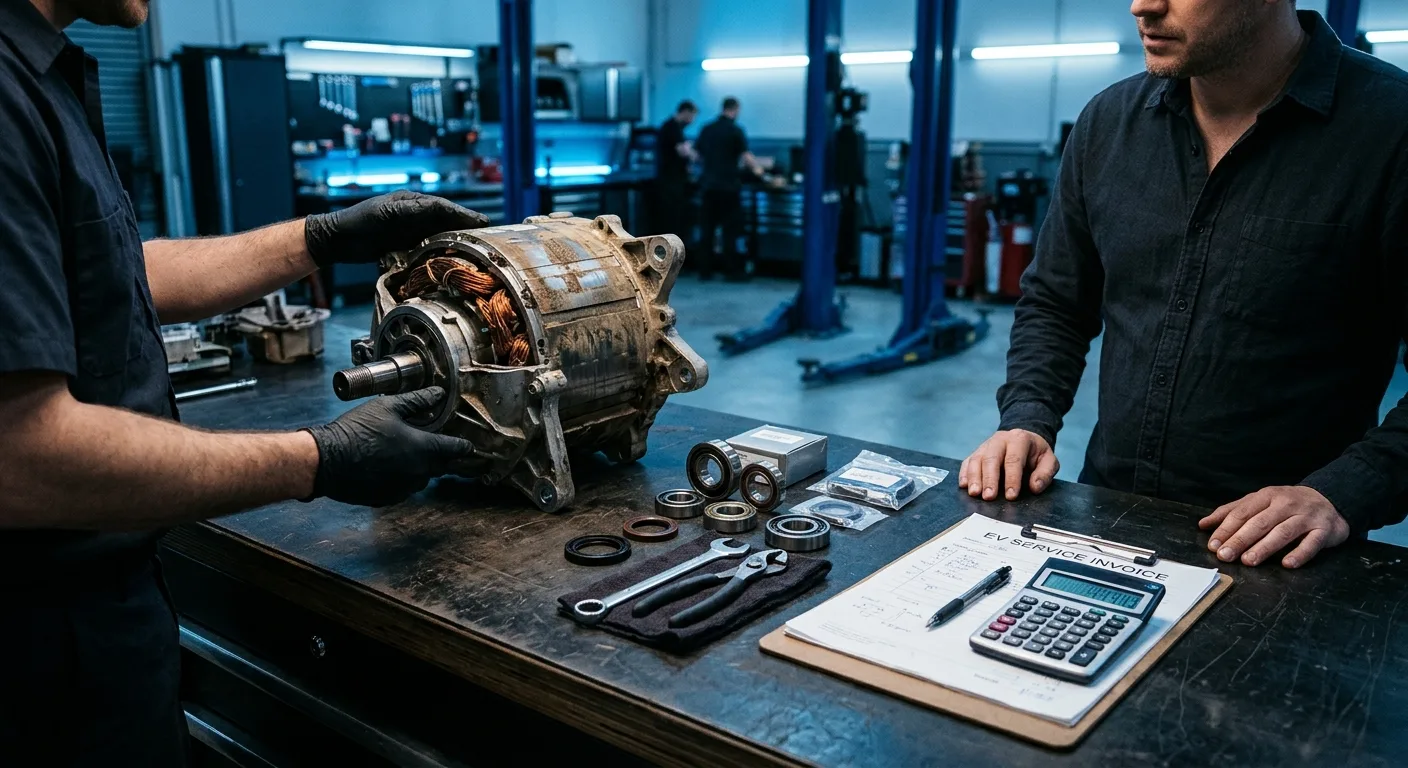
Costs vary widely by model and region, so treat the figures below as rough ranges to sanity-check quotes, not firm prices. Always confirm with your own garage.
| Cause | Typical fix | Rough cost range | DIY safe? |
|---|---|---|---|
| Normal gear whine | None needed | £0 | Yes (just monitor) |
| Low/degraded gearbox oil | Oil change | Low, often under £150 | Usually a garage job |
| Worn wheel bearing | Replace bearing | £150-£400 per corner | No, needs a press |
| Worn motor/gearbox bearing | Rebuild or replace unit | £500-£2,000+ | No |
| Inverter/electronics fault | Diagnostics and repair | £200-£1,500+ | No |
| Loose mount or trim | Re-secure or replace | £20-£200 | Sometimes |
| Tyres | Replace or rotate | £60-£250 per tyre | Partly |
For higher-voltage and drivetrain work, always use a qualified EV technician. If you are still weighing up whether a repair is worth it versus changing cars, the EV model directory and head-to-head comparisons are useful for seeing what else is out there.
Should I just live with a mild whine?
If the noise is stable, smooth, and free of other symptoms, yes. Many owners do. Chasing every sound in a quiet EV can cost more than it is worth. The key is confirming it is stable, not creeping up.
Should I use a diagnostic scan before booking a repair?
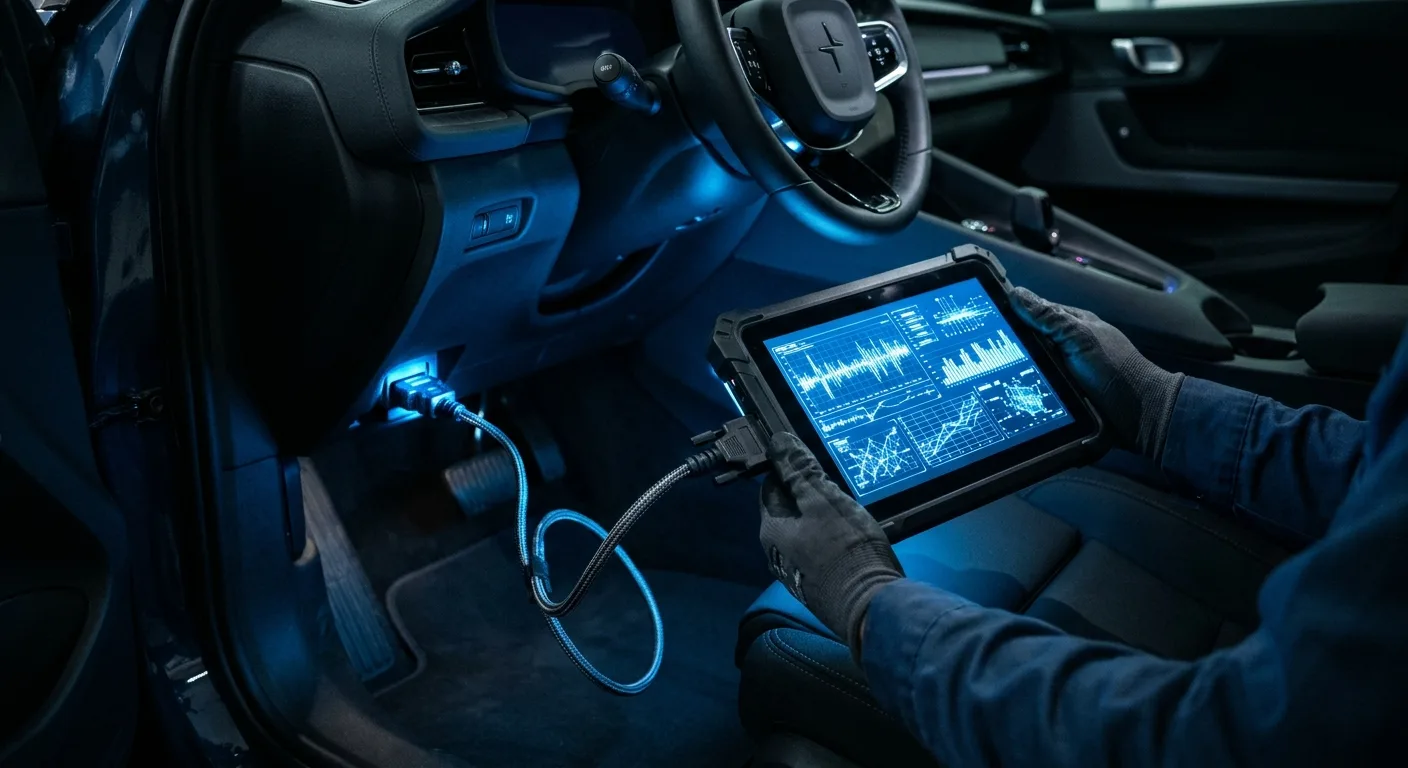
A scan can pull fault codes that point to the inverter or motor electronics. It will not always explain a mechanical whine, but it rules out electronic causes fast and can save you a wasted garage visit. The free EV calculators and tools on EV Hub help you estimate running and repair costs before you commit.
Which option fits your situation?
There is no single right answer, because it depends on what the noise actually is and how much you want to spend.
- Stable, smooth whine with no other symptoms: monitor it. Keep a note of any change. No repair needed.
- Whine that is getting louder or comes with vibration: book a technician for a proper diagnosis. Do not delay, because bearing and gearbox faults get more expensive the longer you drive on them.
- Noise you cannot localise: start with tyres, brakes, and wheel bearings. These are cheaper to rule out than a drivetrain rebuild.
- Electronic whine plus warning lights or reduced power: get it scanned and inspected. This is not a "wait and see" situation.
Step-by-step action plan

- Log the noise for a week: speed, conditions, and whether it is changing.
- Rule out the cheap stuff: tyres, brakes, trim, wheel bearings.
- Check service history for gearbox oil and any prior drivetrain work.
- Scan for fault codes if you have access to a suitable tool.
- Book a qualified EV technician if the noise is new, worsening, or accompanied by vibration or warnings.
- Get a written diagnosis and quote before authorising any drivetrain repair, and compare it against the cost ranges above.
Common mistakes to avoid
- Assuming every whine means a dead motor. Most are gearbox, bearing, or tyre noise. Fix: rule out the cheap causes first.
- Ignoring a whine that is getting louder. Bearing faults rarely fix themselves. Fix: log it and act if it changes.
- Touching high-voltage components to "have a look". This can be fatal. Fix: leave orange cables and battery/motor housings to qualified technicians.
- Skipping gearbox oil checks. Cheap maintenance prevents costly wear. Fix: follow your service schedule.
- Replacing parts on a hunch. Fix: get a proper diagnosis and a written quote first.
- Blaming the motor when it is a wheel bearing or tyre. Fix: localise the noise before spending.
Expert takeaway
The single most important lesson: a whining electric car motor is usually normal until proven otherwise, and the real skill is noticing when it changes. Log the sound, rule out the cheap causes, and let a qualified technician handle anything mechanical or high-voltage. That approach saves you money and keeps you safe.
FAQ
Is a whining noise from an EV motor dangerous? Usually not. A stable, smooth whine is normal drivetrain sound. It becomes a concern if it is new, worsening, or paired with vibration, warning lights, or power loss, which warrants a technician's inspection.
Can I fix a motor whine myself? You can safely check tyres, brakes, trim, and the 12V system. Anything involving the motor, gearbox, or high-voltage system needs a qualified technician.
Why does the whine change with speed? Gear and bearing noise rises and falls with rotational speed, so the pitch tracks your speed. A whine tied to acceleration instead can point to the inverter or electronics.
How much does it cost to fix an EV motor whine? Mild cases cost nothing. Gearbox oil changes are often under £150, while bearing or drivetrain repairs can run from several hundred to over £2,000 depending on the model. Always get a written quote.
When should I see a professional? As soon as the noise is new, getting louder, or comes with vibration, warning lights, or reduced power. Do not drive on a suspected bearing or gearbox fault longer than necessary.