Electric Cars
EV Isolation Fault: Causes, Symptoms and Diagnosis
You press start or turn the key and the car won't go into drive, staying in park with a red or amber high-voltage or insulation warning on the dash. Or it drove fine yesterday but now charging stops almost immediately or refuses to start. On a scooter or e-bike, a light flashes and the throttle does nothing.
What causes it
The electrical insulation between the high-voltage system and the chassis has broken down, so power is leaking somewhere it shouldn't. The vehicle detects this and refuses to move or charge until it's fixed, because it's a genuine safety issue rather than a nuisance code.
You turn the key or press start, and instead of the usual clunk and hum you get a warning on the dash, a red or amber icon, and a car that refuses to go into drive. Or maybe it drove fine yesterday and this morning it will not charge. On a scooter or e-bike it might be a flashing light and a throttle that does nothing. If the words "isolation fault" or "insulation resistance" show up, you are in the right place.
An isolation fault is the vehicle telling you that the electrical insulation between the high-voltage system and the chassis has broken down. In plain terms: power is leaking somewhere it should not, and the car has decided it is safer not to move or charge until you deal with it. It is a real safety issue, not a nuisance code, but it is also often fixable without a huge bill.
Symptom: what you actually see
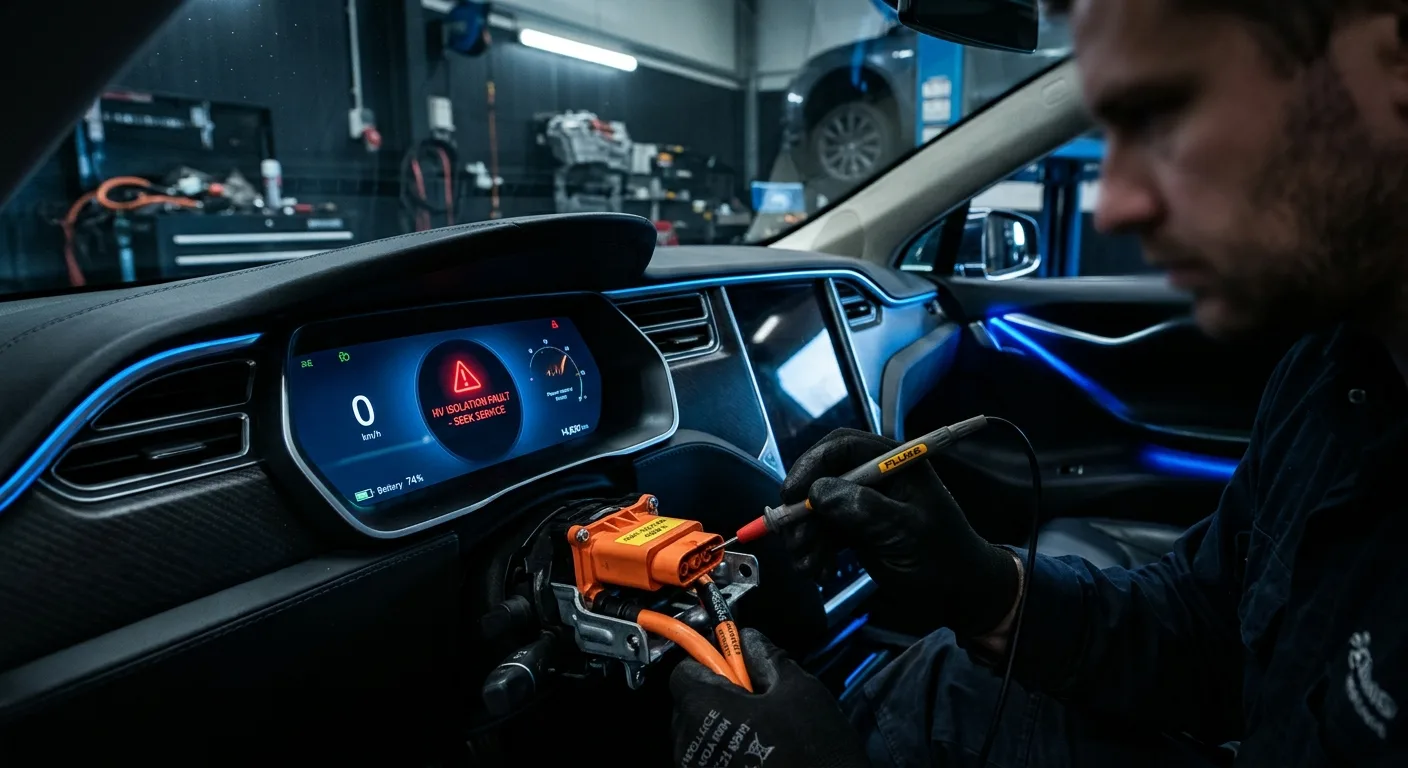
Most owners meet this in one of a few ways. The car will not enter "ready" or drive, and the dash shows a high-voltage or insulation warning. Charging stops almost immediately or refuses to start. Some models show a message like "insulation fault" or "check HV system" and keep the car in park. On two-wheelers you typically get a controller fault light or the display cuts out when you twist the throttle.
A few cars let you keep driving in a reduced-power "limp" mode. Do not treat that as an invitation to keep going. The fault can get worse, and the next symptom could be a dead 12V battery or a shutdown in traffic.
You may also notice a slow 12V drain, a charger that trips a household breaker, or a warning that only appears in wet weather. That last pattern is a strong clue, and it points to moisture rather than a failed component.
Safety first
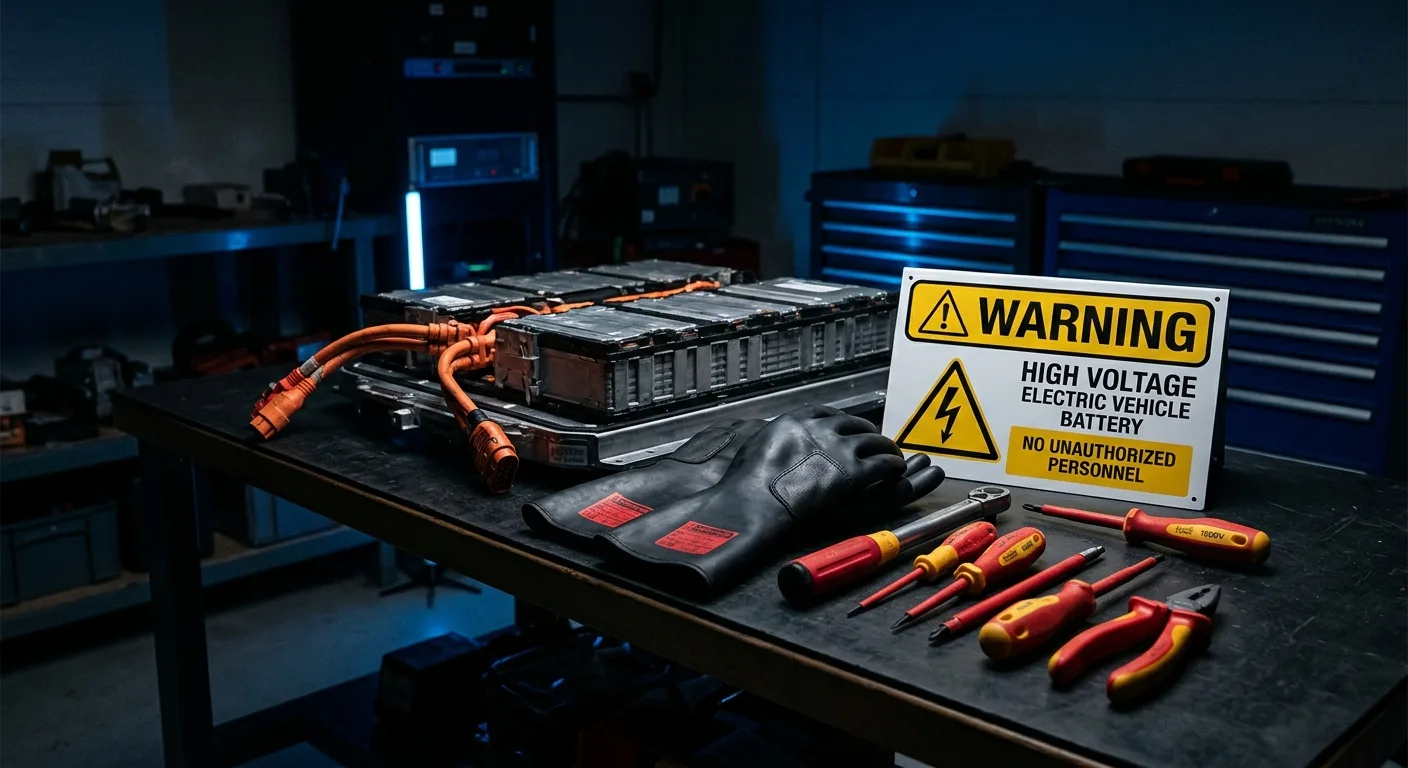
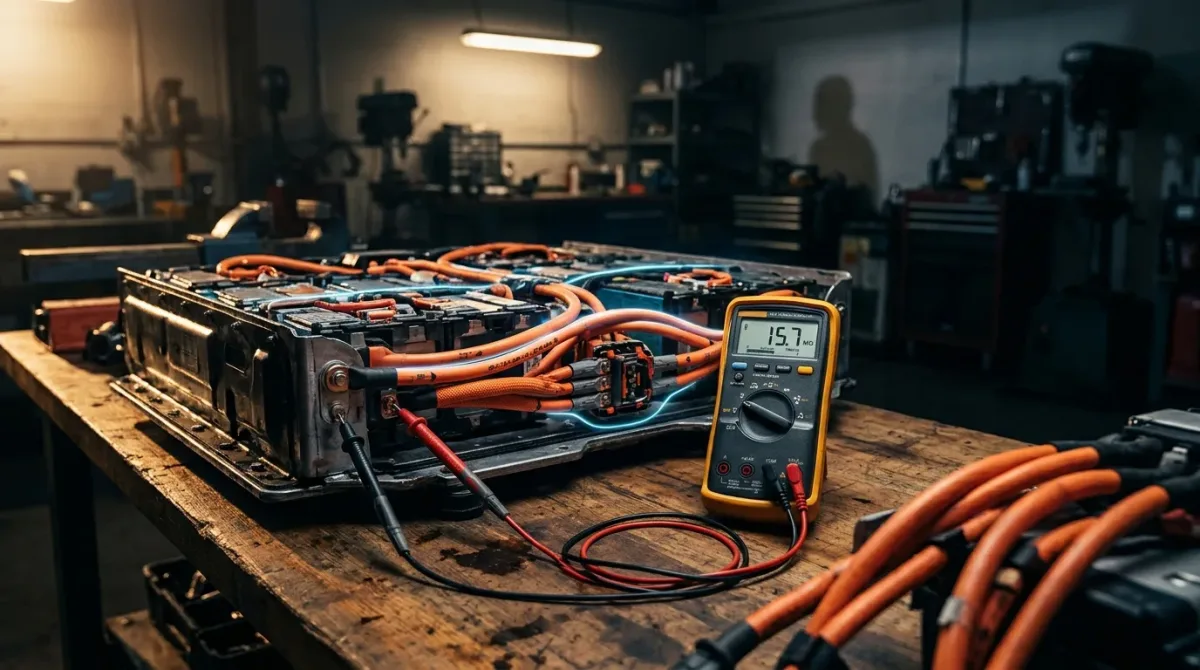
Before you touch anything, understand the split. The 12V system (the small battery, fuses, relays, the charger lead on a scooter) is low voltage and a careful owner can inspect it. The traction battery and every orange cable are high voltage, often 300-800V on a car and 48-72V on a scooter or e-bike. That is lethal, and it is not a DIY zone on any vehicle.
So: switch the vehicle fully off, remove the key or fob from range, and on a two-wheeler pull the main breaker or disconnect the battery pack if the manufacturer provides a safe, documented way to do it. Never open the traction battery pack, never unbolt an orange cable, and never probe HV connectors with a multimeter. Do not wash the car or ride through deep water while a fault is present.
If you smell burning, see smoke, hear arcing, or notice a hot plastic smell near the battery, stop. Get clear of the vehicle and call a professional. Do not charge it.
Check these first
Work through these in order. They are the easy, low-voltage checks, and they catch a surprising share of faults.
-
Check the 12V battery. Measure it with everything off. A healthy resting 12V battery reads about 12.4-12.7V; below about 12.0V it is weak. A sagging 12V battery causes all sorts of spurious HV warnings on cars, because the computers that monitor the HV system misbehave when their supply is low. If it fails, charge or replace it and clear the fault by driving a cycle.
-
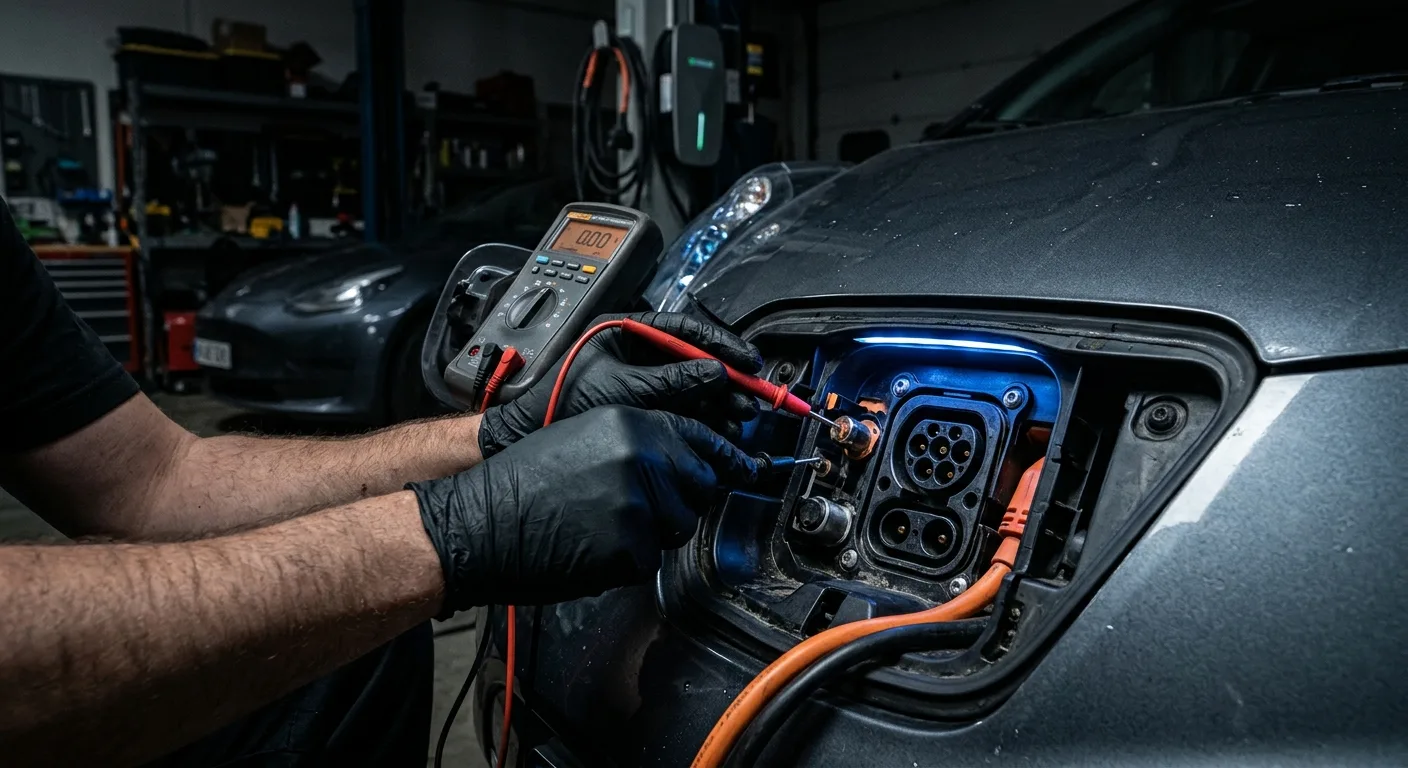
Look for water where water should not be. Open the charge port and check for damp, condensation or corrosion on the pins. On a scooter, check the controller housing and the battery connector for moisture. A normal result is bone dry. Damp pins are a classic cause of intermittent isolation faults, especially after rain or a wash.
-
Inspect the charging cable and plug. Look for cracked insulation, bent pins, scorch marks, or a plug that gets hot. A good cable is cool, clean and undamaged. A damaged charge lead can trip the fault the moment you plug in, and replacing the cable is cheap compared to a repair.
-
Scan for stored codes. Use an OBD reader that supports your model, or the manufacturer app, and read the stored faults. Note the exact wording and when it appeared. Do not guess at codes you cannot look up; check the model-specific documentation. Our diagnostic and fuse guides are a good place to start matching symptoms to circuits.
-
Check the obvious fuses and connectors. On cars, confirm the HV-related fuses in the under-bonnet box are intact per the handbook. On scooters and e-bikes, check the main fuse and that the battery-to-controller connector is fully seated and dry. A normal result is intact fuses and firm, clean connectors. A blown main fuse on a two-wheeler often means something downstream shorted, so do not just replace it and ride on.
-
Note when it happens. Does it only appear in the wet, only when charging, only when cold, or only after a bump? Write it down. This single observation often narrows the cause faster than any meter reading.
The most likely cause
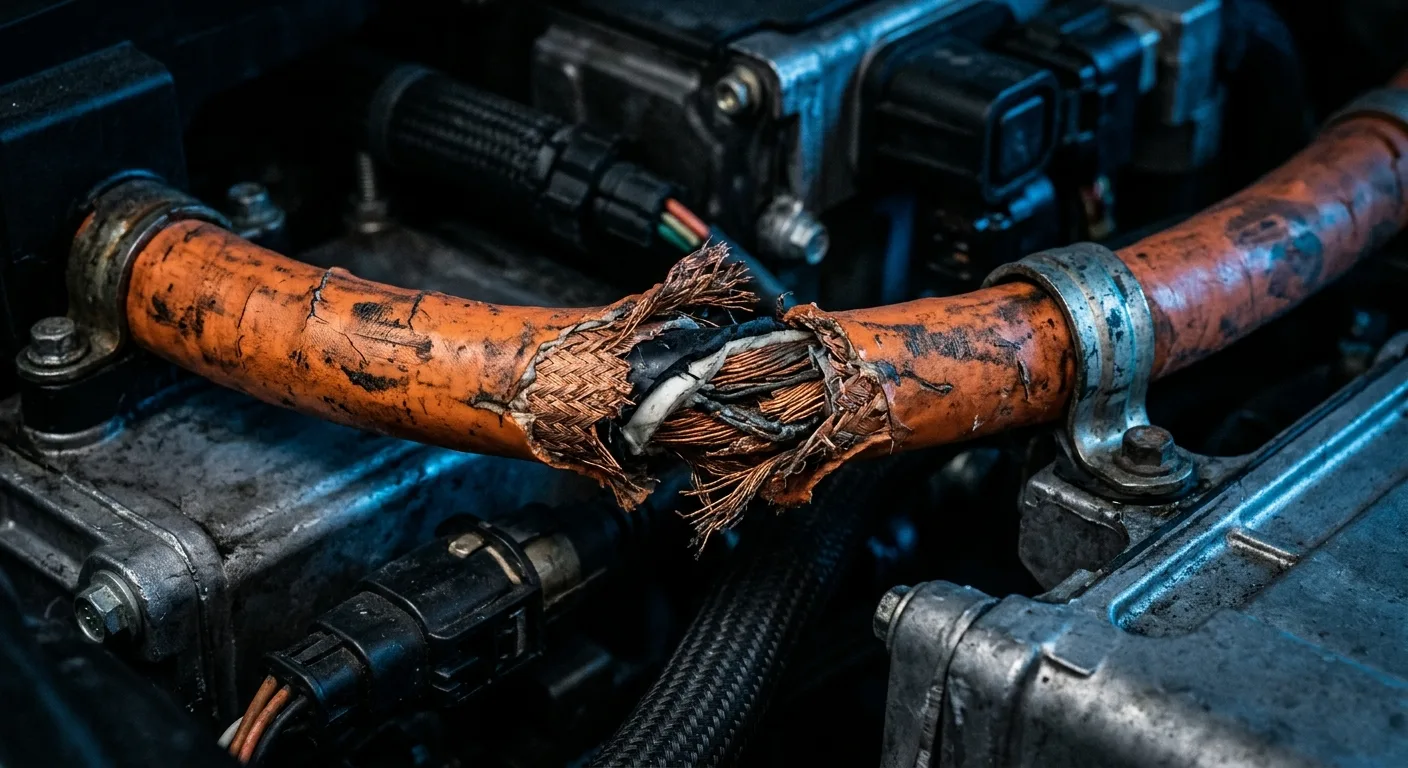
For most readers, the answer is moisture or a damaged connector, not a failed battery. Water gets into the charge port, a controller housing, or a motor connector, and the insulation resistance between the HV conductor and the chassis drops below the threshold the car expects. That threshold varies by model and is typically in the hundreds of kilohms to low megohms; you do not need the exact figure to act on the pattern.
Why moisture wins: the fault is intermittent, it shows up after rain or washing, and it often clears after a dry spell or a warm day. A close second is a chafed or corroded cable where it flexes, for example at the charge port or the motor lead on a scooter. A genuinely failed traction battery is possible but much rarer, and it usually comes with other warning signs like reduced range or a hot pack.
On cars, a weak 12V battery is the sneaky one. It throws HV warnings that look terrifying and disappear once the small battery is healthy again.
How to fix it
Match the fix to the cause you found.
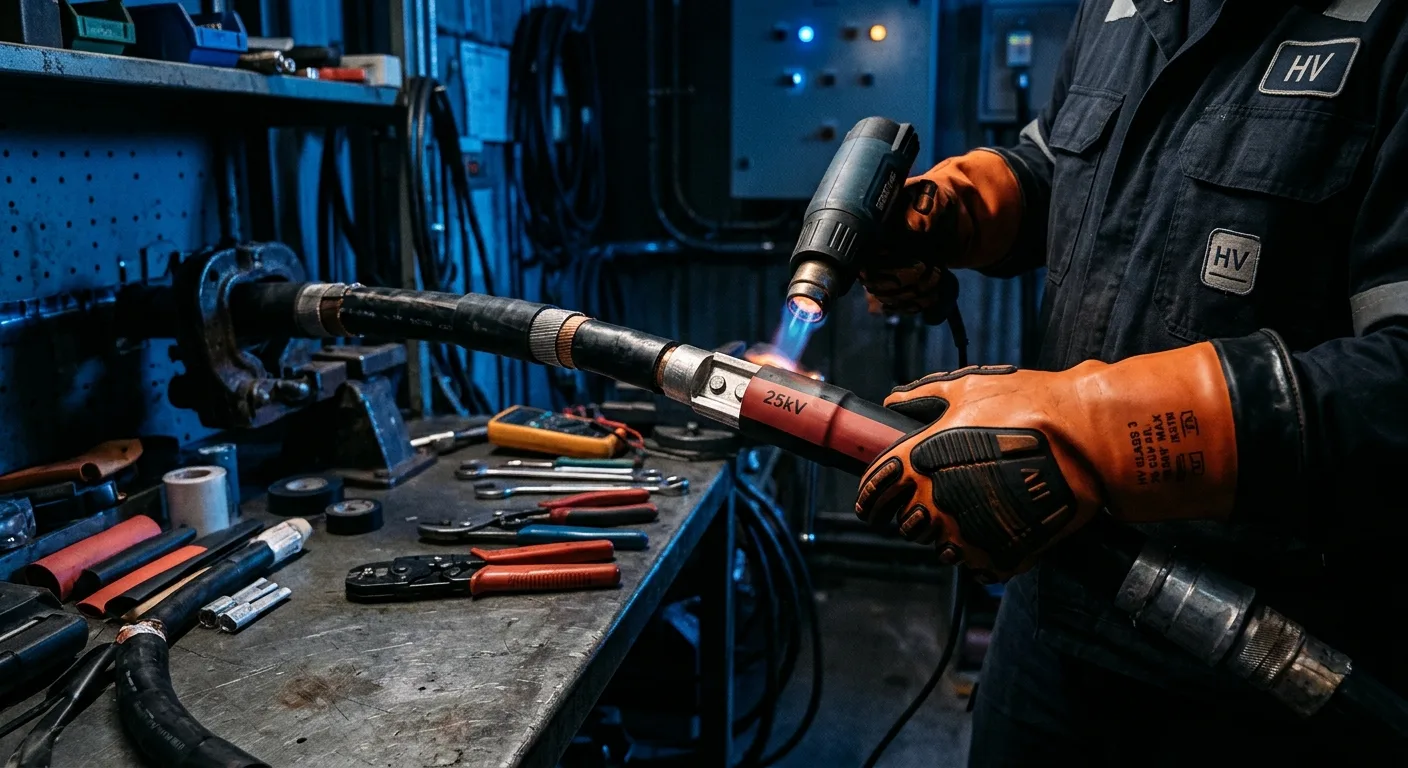
- Moisture in a connector or port: dry it thoroughly with compressed air or a lint-free cloth, check the seals and gaskets, and replace any perished seal. Do not use water-displacing sprays on HV pins unless the manufacturer explicitly allows it. Let it dry fully, then retest.
- Damaged charge cable or plug: replace the cable. This is a consumable, and a new one is cheap insurance.
- Weak 12V battery: charge it fully, or replace it if it will not hold above about 12.0V resting. Then drive a normal cycle so the computers re-check the system.
- Corroded or chafed connector: clean light corrosion with the correct contact cleaner, or replace the connector if the insulation is cracked. If it is an HV connector, this is a technician job.
- Blown main fuse on a two-wheeler: find and fix the short before fitting a new fuse. Replacing the fuse alone and hoping is how people end up with a second, bigger failure.
If the fault persists after the easy checks, the vehicle needs an insulation resistance test performed by someone with the right meter and the training to use it safely on an HV system. That test gives a real number instead of a guess.
If you are still shopping and want to know which models handle faults and servicing better, the head-to-head comparisons and the model directory let you check a shortlist before you commit.
When to see a professional
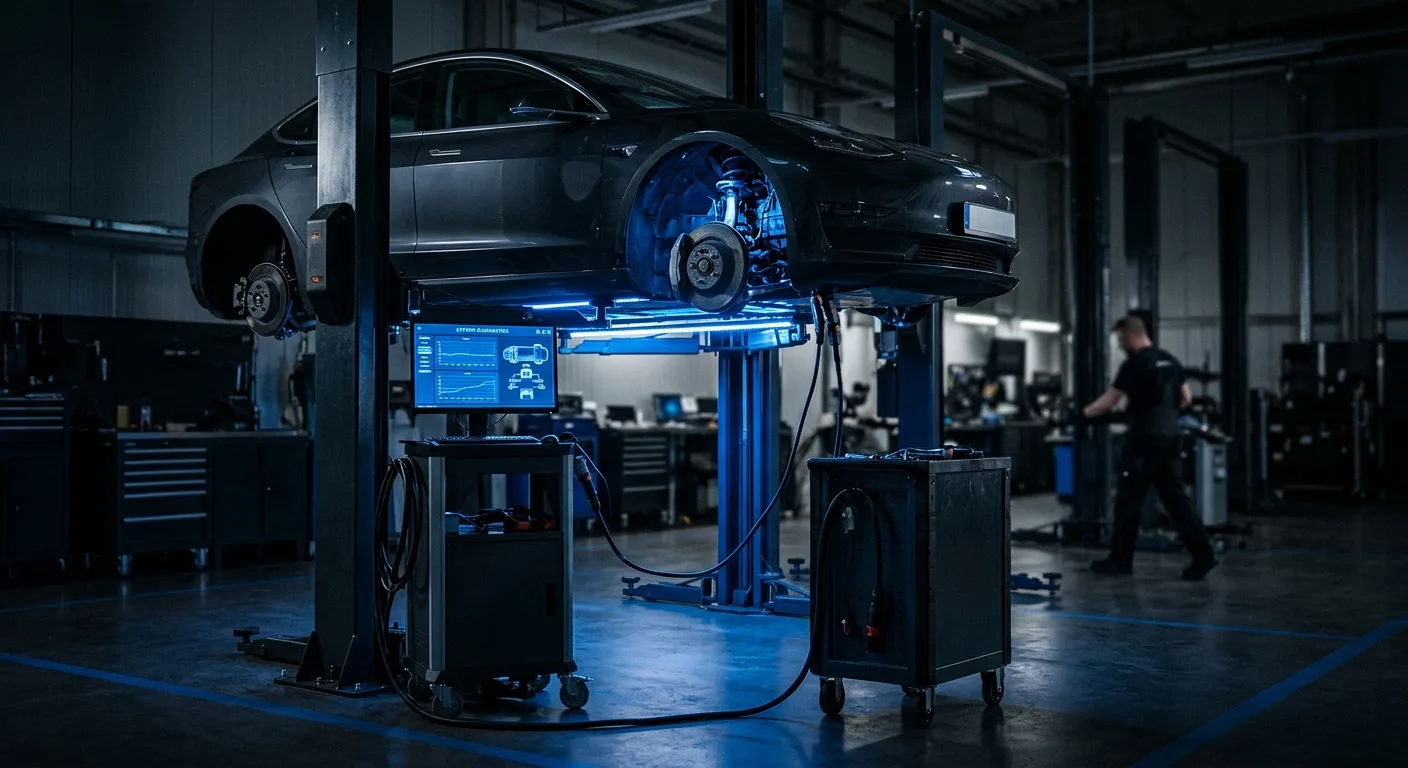
Stop and call a qualified technician if any of these are true:
- The fault returns after drying and a healthy 12V battery.
- You see or smell smoke, arcing, or hot plastic near the battery or orange cables.
- The vehicle will not charge at all, or the charger trips a breaker.
- The insulation warning appears in dry conditions with no obvious moisture.
- The car is in limp mode, or a two-wheeler cuts out under load.
- You cannot find the cause with the low-voltage checks above.
Anything involving the traction battery, orange cables, or an actual insulation resistance measurement belongs to a trained professional. Do not let a general garage without HV certification touch it either. If you want to estimate what a repair might cost in running terms, our free calculators and tools can help you compare ownership costs, but get a proper quote for the repair itself.
FAQ
Can I drive with an isolation fault? Only if the car lets you and only to get somewhere safe, ideally a workshop. Do not plan a long trip on it. A fault that starts intermittent can become a hard shutdown, and a shutdown at speed is dangerous.
Will it clear by itself? Sometimes, if the cause was moisture and everything dries out. That does not mean it is fixed. The seal that let water in is still failing, and the fault will come back. Find and fix the source.
Is it always the battery? No. In my experience the battery is the least likely culprit. Charge ports, connectors, cables and a weak 12V battery account for most cases. A failed pack usually brings reduced range or overheating too.
Does an isolation fault mean my EV is written off? Almost never. Most cases are a dried connector, a new cable, or a 12V battery. Even a motor or controller repair is routine for a qualified shop. Get a proper diagnosis before you panic.
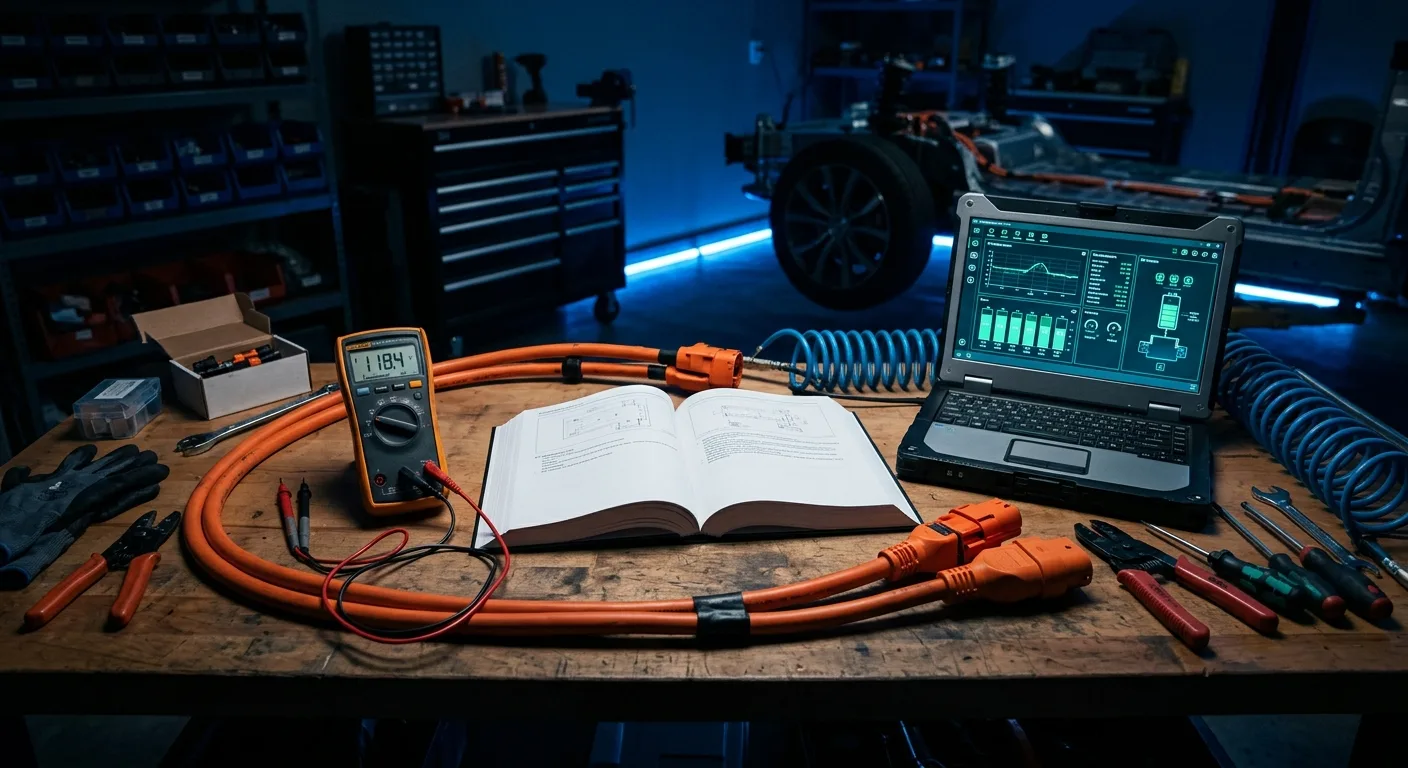
Can I test insulation resistance myself? Not on the traction system. That needs a dedicated insulation tester and HV training. You can safely check the 12V side, the charge cable, and for moisture. Leave the orange stuff to the professionals.
If you want to dig deeper into related faults and fixes, the EV troubleshooting guides cover the next steps for charging, 12V and controller problems.