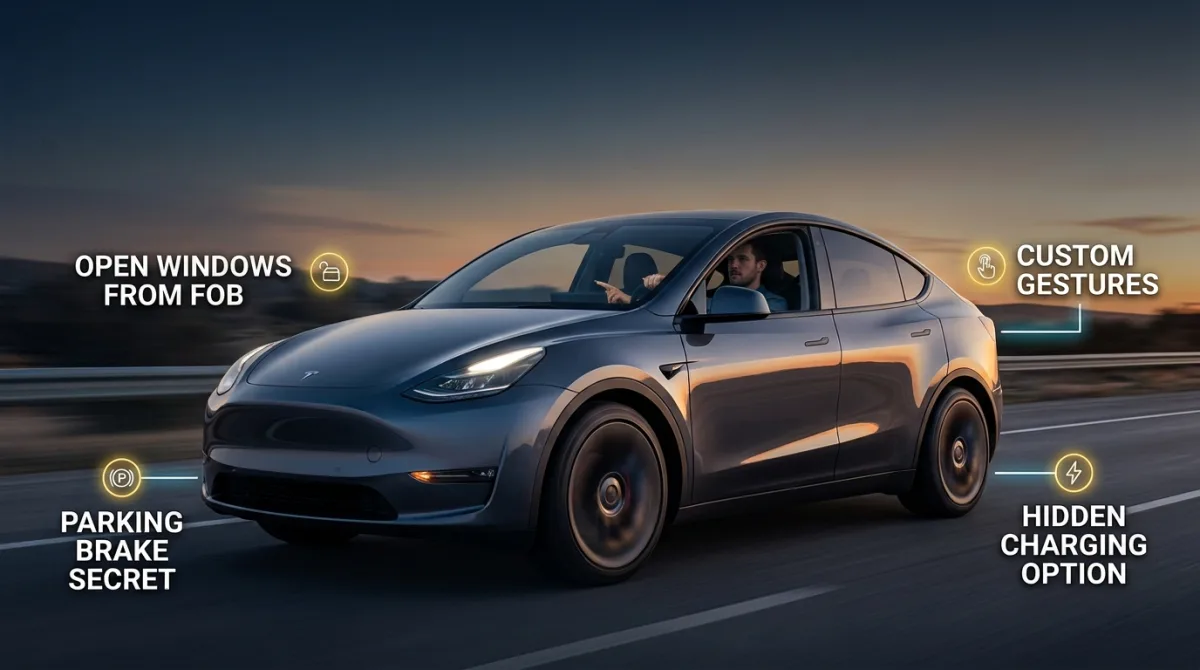
Most drivers use maybe a third of what their car can actually do. The rest sits there, ignored, until the day it would have saved you a headache. After reading this, you will be able to find your fuel door, defog a windshield properly, jump a car without frying anything, and handle a handful of small emergencies on your own. Set aside about 20 minutes to read and try the easy ones in your own driveway.
I drive an older hatchback, and half of these I only learned from a mechanic who was tired of watching me struggle. None of them need a tool kit beyond the basics. Let's go.
What you need before you start
- Your owner's manual. Yes, really. It is the single best source for your specific model, and every car hides these features in slightly different spots.
- A tire pressure gauge, ideally a digital one.
- A phone with a flashlight and a note-taking app.
- Jumper cables or a jump pack, if you want to try the jump-start step.
- No account, no subscription, no app download required for any of this.
1. Find the fuel door release before you need it
Look for a small lever or button near the driver's seat, often low on the floor by the door sill or on the dash. Some cars have no interior release at all: you just push the door itself. Why it matters: pulling into a station on empty with a line behind you is not the moment to learn. Practical tip: check the manual for the exact location, then confirm it by opening the door once at home.
2. Unlock the secret manual fuel door release
If the electric release fails, most cars have a manual tab inside the trunk behind the filler neck trim. Peel back the carpet or remove a small plastic cover to reach it. Why it matters: a dead release can strand you at a pump. Practical tip: find this tab once while the car is new to you, and note its location.
3. Use the recirculation button to clear fog faster
Set the climate control to defrost, turn on the A/C (yes, even in winter), and switch to recirculation only briefly. Fresh air plus A/C dries the glass fastest. Why it matters: wiping a foggy windshield while driving is genuinely dangerous. Practical tip: if your car has an auto climate mode, press the front defrost button and let it do the work.
4. Adjust your mirrors to kill the blind spot
Lean your head toward the driver's window until it almost touches the glass, then set the left mirror so you can just see the side of your car. Repeat on the right side. Why it matters: this widens your rear view and shrinks the blind spot. Practical tip: a car leaving your mirror should appear in your peripheral vision, not vanish.
5. Read your tire pressure placard, not the tire sidewall
Open the driver's door and look at the sticker on the jamb. That number, usually between 30 and 36 psi, is what the car wants. The number molded into the tire is a maximum, not a target. Why it matters: wrong pressure wears tires and hurts range or fuel economy. Practical tip: check when tires are cold, before driving more than a mile or two.
6. Find your car's hidden emergency kit spots
Many cars stash a jack, wheel wrench and sometimes a spare under the trunk floor. Some newer cars ship with a tire inflator kit instead of a spare. Why it matters: knowing what you actually have changes your plan when a tire goes flat. Practical tip: lift the trunk floor panel and look today. If you find a sealant kit, read its expiry date.
7. Jump-start a car in the right order
Park the good car close but not touching, engine off on both. Connect red to the dead battery's positive, red to the good battery's positive, black to the good battery's negative, and black to a bare metal bolt on the dead car's engine, away from the battery. Start the good car, wait a couple of minutes, then start the dead one. Why it matters: the last connection is where sparks happen, and you want them far from battery fumes. Practical tip: never connect black to the dead battery's negative terminal. Reverse the order when removing.
For electric and hybrid vehicles, do not jump the high-voltage traction battery, and follow the owner's manual exactly. That work belongs to a qualified technician.
8. Use the parking brake every time you park
Pull the lever or press the electronic button before you step out, especially on any slope. Why it matters: the parking pawl in an automatic is a small metal pin, not a brake. Practical tip: on a hill, set the brake first, then release your foot from the brake pedal so the pin never takes the load.
9. Trigger the child lock the right way
Open the rear door and find a small switch or slot on the door's edge. Flip it, then close the door and test from inside. Why it matters: kids can open rear doors while you drive. Practical tip: the switch usually needs a key or small screwdriver to turn.
10. Learn your warning light colors
Red means stop soon and check. Amber means get it looked at. Green and blue are just information. Why it matters: a red oil or temperature light ignored for a mile can mean an engine. Practical tip: photograph any unfamiliar light, then check the manual before driving on.
11. Reset a stuck power window
Many cars have a reset: hold the window switch down for a few seconds after it reaches the bottom, then hold it up for a few seconds after it reaches the top. Why it matters: windows lose their position memory after a battery change. Practical tip: if this does not work, the regulator or switch may be failing, so see a technician.
12. Use your phone as a diagnostic reader
A cheap OBD-II adapter plus a free app can read and clear basic fault codes on most cars built after 1996. Plug it into the port under the dash, usually near the steering column. Why it matters: you can tell a shop what the car reported instead of guessing. Practical tip: write the code down before clearing it, and never clear a code just to pass an inspection.
If you drive an EV or plug-in hybrid, the same idea applies, but fault codes tied to the high-voltage system are not a DIY job. Our EV troubleshooting guides walk through the low-voltage checks you can safely do first, and the diagnostic and fuse guides help you trace a dead circuit.
Pro tips
- Keep a microfiber cloth and a small spray bottle of glass cleaner in the door pocket. Fog and grime are the two most common visibility killers.
- Store your registration, insurance and a physical copy of your roadside number where you can reach them without opening the glovebox in the rain.
- If you buy an EV, compare real-world range and charging speed before you commit. Our head-to-head EV comparisons put the numbers side by side, and the model directory lets you filter by body style.
- Run the numbers on running costs with the free EV calculators and tools before you sign anything.
- Test your spare or inflator kit once a year. A flat spare is worse than no spare because you counted on it.
- Learn where your car's battery is, even in the trunk or under a seat. It saves time on a cold morning.
Common pitfalls
- Jumping a car with the cables reversed. This can damage electronics. Double-check polarity, and never connect the final black clamp to the dead battery.
- Inflating tires to the sidewall maximum. That is a limit, not a recommendation. Use the door jamb placard.
- Clearing a check-engine code to make the light go away. The fault stays, and you lose the clue a mechanic needs.
- Assuming your car has a spare. Many new cars ship with a sealant kit only. Check before a road trip.
- Touching high-voltage orange cables under the hood of a hybrid or EV. Leave those to a qualified technician, always.
Useful resources
Your owner's manual is the first stop for anything model-specific. For EV owners, the EV blog covers ownership topics in plain language, and the comparison and tool pages linked above help with buying decisions. General maintenance advice from a trusted mechanic or a manufacturer's official site beats random forum posts every time.
FAQ
Can I jump-start my EV with another car? No. The 12V auxiliary battery can sometimes be charged carefully, but never jump the high-voltage traction battery. Check your manual and call a professional.
Why does my fuel door not open? The electric release may have failed. Try the manual tab inside the trunk, and if that fails, see a technician.
How often should I check tire pressure? Once a month and before long trips. Check when tires are cold for an accurate reading.
What does a flashing check-engine light mean? Stop driving and get it checked. A steady light can usually wait a short trip; a flashing one should not.
Do these tricks work on electric cars too? Most do. Mirror adjustment, tire pressure, warning lights and the OBD port work the same. Anything touching orange high-voltage cables does not.
One last thing
Pick two tricks from this list and try them this week. The fuel door and the mirror adjustment take five minutes each. Once you have done those, the rest start to feel obvious, and you will wonder why nobody told you sooner.