You mention you are thinking about an EV, and someone at the table has a story. The battery died in three years. The grid will collapse. You will be stranded in the middle of nowhere. This article takes those claims apart one by one, so you can make a decision based on how the cars actually work instead of a rerun of a 2018 argument.
Why most people get this wrong
Most EV myths survive because they were true once. Early cars had short ranges, patchy charging and weak thermal management. Those cars are still on the used market, and their quirks get applied to everything built since.
The second reason is that EV ownership is different, not just better or worse. A petrol car is refuelled in five minutes at a station you pass anyway. An EV is refuelled where you park, at whatever speed that spot allows. People evaluate EVs using petrol-car habits and then act surprised when the comparison feels awkward.
The third reason is quieter: almost nobody gets their numbers from their own driving. If you want to see through half the myths below, look up the real efficiency and charging speed of the model you are eyeing in a proper EV model directory and compare it against one rival in a head-to-head comparison. Ten minutes of that beats ten hours of forum arguments.
1: Batteries die in three to five years
A friend of a friend bought a used EV, and by year four it was down to 80 percent. That is not a battery dying. That is normal degradation, and 80 percent is roughly where modern packs tend to settle before flattening out.
People confuse degradation with failure. Degradation is a slope. Failure is a cliff, and it is rare and usually caused by a specific fault rather than age. Check the state of health with a diagnostic app before buying used, and expect the first owner to have taken the worst of the curve.
2: You cannot charge on a normal wall socket
You can. It is just slow. A standard household outlet adds roughly a few kilometres of range per hour, which is fine for a moped, an e-bike or a second car doing short trips, and painful for a car doing 100 km a day.
The mistake is buying a car that needs 60 kWh and assuming a 2 kW socket will do. Match the charging setup to your actual daily distance, not to the one road trip a year.
3: Fast charging ruins the battery
Frequent DC fast charging does put more stress on a pack than gentle overnight charging, and using it every day for years is not ideal. But "ruins" is wrong.
Batteries age from heat, high states of charge and time. If you fast charge on road trips and charge slowly at home, you are doing what the manufacturer expects. If your car sits at 100 percent in the sun all summer, that is the bigger problem.
4: EVs are slower than petrol cars
This one falls apart the first time you drive one. Instant torque means even a modest electric car feels quick off the line, and scooters and e-bikes feel it even more.
Where the myth has a grain of truth is at the top end. Some small EVs run out of steam above highway speeds compared with a bigger petrol engine. That matters if you live on an unrestricted motorway, not if you commute.
5: The grid cannot handle everyone switching
Local grids can struggle, but the failure mode is a transformer upgrade on your street, not a national blackout. Most home charging happens overnight when demand is lowest, and a car charging at 7 kW draws less than an electric shower.
If you are buying, ask your installer about your supply. That is a real conversation. The national grid panic is not.
6: Range drops to half in winter, so EVs are useless
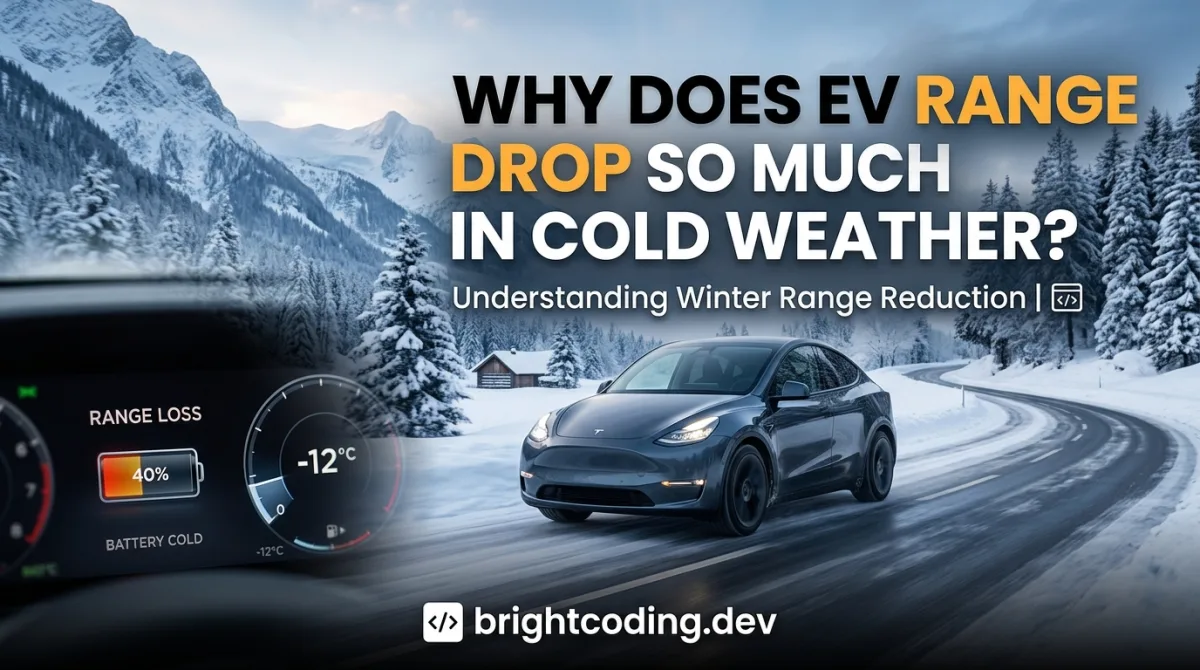
Winter does cut range, sometimes noticeably, because heating the cabin and warming the battery both cost energy. But "half" is the worst case in severe cold with a resistive heater and a heavy right foot.
Heat pumps, preconditioning while plugged in, and seat heating instead of cabin heating all claw range back. If you want to estimate your own winter figure, run your commute through the site's free EV calculators rather than trusting a headline.
7: There is nowhere to charge
There is somewhere to charge: your driveway, your workplace, the supermarket, the car park. What is often missing is a charger exactly where you want one at the exact moment you want it.
That is a planning problem, not a shortage. Check the charging apps for your regular routes before you buy, and be honest about whether you can charge at home. If you cannot, an EV is a harder sell and you should say so.
8: EV batteries cannot be recycled
They can, and the materials are valuable enough that recyclers want them. What is genuinely messy is the logistics: packs are heavy, varied and awkward to transport, so collection networks are still catching up.
The other half of the story is reuse. Retired car packs often go into stationary storage before recycling, which stretches their life by years. The myth assumes a landfill, and that is not where these end up.
9: You will be stranded with a dead battery
You will not, if you charge like a sane person. Running an EV to zero is far less common than running a petrol car to empty, because most owners plug in at home and wake up full.
The real risk is the long trip with optimistic planning. Charge earlier than you think you need to, keep a buffer, and treat the last 20 percent as emergency range rather than usable range.
10: EVs are only for short city trips
City driving suits them, but so do long commutes and regional runs. The car does not care about distance. The driver cares about charging stops.
If your route has reliable fast charging, a long trip is a coffee break, not an adventure. If it does not, plan around it. That is the whole calculation.
11: EVs catch fire far more often than petrol cars
Battery fires are dramatic and get filmed, which is why they feel common. Petrol fires are common and boring, so nobody posts them.
That said, EV fires are harder to extinguish and can reignite, which is why firefighters treat them differently. Do not charge a damaged car, do not ignore a swollen pack, and let a professional handle anything that smells hot or looks deformed.
12: Maintenance is free
No oil changes, no spark plugs, no exhaust. But tyres wear faster because of the weight and torque, brakes still need attention even if regenerative braking saves them, and cabin filters, coolant and suspension all exist.
Budget for tyres especially. That is the line item that surprises new owners most.
13: Every fault means a new battery
A car that will not charge, or shows a range that dropped overnight, usually has a simpler cause: a 12V battery on its way out, a charging fault, a software glitch. The 12V battery causes more EV headaches than the traction pack ever will.
Before you panic, work through the EV troubleshooting guides and the diagnostic and fuse guides. Anything involving the high-voltage traction battery is a stop-and-call-a-technician job, full stop. Low-voltage checks are fair game for a careful owner.
14: Software updates are just marketing
Over-the-air updates genuinely change cars: charging curves, range estimates, thermal behaviour, even acceleration. Some are cosmetic. Some are worth having.
The mistake is assuming every update helps. Read the release notes, and if an update introduces a fault, report it. You are not imagining it.
15: EVs are only for wealthy buyers
New EVs are expensive. Used ones less so, and running costs are usually lower per kilometre, especially if you charge at home on a cheap overnight tariff.
The honest version: the maths works if you can charge cheaply and drive enough. If you cannot charge at home and drive 5,000 km a year, the sums get ugly. Run them before you commit.
Do this instead
- Charge at home whenever you can, and charge slowly overnight.
- Keep the battery between roughly 20 and 80 percent for daily use, and save 100 percent for trips.
- Precondition in winter while still plugged in.
- Check state of health before buying any used EV.
- Plan long trips with a buffer, and charge earlier than feels necessary.
- Budget for tyres, not just electricity.
- Treat any high-voltage fault as a professional job.
- Verify specs from the manufacturer or a proper directory, not from a comment section.
FAQ
Do EVs really lose range in cold weather? Yes, and the size of the loss depends on the car, the temperature and how you heat the cabin. Expect a noticeable drop in winter and plan charging stops accordingly.
Is it bad to charge to 100 percent every day? For most cars, holding a high state of charge for long periods is worse than charging to 100 percent occasionally before a trip. Daily charging to around 80 percent is the gentler habit.
Can I service an EV myself? Low-voltage work, tyres, brakes, filters and the 12V battery are within reach for a careful owner. Anything touching the high-voltage system requires training and the right equipment. Do not improvise.
Are used EV batteries a gamble? Not if you check them. Ask for a state of health report, test drive enough to see the range estimate behave, and walk away from anything with an unexplained warning light.
Do I need a home charger? It makes ownership far easier, but it is not mandatory. If you cannot charge where you park, work out whether public charging fits your routine before you buy.
Myths about EVs mostly come from old cars and old habits, so check the real numbers for the model you are considering and let your own driving decide.