The Real Price Tag: It's Not Just the Sticker
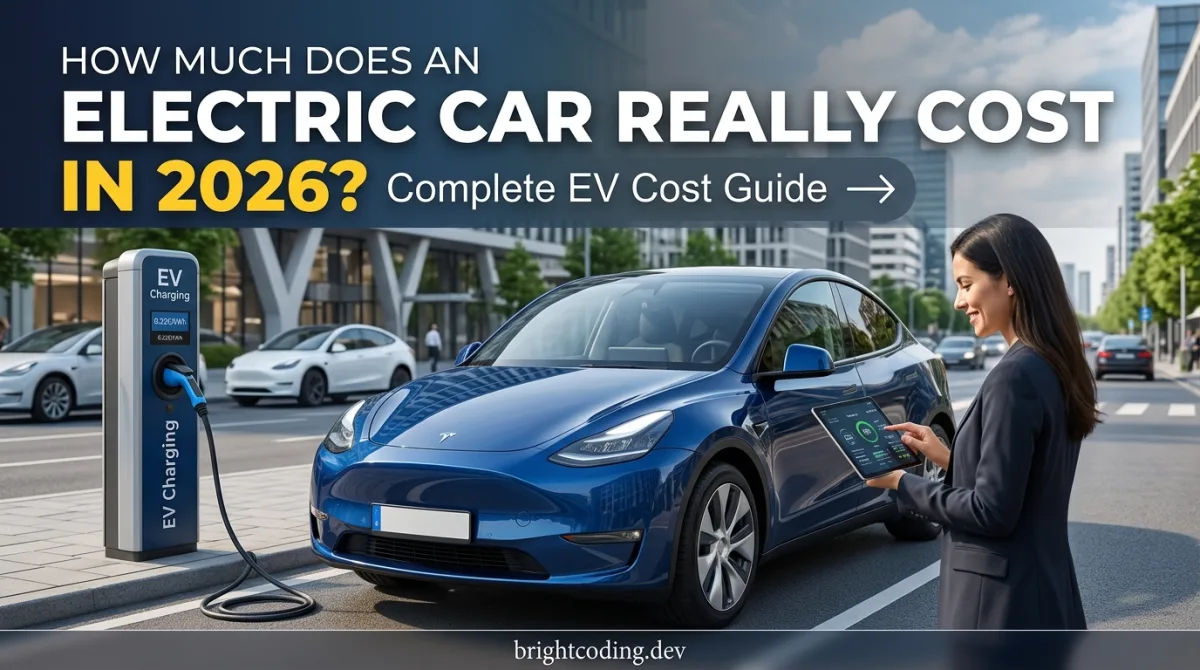
If you're thinking about buying an electric vehicle in 2026, you've probably asked yourself: "How much does an EV really cost?" The answer isn't as simple as the window sticker at the dealership. While some headlines scream about $400,000 luxury EVs, the reality on the ground is far more accessible - and far more complicated.
In 2026, the cheapest new electric car starts at just $27,600 (the Chevrolet Bolt), while the Nissan LEAF S+ offers over 300 miles of range for under $30,000. But on the flip side, insurance can run 63% higher than a gas car, and public fast charging costs up to three times more than charging at home.
So what's the real number? Let's break it down piece by piece.
1. Upfront Purchase Price: New EVs in 2026
The EV market in 2026 has something for nearly every budget. Here's how the landscape looks:
Budget EVs (Under $35,000)
| Model | Starting MSRP | Range | Price Per Mile |
|---|---|---|---|
| Chevrolet Bolt FWD | $27,600 | 262 mi | $105 |
| Nissan LEAF S+ FWD | $29,990 | 303 mi | $99 |
| Chevrolet Equinox EV FWD | $34,995 | 319 mi | $110 |
| Subaru Uncharted FWD | $34,995 | 308 mi | $114 |
These aren't stripped-down city cars, either. The Nissan LEAF S+ delivers 303 miles of EPA-rated range - enough for a week of commuting on a single charge - for under $30,000. That's a price-per-mile-of-range figure that beats many gas-powered competitors.
Mid-Range EVs ($35,000 – $60,000)
This is where most buyers shop in 2026. The Tesla Model 3 starts at $42,490 with 363 miles of range, while the Model Y Long Range comes in at $44,990 with 357 miles. Korean brands remain competitive: the Hyundai IONIQ 5 ($41,000) and Kia EV6 ($41,200) both offer over 315 miles of range with ultra-fast charging capability.
Luxury & Performance EVs ($60,000+)
At the top end, the BMW iX xDrive60 starts near $88,500, the Rivian R1T pickup at $83,900, and the Lucid Air Grand Touring XR commands $114,900 for a staggering 512 miles of range.
Used EVs: The Budget Secret
Don't overlook the used market. A used Tesla Model 3, Hyundai Kona Electric, or Chevy Bolt can slash your upfront cost by 30–50% while still offering plenty of range for daily driving. Just verify battery health, warranty status, and recall completion before buying.
2. The Hidden Costs Nobody Talks About
Insurance: The EV Tax You Didn't Expect
Here's the catch: EVs cost significantly more to insure than gas cars. The average full-coverage policy for an electric vehicle runs $3,281 per year (about $273/month), compared to roughly $2,000 for a comparable gas vehicle.
Why? Higher repair costs, proprietary parts, specialized labor, and longer repair times all drive premiums up. Luxury EVs hurt the most - the Audi SQ8 e-tron can cost over $10,000/year to insure, while a Tesla Model 3 runs about $3,268.
The good news: Some mainstream EVs like the Chevy Silverado EV, Hyundai Ioniq 5, and Subaru Solterra can be insured for under $2,000/year - competitive with gas cars.
Battery Replacement: Should You Panic?
A full EV battery replacement in 2026 typically costs between $7,000 and $25,000, depending on the vehicle. A Tesla Model 3 pack runs £6,000–£10,000 (approx. $7,500–$12,500), while a BMW iX can hit £12,000–£18,000 (approx. $15,000–$22,500).
But here's the reality check: Full replacements are rare. Most EVs come with 8-year/100,000-mile battery warranties, and module-level repairs can often fix issues for a fraction of the cost. For the average driver, battery replacement is a non-issue during the ownership period.
Charging Costs: Home vs. Public
This is where EVs either save you a fortune - or don't.
| Charging Type | Cost per kWh | Cost to Charge 72 kWh | Annual Cost (13,500 mi) |
|---|---|---|---|
| Home (Level 2) | $0.18 | ~$13 | $694 |
| Public Level 2 | $0.25 | ~$18 | $964 |
| DC Fast Charging | $0.53 | ~$38 | $2,043 |
The math is simple: If you can charge at home, you'll pay about $0.05 per mile - roughly one-third the cost of gasoline at current prices. But if you rely on public DC fast charging, that gap narrows dramatically. In fact, heavy reliance on fast charging can erase much of your fuel savings.
Pro tip: Many utilities offer time-of-use rates with off-peak discounts of 30–50%. Charging overnight can drop your effective rate significantly. Some Texas plans even offer free nighttime charging.
Home Charger Installation
A Level 2 home charger (240V) is almost essential for EV ownership. Installation costs vary wildly by state - from as low as $1,387 in Nevada to $3,585 in Wyoming. Many utilities offer rebates of $250–$1,300 to offset this cost.
3. Maintenance: Where EVs Actually Save You Money
This is the bright spot. EVs have dramatically fewer moving parts - no oil changes, no timing belts, no transmission fluid, no spark plugs, and no exhaust system. Regenerative braking means brake pads last far longer because the motor does most of the slowing.
According to Atlas Public Policy, EV maintenance savings run about 39% compared to gas vehicles. AAA and Consumer Reports put EV maintenance at $300–$500 per year versus $900–$1,500 for a comparable gasoline car. That's roughly $700 per year in your pocket - about $7,000 over a typical ownership period.
4. Total Cost of Ownership: The 7-Year Reality Check
Sticker price is misleading. What matters is what you actually spend over the years you own the car. A 2025 Atlas Public Policy analysis compared five best-selling gas models against their closest electric counterparts over seven years. The results?
| Comparison | Segment | 7-Year TCO Winner |
|---|---|---|
| Chevy Equinox EV vs. Gas Equinox | Compact SUV | EV 20% cheaper |
| Tesla Model Y vs. Jeep Grand Cherokee | Mid-size SUV | EV 15% cheaper |
| Hyundai Ioniq 6 vs. Toyota Camry | Sedan | EV 7% cheaper |
| Nissan Leaf vs. Toyota Corolla | Compact sedan | EV 5% cheaper |
| Ford F-150 Lightning vs. Gas F-150 | Pickup | Gas 4% cheaper |
The verdict: In four out of five popular segments, the EV is cheaper to own over seven years - even without the federal tax credit. The savings are largest in SUVs (15–20%) and narrowest in compact sedans and pickups.
Even without federal incentives, fuel and maintenance savings are real and substantial. The average driver saves about $1,100 per year on fuel alone, and over $1,300 annually when maintenance is included.
5. Tax Credits & Incentives in 2026: What's Still Available?
Federal Level: Mostly Gone
The big federal $7,500 clean vehicle tax credit? It's largely history for new purchases after September 30, 2025. Unless you had a binding written contract in place before that date, don't count on it.
State & Local Incentives: Still Strong
Many states still offer substantial rebates:
- Colorado: Up to $3,250 for EVs under $35,000 MSRP; $750 base credit for others.
- Maine: Up to $8,000 for low-income buyers of new EVs (through Sept 30, 2026); $6,000 for moderate-income.
- New Jersey: Up to $4,000 for income-qualified buyers.
- Oregon: Up to $7,500 for new EVs under $50,000.
- California: HOV lane access regardless of occupancy, plus various utility rebates.
Important: Many states also charge annual EV registration fees to offset lost gas tax revenue. These range from $50 to $225 per year depending on your state.
6. The Bottom Line: Is an EV Worth It in 2026?
Yes - for most drivers who can charge at home.
If you have access to overnight home charging, drive an average of 12,000 miles per year, and buy in the compact SUV or mid-size segments, an EV will almost certainly save you money over a 5–7 year ownership period. The combination of cheaper "fuel" ($0.05/mile vs. $0.13–$0.15/mile for gas), lower maintenance (~$700/year savings), and competitive upfront pricing in the $30k–$45k range makes the financial case compelling.
However, an EV might NOT be worth it if:
- You rely primarily on public DC fast charging (erases fuel savings)
- You need a full-size pickup (the one segment where gas still wins narrowly on TCO)
- You live in a state with sky-high electricity rates (Hawaii at $0.47/kWh, we're looking at you)
- You can't install home charging and public Level 2 isn't convenient
Frequently Asked Questions
What's the cheapest new EV with 300+ miles of range in 2026? The Nissan LEAF S+ at $29,990 with 303 miles of range holds this title.
How much does it cost to charge an EV per month? At the national average of 18¢/kWh and 1,000 miles/month, expect $50–$80/month for home charging. Public fast charging could run $150–$300/month.
Do EVs really save money without the federal tax credit? Yes, in most segments. The Chevy Equinox EV and Tesla Model Y still beat their gas counterparts on total cost of ownership without any federal credit, thanks to fuel and maintenance savings.
Will I really need to replace my EV battery? Unlikely during normal ownership. Most batteries are warrantied for 8 years/100,000 miles, and degradation is typically gradual. Full replacements are rare and often covered.
Final Verdict
In 2026, the electric car isn't just an environmental statement - it's increasingly a smart financial move. With new EVs starting under $28,000, home charging costing a fraction of gasoline, and maintenance savings of roughly $700/year, the total cost of ownership story favors electricity in most vehicle segments.
The key is honest math: factor in your local electricity rates, insurance quotes for the specific model you want, your ability to charge at home, and available state incentives. Do that, and you'll know exactly what an electric car really costs you.