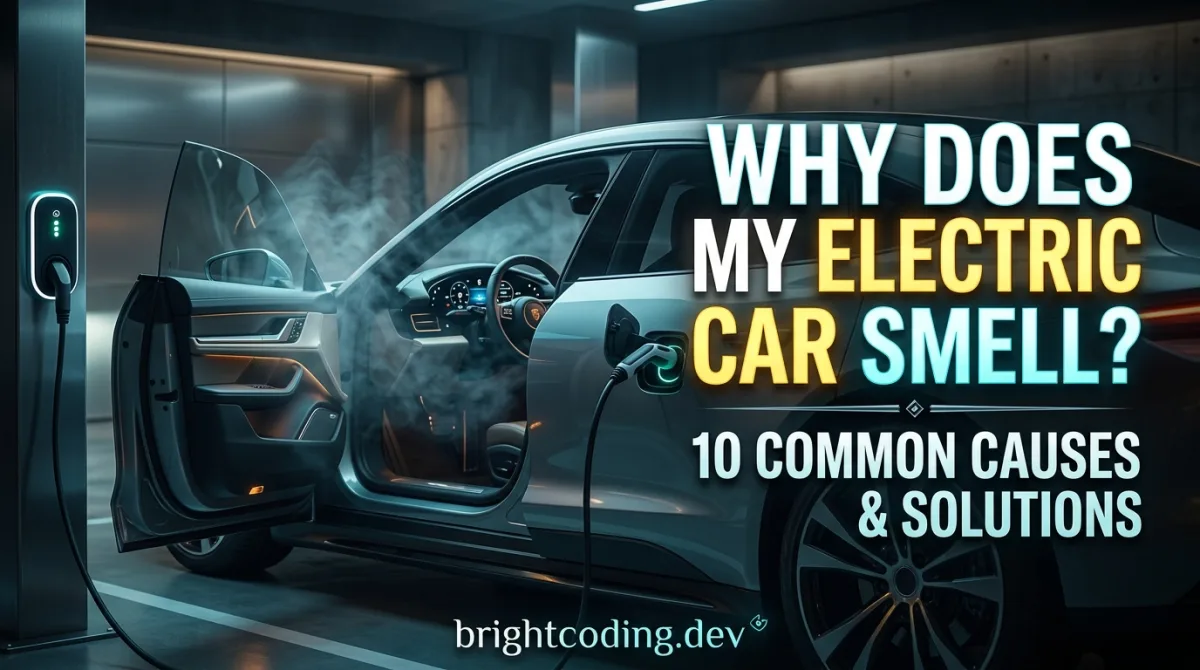
You park your electric car in the garage, walk past the front, and something smells off. Maybe it is sweet, maybe it is like burning rubber, maybe it is just a weird chemical tang you cannot place. You bought an EV partly because it was supposed to be simpler and cleaner, so a strange smell is unsettling.
Here is the reassuring part: most EV smells have a small number of causes, and only a couple of them are genuinely urgent. This guide walks through the 10 smells owners report most often, what each one usually means, and what you can safely check yourself before you call anyone.
One rule before we start, and it matters more than anything else in this article. A 12V battery, cabin filter and wiper area are fair game for a careful owner. The high-voltage traction battery, its cables and the orange wiring under the car are not. If a smell is coming from the pack area, stop reading the DIY sections and book a professional.
The Problem: an EV should smell like almost nothing
A healthy electric car has no exhaust, no fuel, and no hot oil. The cabin should smell like whatever you last spilled in it, nothing more. So when a smell appears, it usually points to one of three systems: the cabin climate system, the brakes and tyres, or the battery and electronics.
The mistake most owners make is guessing. They spray air freshener over a sweet smell, or they assume a burning smell is "just new car stuff" for weeks. Both can hide a real fault. The second common mistake is the opposite: panicking over a smell that is completely normal, like the metallic tang from fresh brake pads or the plasticky whiff from a brand-new interior.
Your job is not to diagnose everything. It is to sort the smell into a category fast, because that tells you whether to clean a filter, book a service, or park the car outside and call for help.
Why It Happens: your EV has fewer smells, but each one means more
A petrol car masks half its problems with exhaust and engine heat. An EV has no such cover, so every odour stands out.
Air that enters the cabin passes through a filter that traps dust and pollen. Over months it also traps moisture, which grows mould and bacteria. That is your musty smell. The air conditioning system has its own drain tube; when it clogs, water pools and starts to smell sour.
Separately, the car has a thermal management system that keeps the battery and motor at the right temperature. It circulates coolant through sealed loops. If a hose or fitting weeps, you may catch a faint sweet smell, similar to the coolant leaks you would recognise from a combustion car.
Then there is heat. Brakes, tyres and electrical joints all produce a hot, acrid smell when something is wrong. The trick is telling "hot because it is working hard" from "hot because it is failing." Smell plus context does that job: a burning smell right after a hard stop on a long descent is different from one that appears while the car sits parked.
The 10 Common Smells and What They Mean
1. Musty, damp, like wet laundry
This is almost always the cabin air filter and the evaporator behind it. Moisture plus trapped organic matter equals mould. It is the single most common EV cabin smell and the easiest to fix. Replace the cabin filter, and if the smell lingers, have the evaporator cleaned. A filter typically costs a modest amount and many are DIY-replaceable in 15-30 minutes.
2. Sour, vinegary, worse when you first start the AC
A clogged AC condensate drain. Water that should drip under the car instead sits in the housing and goes stale. Clearing the drain tube usually solves it. If water is pooling in the passenger footwell, get it seen quickly, because that can damage electronics.
3. Sweet, syrupy, slightly like maple
This points to coolant. EVs use coolant for the battery and motor loops. A faint whiff after a drive can mean a small weep at a hose or clamp. Do not top up random fluids and hope. Coolant loss is a service item, and on the high-voltage side it needs a qualified technician.
4. Burning rubber
Usually a belt, a tyre rubbing, or a plastic bag you picked up and melted onto the exhaust-free underbody or a hot component. Check for anything wrapped around a wheel or hanging under the car. If nothing is visible and the smell returns, stop driving and get it inspected.
5. Acrid, electrical, like hot plastic or ozone
This is the one to take seriously. It can come from a failing 12V accessory circuit, a chafed cable, or a failing component. If you also see warning lights, smoke, or a hot smell near the charge port, stop charging, unplug if it is safe, park outside, and call a professional. Never open high-voltage orange cables or the battery pack.
6. Rotten eggs, sulphur
In a petrol car this means a failing catalytic converter. In an EV, a sulphur smell is unusual and often comes from the 12V lead-acid battery being overcharged or failing, or from the environment around you. Have the 12V battery tested. It is a cheap check and a common culprit.
7. Sharp, chemical, like nail polish remover
Often a solvent or adhesive smell from new trim, a recent repair, or a plastic protective film still heating up. It usually fades within days to a couple of weeks. If it persists or gives you headaches, ventilate and get the source checked.
8. Hot brakes, like burnt toast and metal
Regenerative braking means your friction brakes do less work, so they can seize or glaze from underuse. A dragging caliper smells hot and metallic, and the wheel may feel warm. This is a genuine safety item. Get the brakes inspected.
9. Fuel-like or exhaust-like smell
If you smell petrol or diesel in an EV, that is not your car. It is a nearby vehicle, a lawnmower, or spilled fuel in the garage. Worth ruling out before you panic, and worth noting that a strong fuel smell in an enclosed space is a fire risk regardless of what you drive.
10. Sewage or rotten smell that comes and goes
Usually water sitting in the AC drain, a damp boot floor after a leak, or debris in the drainage channels around the frunk and windscreen. Clear the drains, dry the area, and check for blocked scuttle drains under the wiper cowl.
If you want to narrow a fault down properly before you book anything, our EV troubleshooting guides walk through symptoms step by step, and the diagnostic and fuse guides help you trace which circuit is involved.
The Solutions: from a five-minute check to a dealer visit
Replace the cabin filter. What it is: a paper or carbon filter behind the glovebox or under the bonnet. How it works: it stops particles and moisture reaching the cabin. Advantage: cheap, fast, fixes most musty smells. Disadvantage: it will not fix a coolant or electrical smell. When it makes sense: any damp, musty or sour odour. Cost: low, and often DIY.
Clean the AC system and drain. What it is: clearing the condensate tube and treating the evaporator. Advantage: kills the source, not the symptom. Disadvantage: needs the right access, and some cars hide the drain well. When it makes sense: sour smell that worsens when the AC starts.
Inspect the 12V battery and charging system. What it is: a voltage and load test. Advantage: rules out the most common electrical smell source. Disadvantage: a tired battery can test fine one day and fail the next. When it makes sense: sulphur or acrid smells, or slow starting of the car's computers.
Brake and underbody inspection. What it is: checking for dragging calipers, seized pads and debris. Advantage: catches a safety issue early. Disadvantage: needs a lift or ramps. When it makes sense: hot metallic smells or a wheel that feels warmer than the others.
Professional thermal management check. What it is: pressure-testing coolant loops and inspecting high-voltage components. Advantage: finds small leaks and cable faults before they grow. Disadvantage: dealer or specialist only, and it costs more. When it makes sense: any sweet coolant smell, any acrid smell near the pack or charge port, or any smell you cannot place.
Handy context: what a smell costs you over time depends on how much you drive and charge. Our free EV calculators and tools help you put running costs in perspective, which is useful when you are deciding whether to fix or trade.
The Best Choice for Your Situation
| Smell | Most likely cause | DIY or pro? | Urgency |
|---|---|---|---|
| Musty, damp | Cabin filter, mould | DIY | Low |
| Sour, vinegary | AC drain clog | DIY to moderate | Low |
| Sweet, syrupy | Coolant weep | Pro | Medium |
| Burning rubber | Belt, tyre, debris | Check, then pro | Medium |
| Acrid, electrical | Wiring or component fault | Pro, stop driving | High |
| Rotten eggs | 12V battery or environment | Test 12V first | Medium |
| Chemical, solvent | New trim or repair | Ventilate, monitor | Low |
| Hot brakes | Dragging caliper | Pro | High |
| Fuel-like | Nearby vehicle or spill | Rule out | Low |
| Sewage, intermittent | Drains, damp floor | DIY | Low |
Verdict: if the smell is damp, musty or sour, start with the cabin filter and AC drain. That covers most owners. If it is sweet, acrid, or comes with warning lights, treat it as a professional job and stop driving or charging until it is checked. There is no single best fix here because the right answer depends entirely on which smell you have, and that is the honest truth.
Step-by-Step Action Plan
- Note when it happens. Cold start, after charging, after braking, or only when parked? Timing narrows the cause faster than anything else.
- Check the easy stuff. Cabin filter, AC drain, boot floor, wheel wells, and anything wrapped around a wheel.
- Test the 12V battery. A cheap multimeter or a parts shop test rules out a very common culprit.
- Smell the charge port area. If the acrid smell is strongest there, stop charging and get it inspected.
- Park outside if the smell is sharp or electrical. Do not leave a suspect car in an attached garage overnight.
- Book a professional for anything sweet, acrid or accompanied by warnings. Say exactly what you smelled and when.
- Fix the source, not the smell. Air fresheners and ozone treatments only mask a problem that will return.
Common Mistakes to Avoid
- Masking the smell with air freshener. Fix: find the source first, scent later.
- Ignoring a sweet coolant smell. Fix: book a thermal system check, small leaks become big ones.
- Assuming all smells are the battery. Fix: rule out the 12V system, brakes and cabin first.
- Continuing to charge with an acrid smell at the port. Fix: stop, unplug safely, call a pro.
- Opening high-voltage orange cables or the pack. Fix: never. That is qualified-technician work only.
- Replacing the cabin filter but skipping the evaporator clean. Fix: do both if the musty smell returns.
- Trusting a "new car smell" for weeks. Fix: if it is chemical and persistent, get it checked.
Expert Takeaway
The single most important lesson is this: in an EV, a smell is a clue about which system to check, not a verdict. Damp smells are almost always cabin air. Sweet smells are coolant. Acrid smells are electrical and deserve urgency. Learn those three buckets and you will handle 90% of what your nose throws at you, safely and without wasting money.
FAQ
Why does my electric car smell musty when I turn on the AC? Moisture and organic matter have built up on the cabin filter and evaporator, growing mould. Replace the cabin filter and clean the AC system and drain. It is the most common EV cabin smell and usually cheap to fix.
Is a burning smell from an electric car dangerous? It can be. A faint hot smell after hard braking is often normal, but an acrid electrical smell, smoke, or a smell near the charge port means stop driving and charging and get it inspected. Do not open high-voltage components yourself.
Why does my EV smell sweet? A sweet, syrupy smell usually means coolant is weeping from a hose or fitting in the thermal management system. It is not a DIY fix on the high-voltage side, so book a qualified technician.
Can a bad 12V battery cause a smell in an electric car? Yes. A failing or overcharged 12V battery can give off a sulphur or acrid smell. Have it tested, since it is a cheap check and a frequent culprit behind odd electrical odours.
Should I worry about a chemical smell in a new electric car? Usually not. New trim, adhesives and protective films can off-gas for days to a couple of weeks. Ventilate the cabin. If the smell persists or causes headaches, have the source checked.
Still comparing models or weighing a fix against a change? The EV model directory and our head-to-head EV comparisons are a good next stop, and the EV blog covers more ownership questions like this one.