Replacing an EV battery is the single biggest repair bill most owners will ever face, and the numbers floating around online range from a few hundred dollars to more than a new economy car. This article answers the questions people actually search for: what a replacement costs, whether it is ever worth it, what warranty covers, how it differs between a car and a scooter or e-bike, and how to tell whether you need a full pack or just one bad module. Where pricing is uncertain, I say so and tell you to verify with a local quote, because battery prices move fast and vary enormously by region.
Quick answers
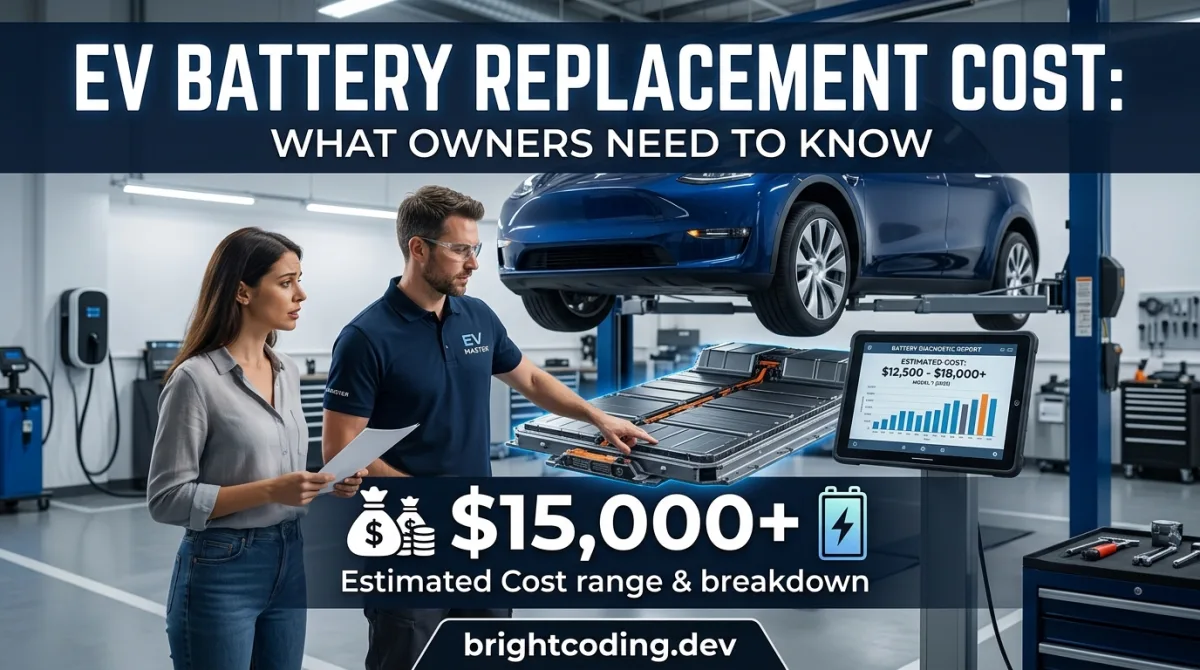
- How much does EV battery replacement cost? For a full car pack, expect roughly $4,000 to $20,000 or more depending on capacity and model; small e-bike and scooter packs usually run $200 to $1,200.
- Does the warranty cover it? Most EV makers cover the traction battery for 8 years or around 100,000 miles (often longer in some regions), but only if capacity drops below a stated threshold, typically 70%.
- Can you replace just part of the battery? Sometimes. A failed module or cell group can be swapped by a specialist, which is far cheaper than a whole pack, but not every pack is built to be serviced that way.
- Is it worth replacing an EV battery? It depends on the car's value. If the pack costs more than the vehicle is worth, repair rarely makes financial sense.
- Do EV batteries always need replacing eventually? No. Most outlast the car. Degradation is gradual, and many packs still hold usable range well past 150,000 miles.
How much does EV battery replacement cost?
Let's separate the categories, because lumping a Nissan Leaf and a cheap e-bike together is how bad numbers spread.
For a full-size electric car, the pack is the most expensive component. Prices depend on chemistry, capacity and whether you buy new, refurbished or salvaged. As a cautious range, a new pack from a dealer often lands somewhere between $4,000 and $20,000, and premium long-range models can exceed that. A refurbished pack or a salvaged one can cut that substantially, sometimes by half or more, but you take on unknown history.
For electric motorcycles and mopeds, packs are smaller. A replacement might run from a few hundred dollars up to a couple thousand for a high-capacity model.
For e-bikes and scooters, you are typically looking at $200 to $1,200 for a quality replacement pack. Cheap no-name batteries exist for less, and I would treat those with suspicion: fire risk is real, and the savings are not worth it.
These are ballparks, not quotes. Labor, shipping of a heavy pack, and disposal fees add on top. Always get a written estimate for your specific model.
Does the warranty cover a replacement?
Many people assume the warranty replaces any battery that feels tired. It usually does not work that way.
Most car makers warranty the traction battery for 8 years or about 100,000 miles, whichever comes first, and some offer longer coverage. The catch is the trigger: the pack typically has to fall below a capacity threshold, often around 70% of its original usable capacity, verified by the dealer. Gradual range loss that stops at 80% is normal aging, not a warranty claim.
A few practical points:
- Keep your service records. Warranty disputes often hinge on documentation.
- The threshold and terms differ by brand and country, so read your own booklet rather than trusting a forum post.
- E-bike and scooter warranties are much shorter, often 1 to 2 years on the battery, so check before you buy.
If you are shopping and warranty length matters to you, it is worth comparing models side by side. Our head-to-head EV comparisons let you line up battery warranty and capacity across models before you commit.
Can you replace part of the battery instead of the whole pack?
Yes, sometimes, and this is where real money is saved.
A traction pack is built from modules, and each module holds many cells. When one module or cell group fails, a specialist can sometimes replace just that section. The cost can be a fraction of a full pack. The catch: not every pack is designed to be opened and serviced, and some makers seal them or refuse to sell individual modules.
This kind of work needs someone who knows high-voltage systems. It is not a DIY job. If a shop offers to open your pack, ask what training and insurance they have, and what warranty they give on the repair.
For smaller vehicles, module-level repair is more common. E-bike and scooter packs are sometimes rebuilt by specialists who replace failed cells and rebalance the pack. That can be cheaper than new, but only trust a reputable builder.
Is it worth replacing an EV battery?
Do the math on the car, not the battery.
If the replacement costs more than the vehicle is worth, it usually makes no financial sense. If the car is otherwise sound and the pack cost is a modest share of its value, replacement can buy you many more years. There is no universal rule; it comes down to your numbers.
Rough way to think about it:
- Get the pack quote.
- Get the current market value of your car in working condition.
- Compare. If the repair is a large fraction of the value, weigh that against buying something else.
For older EVs, a refurbished pack is often the sensible middle path. For newer ones still under warranty, a claim is usually the right first move.
How do you know if you actually need a new battery?
Often you do not. Range loss has many causes, and a full pack is rarely the first suspect.
Before anyone sells you a pack, rule out the cheap stuff:
- Charging issues. A faulty charger, cable or charge port can mimic battery problems.
- 12V auxiliary battery. A weak 12V battery causes bizarre faults on many EVs, and it is cheap to replace. This is low-voltage work a careful owner can do.
- Software and calibration. Sometimes the battery management system needs a reset or update.
- Bad connections or a blown fuse. Corrosion and blown fuses cause real symptoms.
If your car is throwing codes or acting strangely, start with our EV troubleshooting guides and the diagnostic and fuse guides before you assume the worst. A five-dollar fuse beats a five-thousand-dollar pack.
Safety line: anything involving the high-voltage traction battery is professional-only work. Do not open a traction pack, do not poke at orange cables, and stop if you are unsure. Low-voltage 12V checks are within reach for a careful owner; high-voltage is not.
Related questions owners ask next
How long do EV batteries actually last?
Longer than most people fear. Many packs still deliver usable range past 150,000 miles, and degradation is gradual rather than a sudden cliff. How you charge and where you park matter: frequent DC fast charging and extreme heat speed up aging, while gentle charging and a temperate climate slow it. Real-world results vary a lot by model and climate, so treat any single "lifespan" figure with caution.
Can you replace an EV battery with a bigger one?
Rarely a simple swap. Pack size, voltage, mounting and the battery management software are all matched to the vehicle. Some enthusiasts do capacity upgrades on specific models with specialist help, but it is not a plug-and-play job, and it can void warranties or fail inspection. If you want more range, buying a longer-range model is usually the cleaner route, and our EV model directory helps you compare real options.
Can you replace an e-bike or scooter battery yourself?
Usually yes, and it is far simpler than a car. Match the voltage, capacity, connector and physical size exactly, buy from a reputable brand, and never mix an old charger with a new pack unless the specs match. Battery fires are almost always cheap cells, mismatched chargers or physical damage, so do not cut corners here. If you want to estimate running costs after a swap, our free EV calculators and tools can help.
Bottom line
EV battery replacement is expensive, but it is rarely the first thing to blame and often avoidable through warranty claims, module-level repair or fixing a cheaper fault. Get a written quote, check your warranty threshold, and compare the repair against the car's value before deciding. For small vehicles, a quality replacement pack is a normal, affordable maintenance cost. For cars, treat a full pack as a major decision, not a routine one.