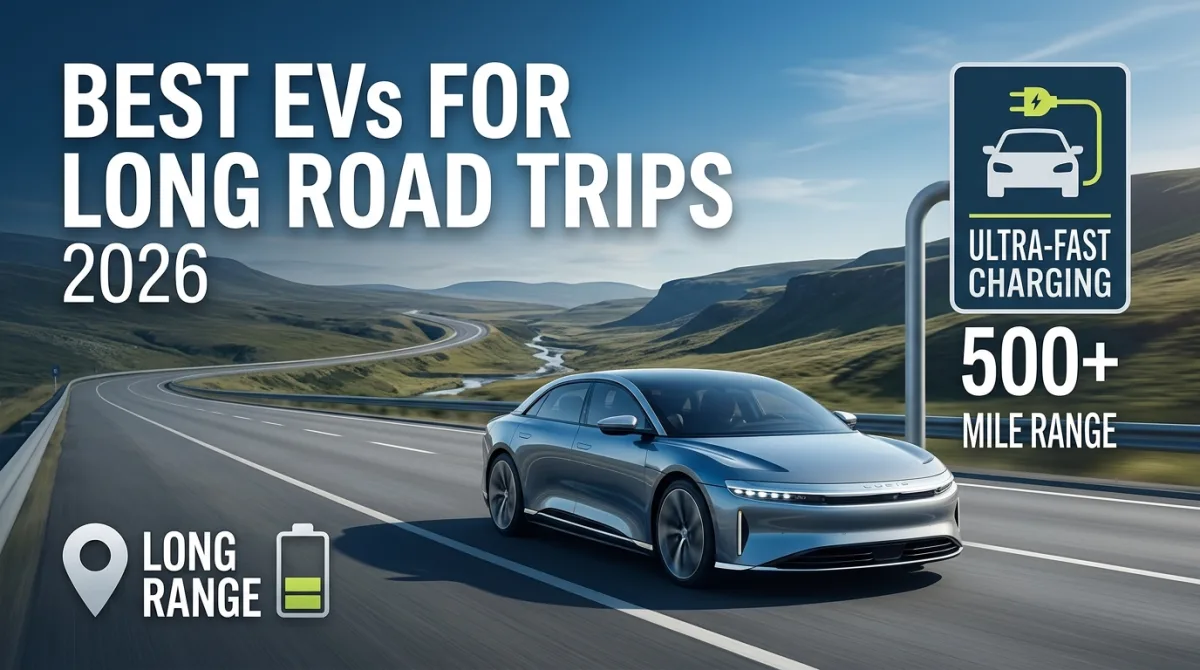
A good road-trip EV is about more than range. It's about how fast it recharges, how efficient it is on the highway, and how comfortable it is after 6 hours at the wheel. Range gets the headlines; charging speed wins the actual trip.
Here are the best EVs for long road trips in 2026, ranked by what makes a 500-mile day bearable.
The road-trip EV requirements
A great road-trip EV needs four things:
- Real highway range (not just the WLTP number) — 250+ miles at 70 mph
- Fast, sustained charging — 10→80% in under 25 minutes
- Charging network access — so you can actually use that speed
- Comfort — seats, noise, and driver assistance for long days
The best EVs for road trips in 2026
| Model | Real highway range | 10–80% time | Network advantage |
|---|---|---|---|
| Tesla Model 3 Long Range | ~330 mi | ~20 min | Supercharger (best) |
| Tesla Model Y Long Range | ~310 mi | ~22 min | Supercharger (best) |
| Hyundai Ioniq 6 | ~320 mi | ~18 min | Open networks, 350 kW |
| Kia EV6 Long Range | ~300 mi | ~18 min | Open networks, 350 kW |
| Porsche Taycan | ~300 mi | ~16 min | Fastest sustained curve |
| Hyundai Ioniq 5 | ~290 mi | ~18 min | Open networks, 350 kW |
| BMW i4 eDrive40 | ~290 mi | ~22 min | Good network + efficiency |
| Mercedes EQS | ~340 mi | ~22 min | Very efficient, comfy |
| Polestar 2 | ~280 mi | ~24 min | Good all-rounder |
| Volvo EX30 | ~230 mi | ~25 min | Budget road-tripper |
> Figures are indicative. Use the trip planner for real routing and the highway range calculator for your exact car.
The charging network factor (the hidden spec)
Here's what the spec sheets don't tell you:
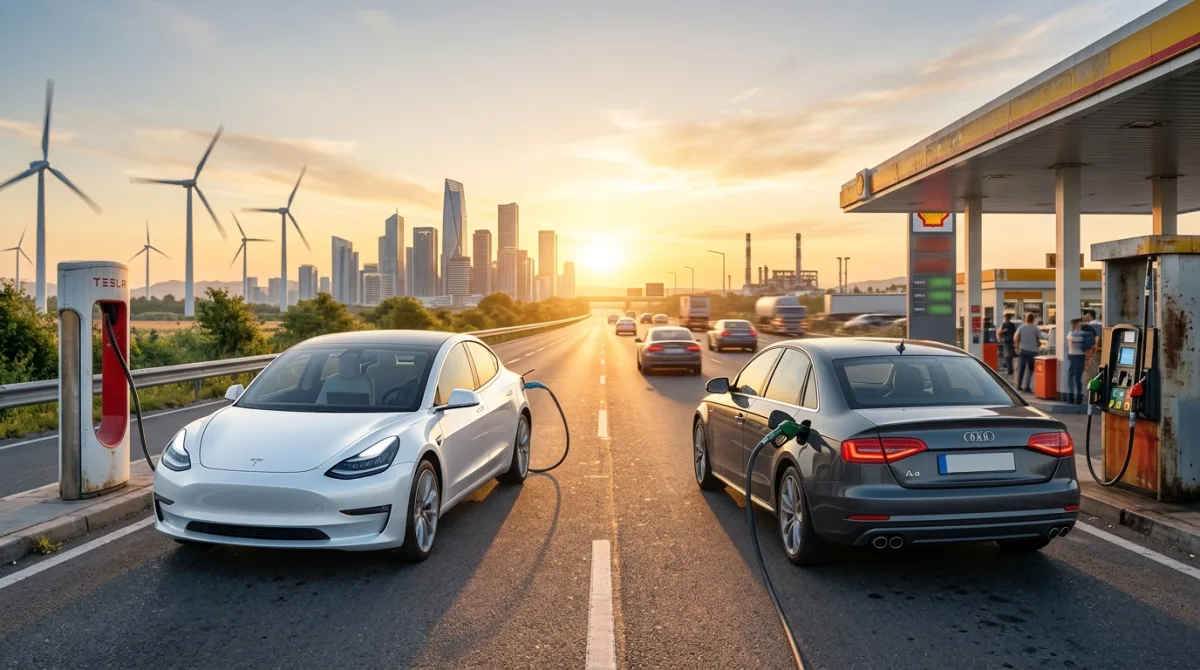
- Tesla: the Supercharger network is the single biggest road-trip advantage. Reliable, fast, strategically placed, and the car plans routes automatically. It just works.
- Everyone else: open networks (Ionity, Electrify America, Fastned, etc.) are improving fast — 350 kW chargers are now common on motorways, but reliability and pricing vary.
For a long-distance driver, Tesla's network advantage is genuinely worth thousands. If you road-trip monthly, it changes the recommendation.
Why efficiency matters on the highway
At 70 mph, efficiency is everything — it decides both range and charging time:
- Ioniq 6 / Model 3 LR: ~4.5 mi/kWh → 330 miles from a 77 kWh battery
- Most SUVs: ~3.2–3.6 mi/kWh → similar battery, 60 fewer miles
The most efficient EVs go further and recharge faster, because they consume energy slower. Check the real range calculator to see the difference at your driving speed.
The best road-trip picks by budget
| Budget | Best pick | Why |
|---|---|---|
| Under $35k | Hyundai Ioniq 6 | Efficiency + 350 kW charging |
| $35k–$45k | Tesla Model 3/Y | Supercharger network |
| $45k–$60k | Kia EV6 / BMW i4 | Speed, comfort, style |
| $60k+ | Porsche Taycan / Mercedes EQS | The effortless long-haulers |
Making any EV road-trip ready
- Plan with a charging-aware route — use the trip planner, not generic GPS
- Precondition before fast charging — set the charger in the car's nav to unlock full speed
- Charge 10→80%, never chase 100% (see how long charging takes)
- Charge at home overnight before leaving — start at 100% for free
- Use off-peak rates at destination chargers when possible
FAQ
What's the best EV for long-distance driving in 2026? The Tesla Model 3/Y for the network, the Hyundai Ioniq 6 for efficiency, and the Porsche Taycan for charging speed. All three make 500-mile days effortless.
Does range or charging speed matter more for road trips? Charging speed and network access — a 300-mile EV that fast-charges in 18 minutes beats a 400-mile EV that charges in 40.
Can you do a 1,000-mile EV road trip? Easily in 2026 — expect ~15 minutes of charging every 2–3 hours with a fast-charging EV. Plan stops with the trip planner and enjoy the ride.
The bottom line
The best road-trip EV in 2026 combines real highway range, fast charging, and network access. Tesla leads on the network, the Ioniq 6 leads on efficiency, and the Taycan on pure charging speed. Whichever you choose, plan your stops, precondition the battery, and charge 10→80 — and long-distance EV travel becomes the easiest part of ownership.