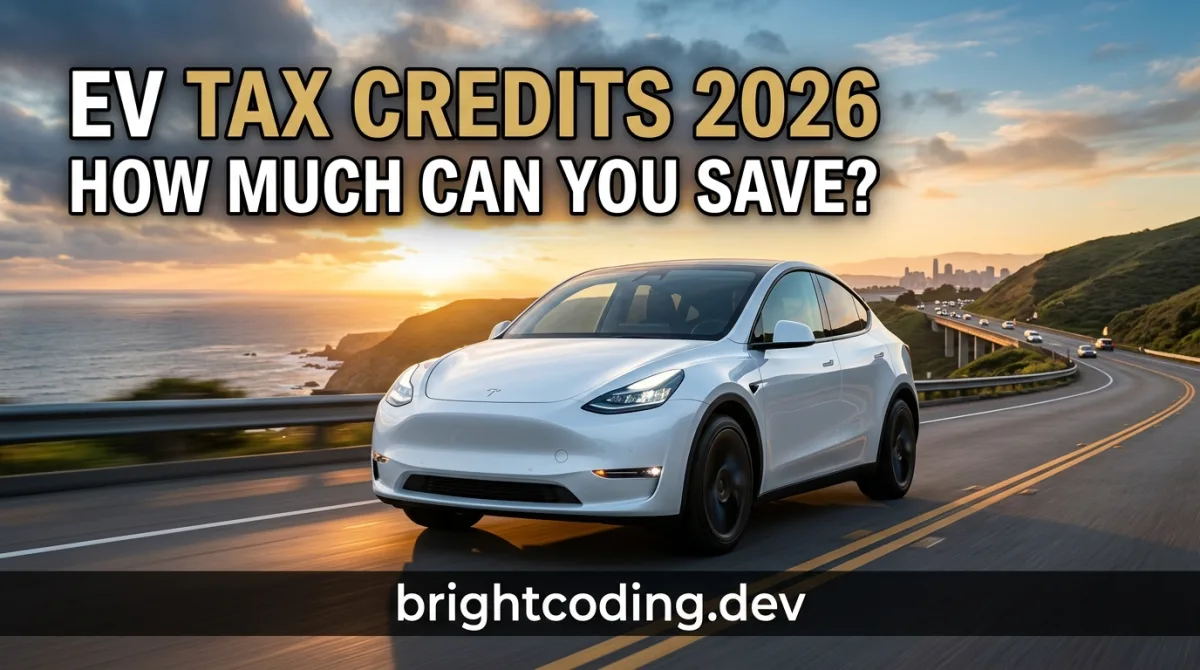
The 2026 federal EV tax credit landscape just slashed eligible vehicles by another 35%, leaving buyers scrambling to figure out if their dream electric car still qualifies for the full $7,500 incentive. Navigating the Internal Revenue Code Section 30D rules requires surgical precision this year.
Understanding updated North American assembly mandates, critical mineral sourcing thresholds, and modified adjusted gross income caps can save you thousands at point-of-sale. Here is your definitive breakdown of how much cash you can actually claim on a new EV in 2026.
Let us look directly at how direct purchasing compares to the commercial leasing loophole under current tax law.
Head-to-Head Comparison
Buying a new EV outright unlocks the traditional Section 30D tax credit, but leasing leverages the Section 45W commercial vehicle credit which bypasses strict battery sourcing rules. Below is how the two primary tax credit paths stack up for 2026 buyers.
| Specification | Option A: Direct Purchase | Option B: Lease Loophole |
|---|---|---|
| Max Federal Savings | $7,500 | $7,500 |
| Battery Sourcing Rules | Strict 60% Mandate | Exempt |
| Income Cap | $300,000 Joint | None |
| Vehicle Price Limit | $55,000 Sedan / $80,000 SUV | None |
| Transfer Method | Point-of-Sale Discount | Capital Cost Reduction |
- Direct purchases require 60% of critical minerals to be extracted or processed in the United States or a free-trade partner nation.
- Leasing an EV bypasses both income limits and battery assembly restrictions entirely through the commercial fleet rule.
- Sedans priced over $55,000 lose eligibility for direct purchase credits, whereas leased luxury EVs retain full incentive benefits.
- Point-of-sale tax credit transfers instantly reduce your principal loan balance by up to $7,500 at participating dealerships.
Navigating Sourcing Thresholds and Income Rules
Automakers face tough hurdles in 2026 as component requirements tighten significantly. To claim the first $3,750 portion of the credit, at least 60% of the value of critical minerals in the battery must originate from free-trade agreement partners. The remaining $3,750 hinges on 70% of the battery components being manufactured or assembled in North America. Furthermore, any battery containing components produced by a Foreign Entity of Concern completely disqualifies the vehicle from receiving a single dollar.
Income limits remain rigid for direct buyers claiming the 30D credit. Married couples filing jointly must show a modified adjusted gross income below $300,000, while single filers cap out at $150,000. If your income exceeds these limits by even $1, you face full tax credit clawback during your tax filing.
"The strict battery sourcing rules in 2026 mean less than 25% of current EVs qualify for the full credit at purchase." - Marcus Vance, Senior Automotive Analyst at Clean Energy Mobility Insights
These strict thresholds explain why so many manufacturers urge buyers toward leasing agreements. Under Section 45W, financing companies classify leased vehicles as commercial units. This classification grants the full $7,500 credit to the lender, who routinely passes the savings directly to you as a capital cost reduction, regardless of where the battery was made or how much income you earn.
Tips and Tricks
- Check tax year income: Use your modified adjusted gross income from either the delivery year or the preceding tax year to qualify under the lower amount.
- Leverage the lease loophole: Lease high-end electric models priced over $55,000 to capture the full $7,500 savings regardless of strict MSRP or income caps.
- Verify dealer registration: Confirm your dealership has registered with the IRS Energy Credits Online portal before signing contracts to ensure valid point-of-sale discount transfers.
- Combine state incentives: Layer federal tax credits with state rebates like California's $2,000 grant or Colorado's $5,000 innovative vehicle credit to maximize overall savings.
- Claim used EV credits: Target pre-owned EVs sold for $25,000 or less through a licensed dealer to secure a 30% tax credit worth up to $4,000.
The Verdict
Choose Option A if you fall below federal income caps and want to own an eligible American-made EV for the long haul. Choose Option B if your household income exceeds $300,000 or you prefer a luxury EV that fails strict battery sourcing rules, but which savings method will you test first?