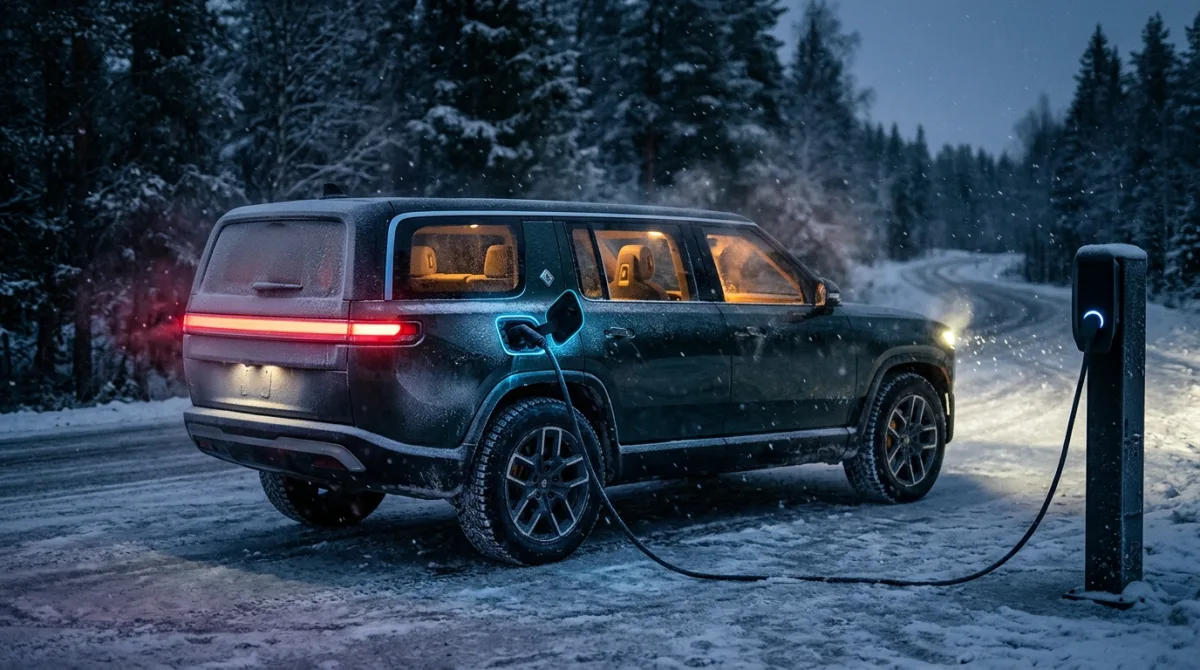
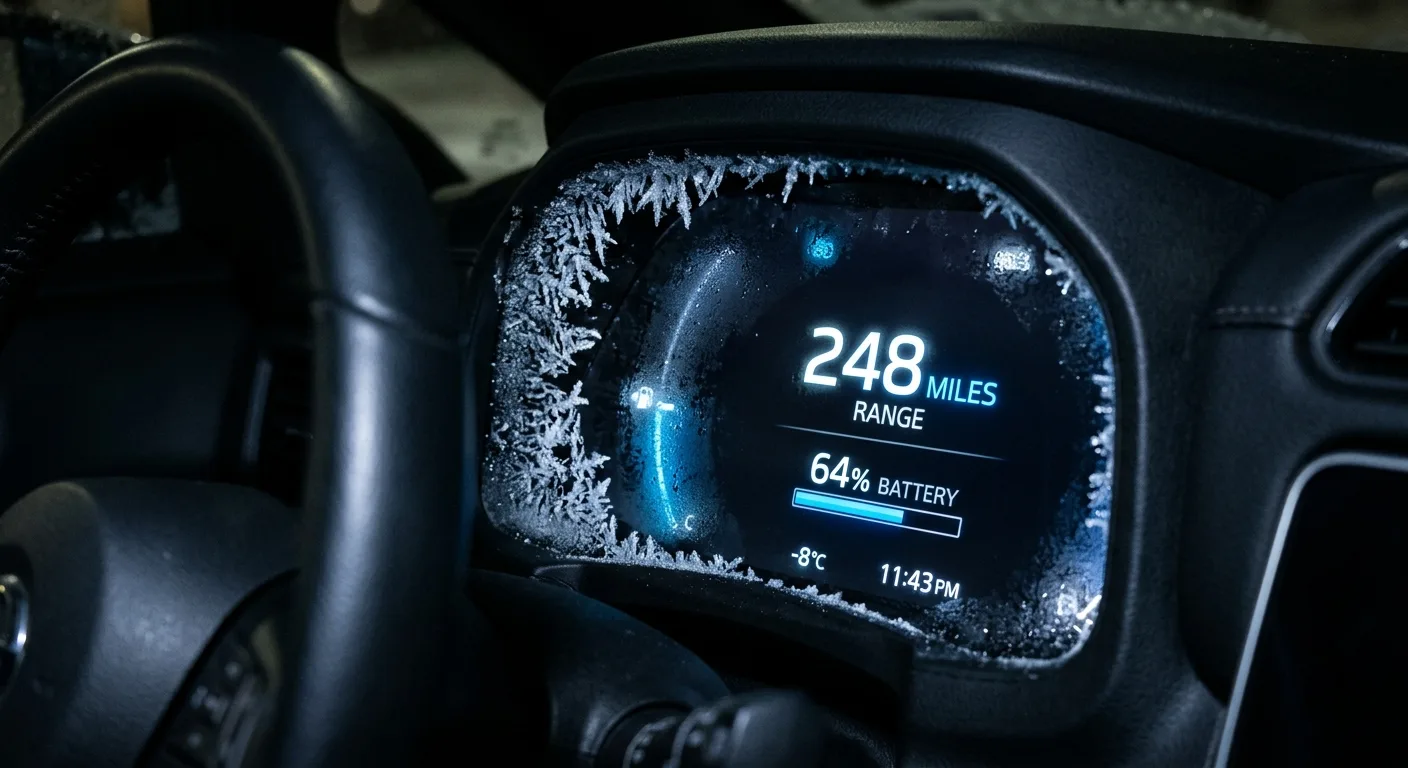
Cold mornings hit range hard. A car that shows 250 miles in July might show 180 in January, and the first time that happens you wonder if something broke. Usually nothing broke. Cold changes how the battery behaves, how the cabin heats, and how much energy the electronics pull. This guide covers ten practical ways to claw range back, and it also covers the sensor and control faults that masquerade as "cold weather range loss" so you can tell the difference before you start swapping parts.
If you are still choosing a car and want to know how models compare on winter efficiency, the head-to-head EV comparisons are worth a look before you buy.
Symptom: what this fault, code or blown fuse typically presents as
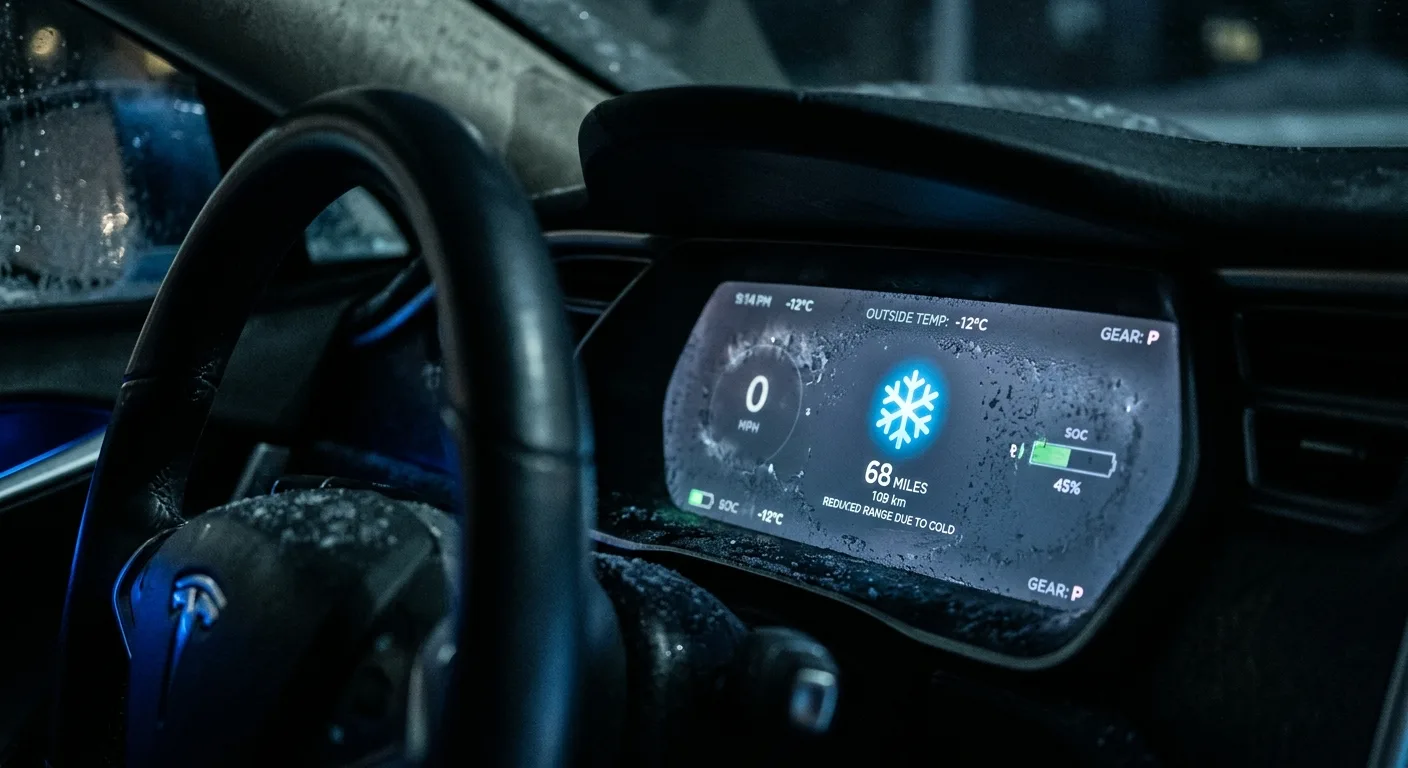
Before the tips, the diagnostic angle. Genuine cold-weather range loss is gradual: it tracks temperature, it recovers as the pack warms, and it comes back every winter.
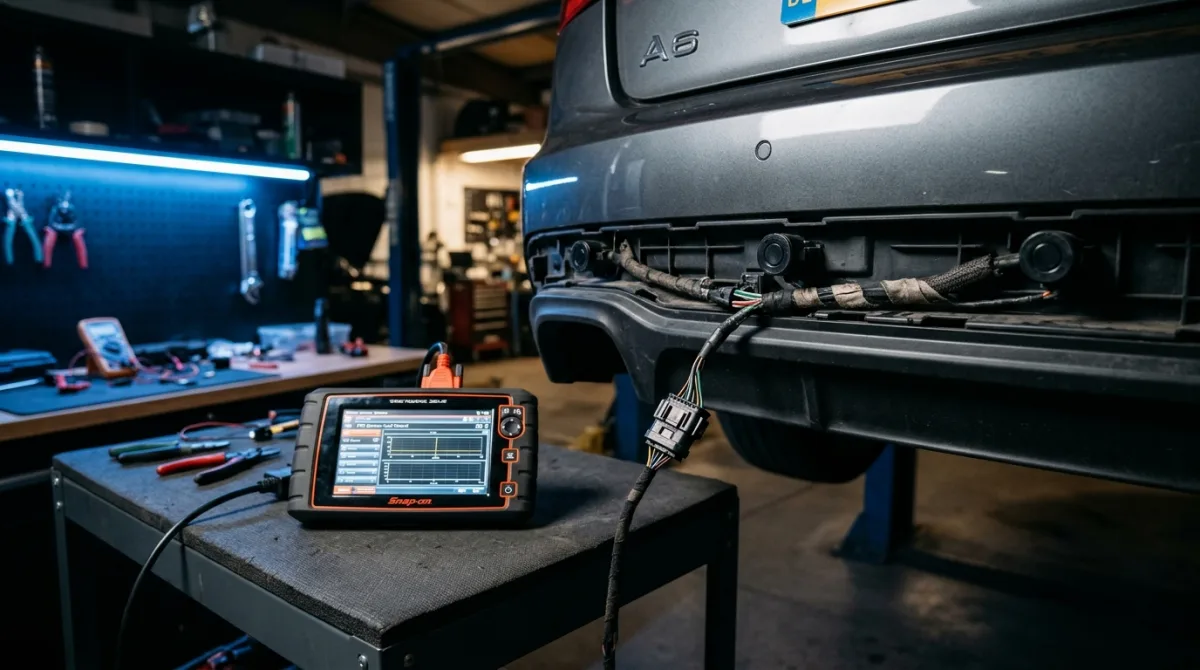
A fault looks different. Watch for range that drops far faster than the temperature explains, a cabin heater that blows cold, a battery or powertrain warning light, a sudden jump or collapse in the estimated range, or a heater/compressor circuit that keeps blowing its fuse. On the low-voltage side, a blown heater or pump fuse gives you no cabin heat or no battery thermal management, and both cost you range. On the high-voltage side, a fault code pointing at the pack heater, the DC-DC converter or the battery management system is a job for a technician. Do not guess at code meanings; read the code from the vehicle's own diagnostic tool or manual.
Safety first
Do this before you touch anything.
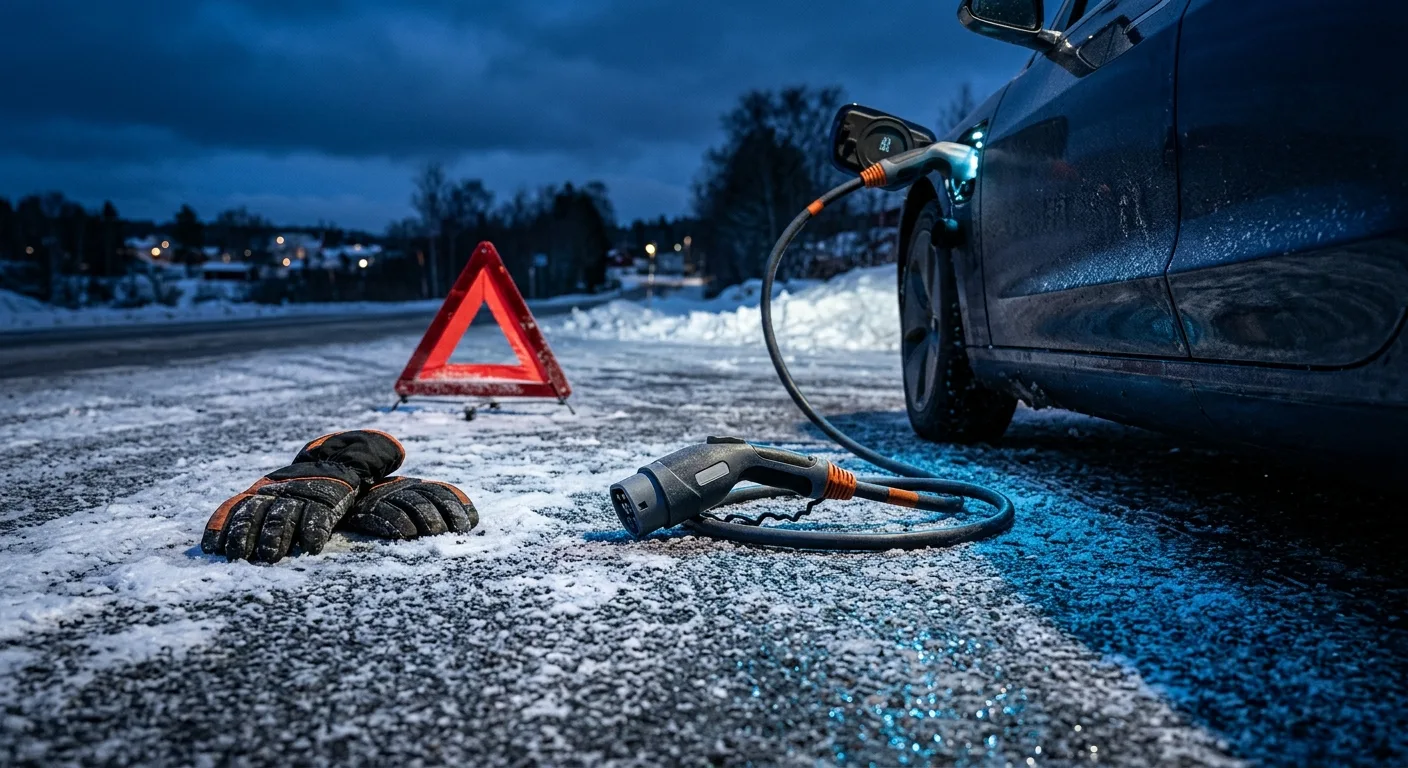
- Low-voltage (12V) work is yours to do carefully. The 12V battery, fuses, relays and the sensor wiring that runs at 12V are safe for a careful owner with the right tools.
- High-voltage is not. The traction battery, its cabling, the pack heater, the inverter and the DC-DC converter all run at dangerous voltages. Never probe a live high-voltage component, never open an orange cable, and never work on the pack yourself. That work is for qualified technicians only, full stop.
- Isolate the circuit before any measurement: switch off, remove the key, and pull the fuse for the circuit you are testing where the manual says it is safe to do so.
- Let the car sit and, where the manual allows, disconnect the 12V negative terminal before probing wiring.
- Wear eye protection and keep metal tools away from battery terminals.
- If you smell burning, see smoke, or the car reports a high-voltage isolation fault, stop and get it looked at.
What you need
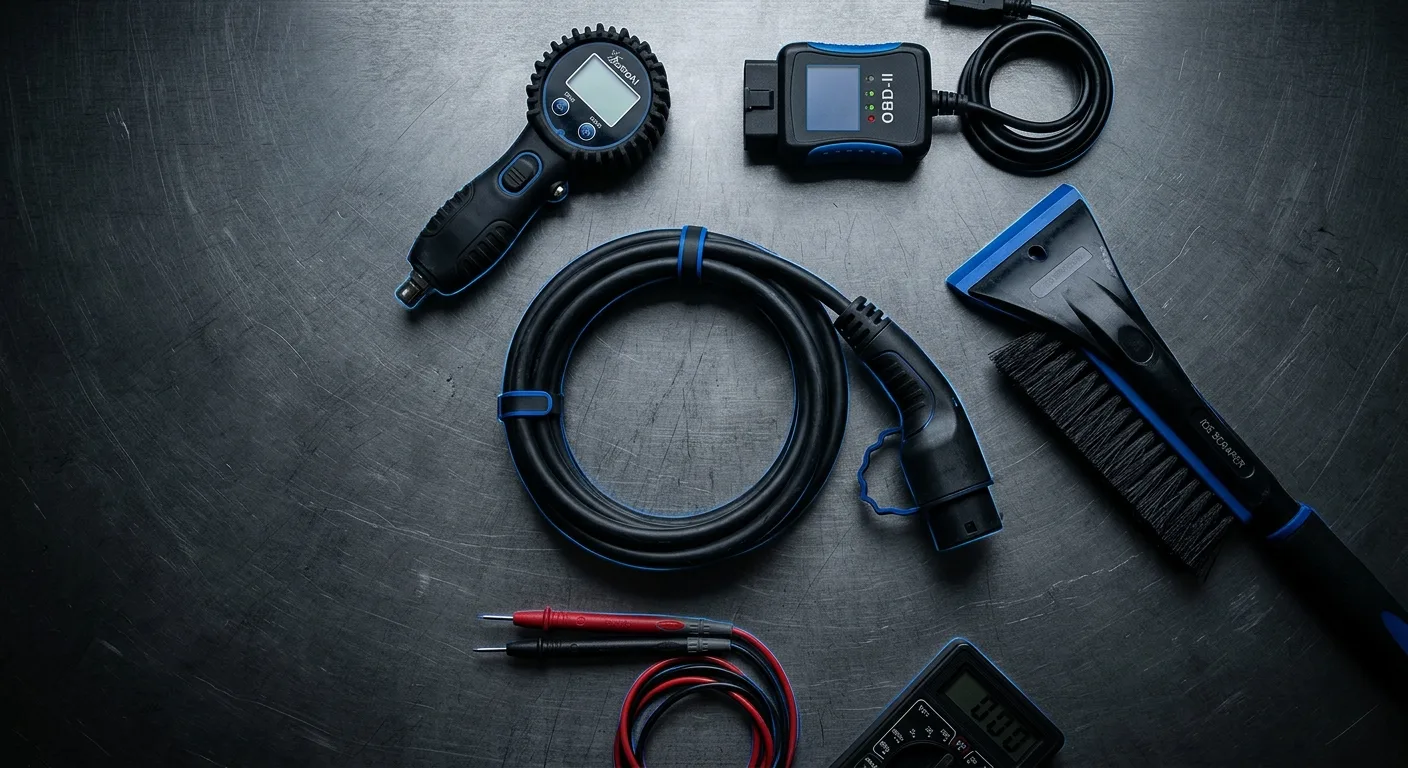
- A digital multimeter with a DC volts setting and a continuity/ohms setting.
- The vehicle's fuse box diagram (in the manual or on the lid).
- A fuse puller and a set of spare fuses of the correct rating. Do not uprate a fuse; match the rating printed on the car's diagram.
- Insulated probes and, ideally, a helper to hold the meter.
- The owner's manual open at the fuse and 12V sections.
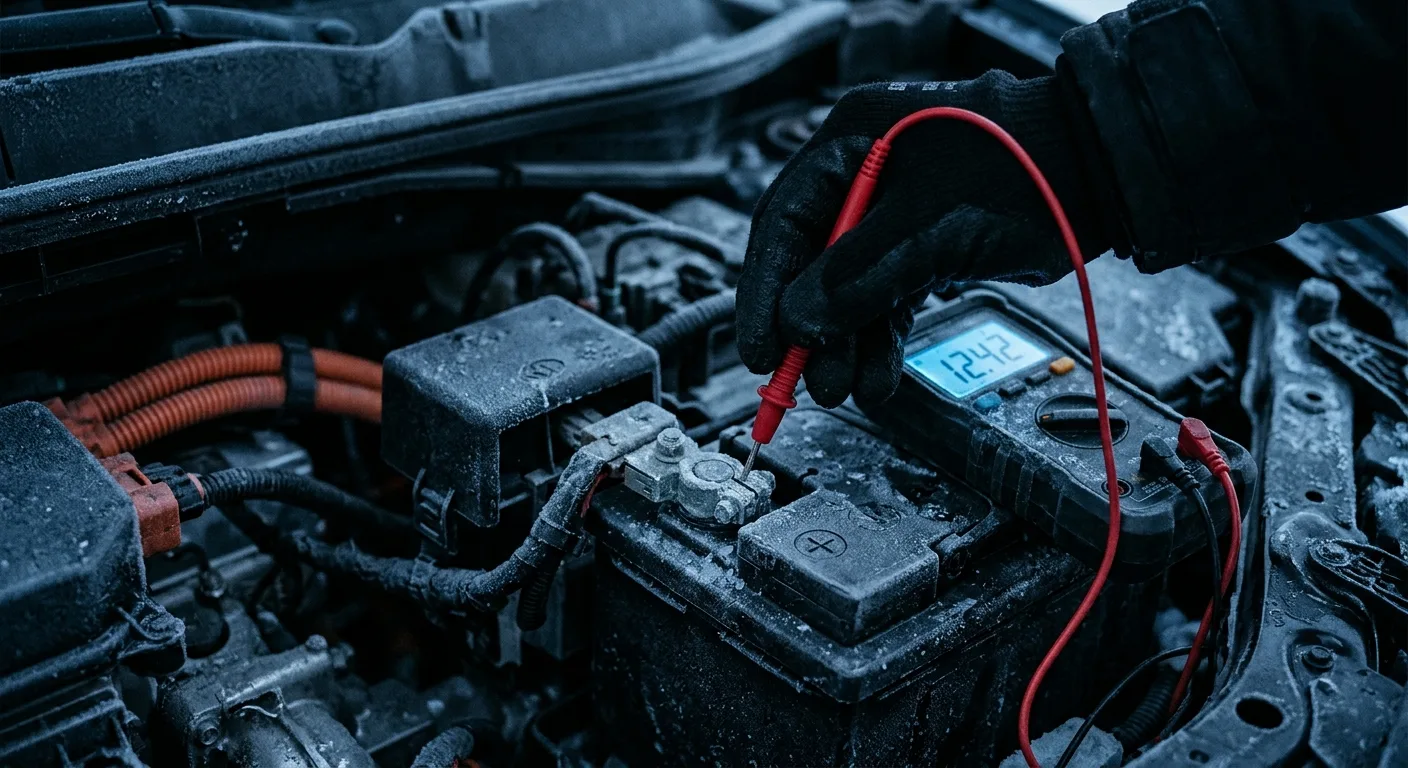
What you will measure: 12V system voltage across the battery with the car off (a healthy, charged 12V battery typically reads around 12.4-12.8V; confirm the spec in your manual) and continuity across a fuse (a good fuse reads near zero ohms; a blown one reads open). Any high-voltage measurement is out of scope here; leave it to a technician.
Measurement steps
Safe order, low-voltage only:
- Park, switch off, remove the key. Wait a few minutes so modules go to sleep.
- Locate the fuse for the heater blower, cabin heater, coolant pump or battery thermal circuit (whichever matches your symptom) using the diagram.
- Pull the fuse with the puller. Look at the element: a visible break means it is blown.
- Set the meter to continuity/ohms. Touch the probes together; the display should read near zero, confirming the meter works.
- Probe across the two fuse blades, one probe on each. A good fuse reads near zero ohms. A blown fuse reads open (no reading or "OL").
- For a voltage check, set the meter to DC volts, black probe on a clean ground, red probe on the 12V battery positive. Read the resting voltage with the car off.
- With the circuit energised where the manual permits, check for 12V at the fuse holder feed. No voltage there points upstream to a relay or supply, not the fuse.
- Re-fit a correct-rating fuse and retest the function.
If a fuse blows again immediately, stop. A repeat blow means a short downstream, and that is a diagnostic job, not a fuse-swap job. The EV diagnostic and fuse guides walk through the circuit side in more depth.
What the reading means
- Fuse reads near zero ohms, 12V present at the holder: the fuse and supply are fine; the fault is downstream (the heater, pump or its wiring).
- Fuse reads open: it is blown. Replace with the correct rating and find out why it blew before trusting it.
- No voltage at the fuse holder with the circuit on: supply problem upstream (relay, ignition feed or wiring), not the fuse.
- 12V battery below roughly 12.2V at rest: the 12V battery is low or tired. A weak 12V battery drags on the DC-DC converter and can throw odd faults. Charge or test it.
- Continuity where there should be none, or a fuse that blows repeatedly: likely a short. Stop and get it diagnosed.
Likely causes
From most to least likely for a cold-weather problem that is not simply "it is cold":
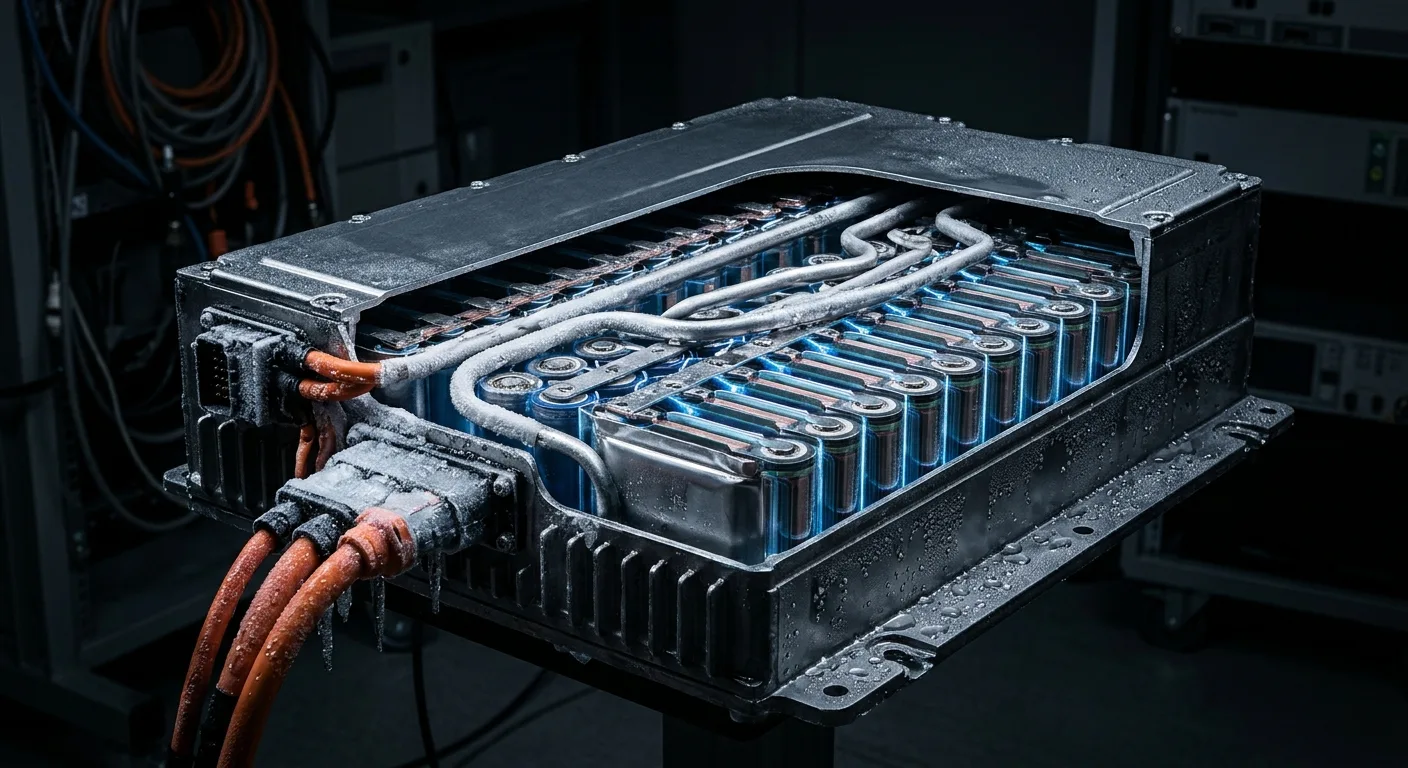
- The cold itself. Reduced battery chemistry performance plus cabin and pack heating is the number one cause of winter range loss, and it is normal.
- A blown heater or pump fuse. No cabin heat or no pack thermal management both hurt range and comfort.
- A weak 12V battery. Cold is brutal on 12V batteries; a tired one causes strange electrical behaviour.
- A faulty cabin heater or heat pump. If it blows cold, the car may be leaning on resistive heating or failing to warm the pack.
- A pack heater or thermal-management fault. This shows as a warning and needs a technician.
- Tyre pressure drop. Cold air shrinks tyre pressure; under-inflated tyres add rolling resistance.
- A sensor or wiring fault in the heater or pump circuit, often behind a repeat fuse blow.
Fix or next step
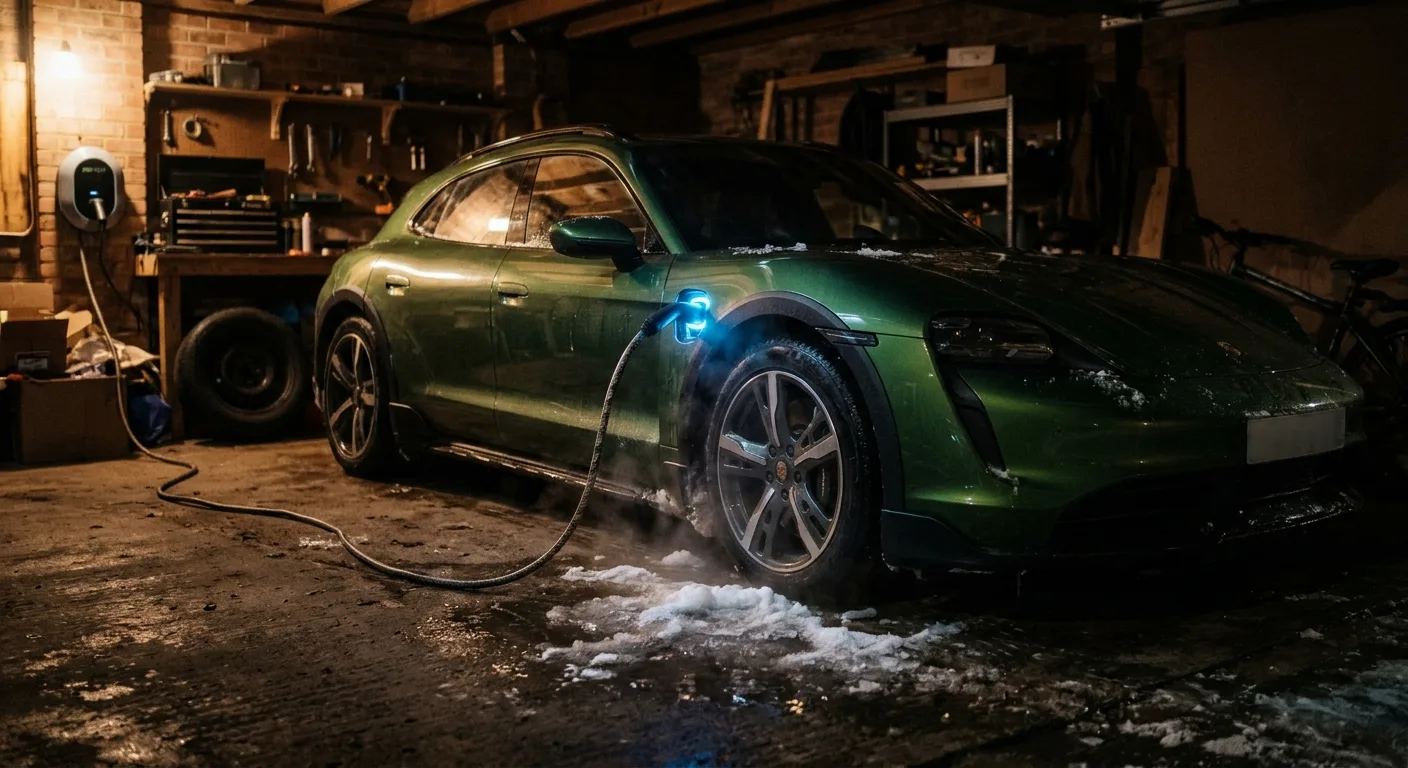
Start with the free wins. Check and correct tyre pressures to the door-plate figure. Precondition the cabin while plugged in. Use seat and steering-wheel heat instead of blasting the cabin. Park indoors or plugged in where you can. Those alone recover meaningful range without touching a tool.
If a fuse is blown, replace it once with the correct rating and confirm the function returns. If it blows again, stop and diagnose the circuit. If the 12V battery is low, charge it and have it load-tested. If the car shows a high-voltage or thermal warning, do not keep driving on it; book it in.
A quick sanity check on your real consumption helps you separate "cold penalty" from "fault." The free EV calculators and tools let you work out expected range at your current efficiency, so you can see whether the drop matches the temperature.
When to see a professional
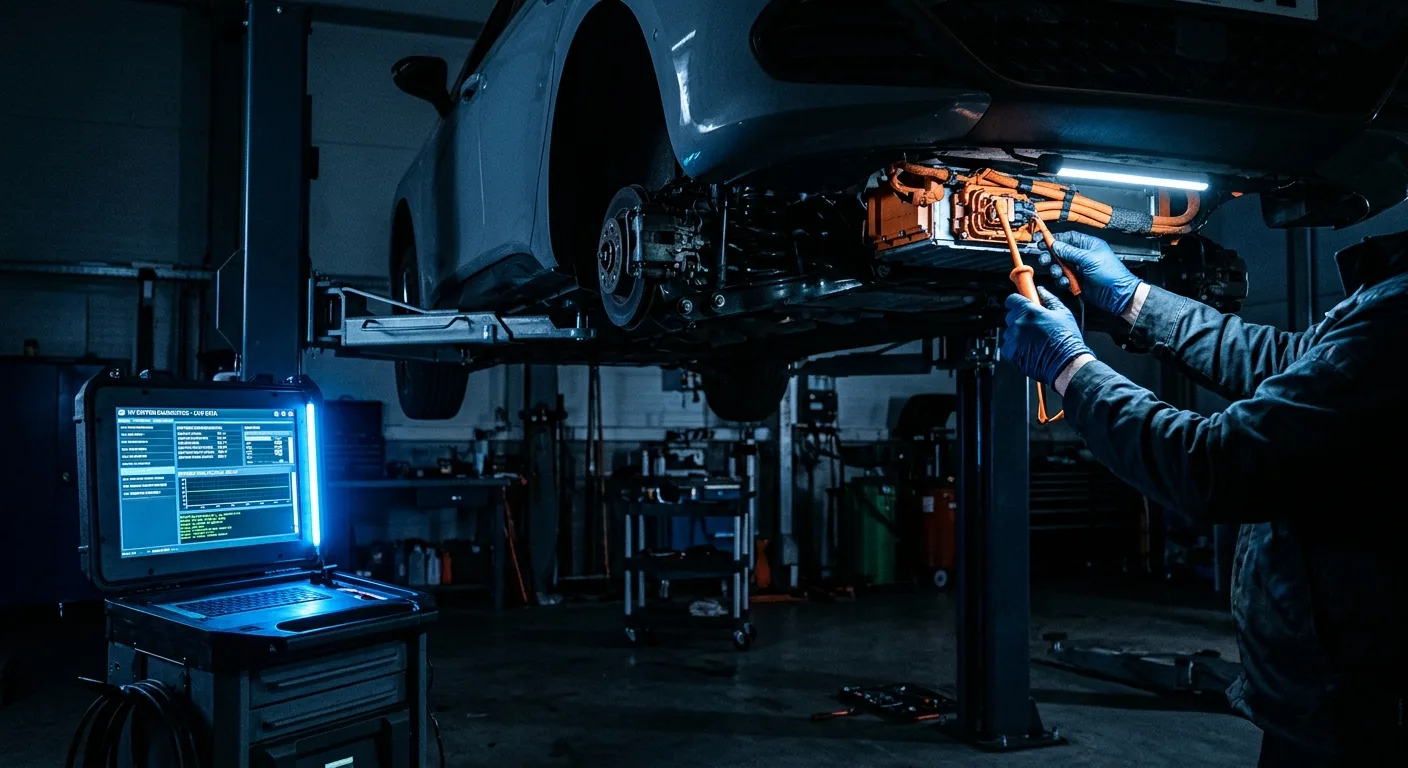
Stop and call a qualified technician if any of these apply:
- Any high-voltage warning, isolation fault, or smell of burning from the pack area.
- A fuse that blows again immediately after replacement.
- A fault code pointing at the pack heater, BMS, DC-DC converter or inverter.
- The cabin heater or heat pump blows cold and the fuse and 12V supply check out.
- You are unsure which circuit you are probing, or the manual does not clearly identify it.
High-voltage traction-battery work always requires a qualified professional. No exceptions.
FAQ
Is winter range loss normal, and how much should I expect? Yes, it is normal. Expect a noticeable drop in cold weather, often in the region of 20-40% depending on temperature, driving style and how much you heat the cabin. Treat that as a cautious range and confirm your own figures with the car's trip data.
Will preconditioning while plugged in really help? Yes. Warming the cabin and pack on mains power means the battery is not paying for it at the start of the drive. It is one of the highest-value habits in winter.
My heater fuse keeps blowing. Can I just fit a bigger fuse? No. Never uprate a fuse. A repeat blow means a short or a failing component downstream; fitting a bigger fuse risks damage or fire. Diagnose the cause.
Does tyre pressure really affect range in the cold? Yes. Cold air lowers pressure, and soft tyres add rolling resistance. Check pressures cold, to the door-plate figure, and top up as the seasons change.
Can a weak 12V battery cause range problems? Indirectly yes. A tired 12V battery strains the DC-DC converter and can trigger odd electrical faults. If it is old or reads low at rest, get it tested.
For more model-specific winter behaviour and owner experiences, browse the EV model directory and the EV troubleshooting guides.