The rain started somewhere around junction 12, and that's when I realised my charging cable was sitting in a puddle. Not a dramatic puddle. A small, grey, motorway-service-station puddle that had formed right where I'd dropped the connector because I was too cold to care. I stood there in the drizzle, holding a wet plug, wondering whether I was about to become a cautionary tale. I didn't. But that evening I went home and started a proper list of the accessories that had actually earned their place in the car, and the ones that were just expensive clutter.
I've been driving electric for a few years now, plus a brief and slightly embarrassing stretch with an e-scooter. Over that time I've bought a lot of things I didn't need. This is the honest version: what stuck, what I'd buy again, and roughly what it cost.
Why I bothered making a list
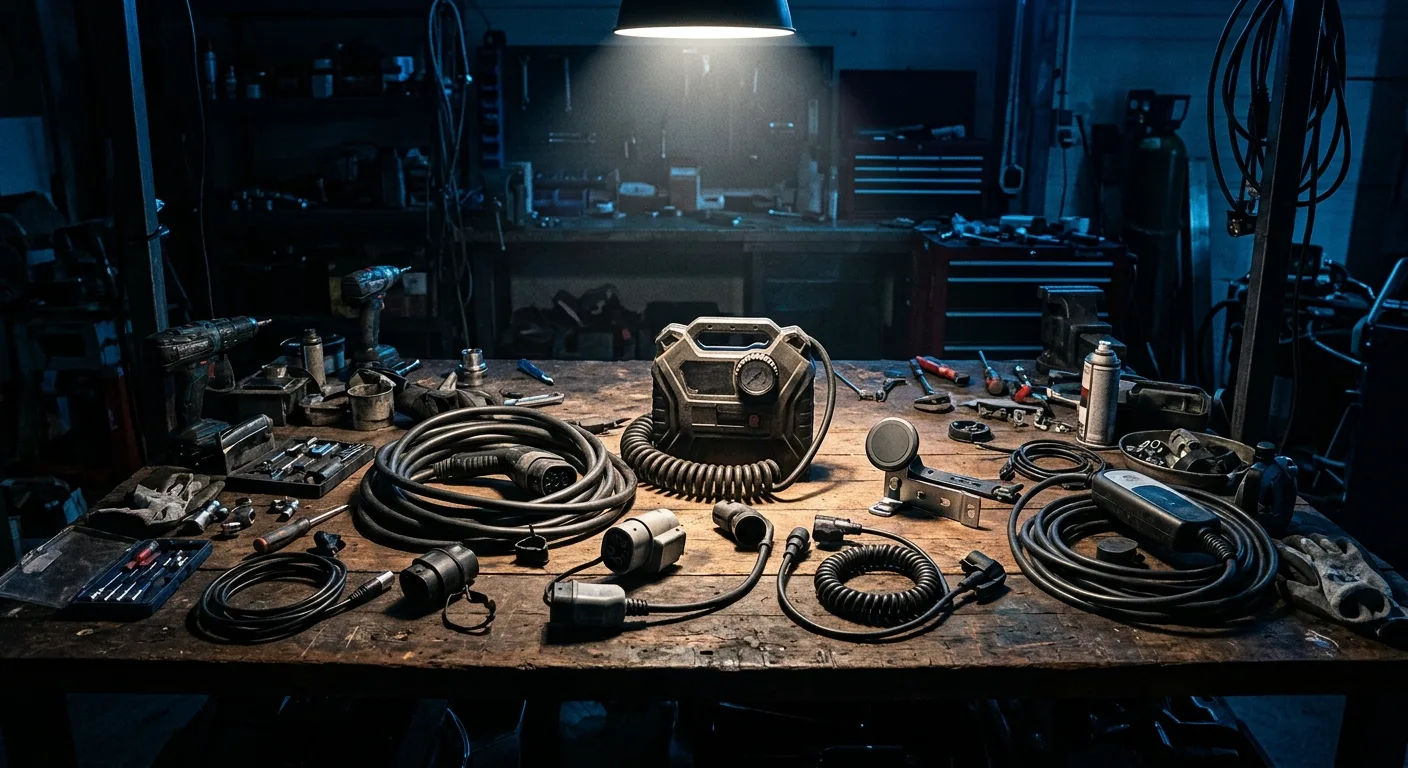
Most accessory lists online are written by people who've never charged a car in the rain. I wanted my own record, mostly so I'd stop rebuying the same cheap junk. I also wanted to know which things were genuinely useful for the way I actually drive, which is a mix of short town trips and the occasional long motorway slog where a 20-minute charging stop feels like a small victory.
So I kept a note in my phone. Every time something annoyed me on a journey, I wrote it down. Every time something quietly made my life easier, I wrote that down too. What follows is the result, roughly ordered by how often I use the thing.
The stuff that actually stuck
Two cables, not one
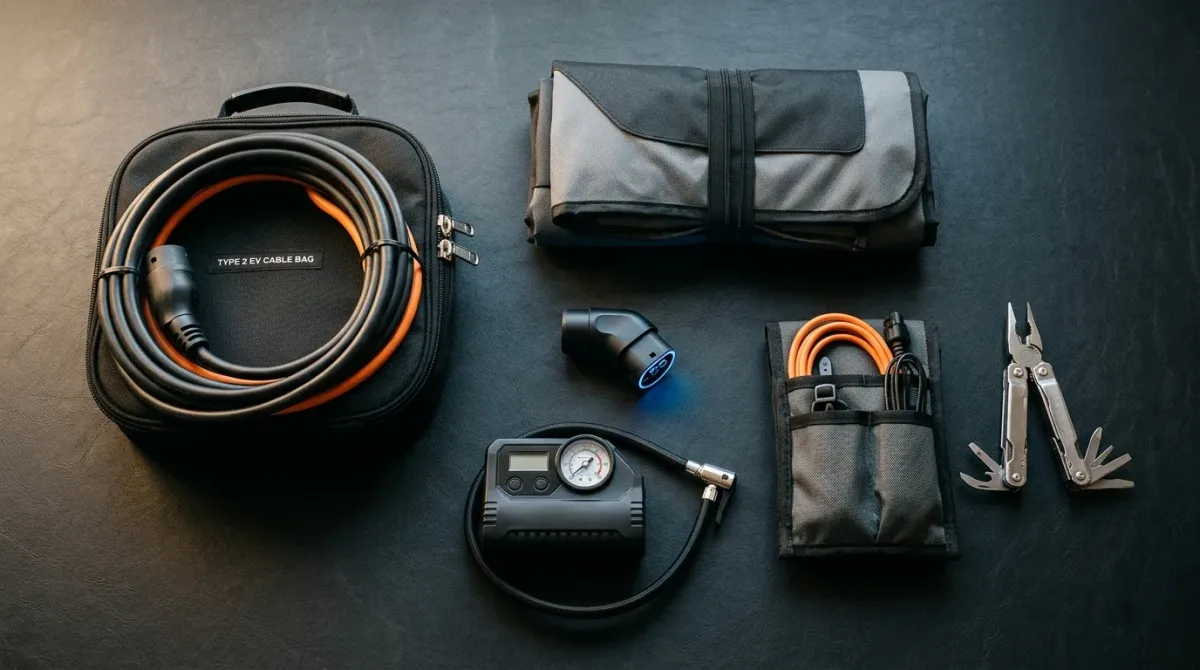
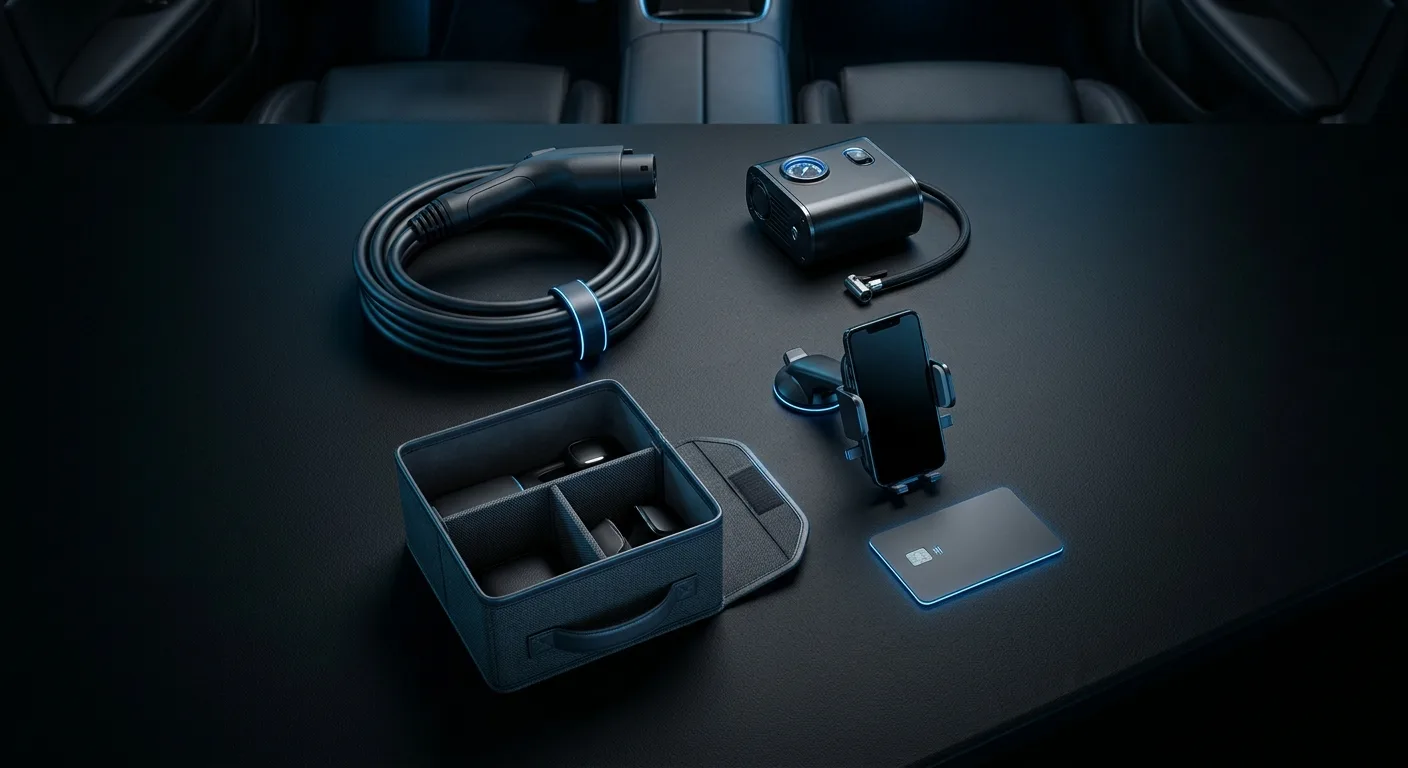
This is the least exciting item on the list and the one I'd replace first if it broke. I keep a Type 2 cable for public AC points and a separate cable for whatever slow charging I do at home. The single biggest mistake I made early on was assuming one cable would cover everything. It didn't. Now I have a decent coiled cable that lives in the boot wrapped in a velcro strap, and I've stopped fighting it every time I need a top-up.
The number that matters: a standard AC top-up at a public point will typically add somewhere between 10 and 30 km of range in an hour, depending on your car and the charger. That's enough to get you home, not enough to cross a country. Check your own car's onboard charger rating before you assume otherwise.
A proper charging-cable bag
Cheap, unglamorous, and now non-negotiable after the puddle incident. I use a waterproof bag, roughly the size of a small backpack, that keeps the wet connector away from everything else in the boot. It cost me less than a takeaway. I no longer arrive at a charger with a dripping cable and a cold hand.
A tyre inflator that plugs into the 12V socket
I ignored the low-tyre warning for about three weeks, which is the kind of decision that catches up with you. A small 12V inflator has saved me twice now, once in winter when the pressures dropped and once on a slow puncture that got me to a garage without drama. It lives under the boot floor and takes about two minutes to use. Expect around 20 to 40 for a decent one, and check your car's recommended pressures before you start.
This is low-voltage work, so it's within reach for a careful owner. Anything to do with the high-voltage traction battery is not, and I'll say that plainly later.
A 12V socket USB adapter, and a spare
My car has one 12V socket and I have two phones, so I bought a compact dual-port adapter. The first one I bought was flimsy and got warm, so I swapped it for a slightly better one. Warm is fine; genuinely hot is not, and that's when you stop and check.
A windscreen cover for frosty mornings
I park outside. On the cold mornings, scraping ice at 7am while the car beeps at me is a special kind of misery. A fabric windscreen cover, the kind that tucks into the doors, has cut my morning routine to about 30 seconds. It's not a heater; it just stops the worst of it. In my experience, expect around 15 to 25.
A small tyre pressure gauge
I know the car tells me when pressures are low. But the low warning is a nudge, not a number, and I like knowing the actual reading. A basic gauge lives in the glovebox. It's the sort of thing that costs the same as a sandwich and makes you a slightly better owner.
A decent phone mount
I went through three. The first fell off at a roundabout. The second blocked a vent. The third, a windscreen one with a proper clamp, has been solid for over a year. This is one of those things where the cheap version costs you more in the end.
An emergency kit that fits the car
Mine is a small bag with a hi-vis vest, a torch, a basic first-aid kit and a warning triangle. It's not glamorous and I hope I never need it, but I've used the torch twice and the vest once, on a dark hard shoulder. The cost depends entirely on what you already own.
A home charging solution you actually trust
This is the big one. If you can charge at home, it changes everything. I won't pretend I installed mine myself; a qualified electrician did the wiring, and I'd do the same again. What I will say is that the difference between charging overnight and hunting for public points is the difference between a relaxed week and a stressful one. If you want to compare how different cars handle this, the head-to-head comparisons on the site are a good place to start.
A range planner habit, not a gadget
I didn't buy an app. I just got into the habit of planning a long trip around where the chargers are, not around hope. The free EV calculators on the site were useful for sanity-checking my expectations before a 300 km run. I'd rather know the number before I leave than discover it at the side of the road.
A spare charging card or two
Some public networks want an app, some want a card, and at least one wanted both on the same day. I now carry two cards for different networks, and a small note in my phone of which one worked where. It's not glamorous. It has saved me twice.
A boot organiser
The last one on the list is the most boring, and yet it's the one I notice every time I open the boot. Cables, gloves, the inflator and the warning triangle all have a place now. Before, it was a nest of straps and things that slid around on corners. Expect around 15 to 30 depending on size.
Honest pros and cons
Pros: most of these cost less than a tank of fuel, and the few that matter (cables, home charging, a decent mount) genuinely change how the week feels. The tyre inflator and the windscreen cover alone have saved me more mornings than I can count.
Cons: it's easy to spend a lot on things you'll use once. I've bought a "smart" cable organiser, a second spare cable I never needed and a phone holder that lasted a fortnight. None of that was expensive individually; together, it added up to a small holiday. The accessories that stuck were the ones that solved a specific, recurring annoyance, not the ones that looked clever in a listing.
What it actually cost
Rough ranges, in my experience. Check current prices locally, because they move.
| Item | Approx. cost |
|---|---|
| Type 2 cable | 100 to 250 |
| Waterproof cable bag | 10 to 25 |
| 12V tyre inflator | 20 to 40 |
| 12V USB adapter | 5 to 15 |
| Windscreen cover | 15 to 25 |
| Tyre pressure gauge | 5 to 15 |
| Phone mount | 15 to 40 |
| Emergency kit | 20 to 40 |
| Home charging setup | varies widely; get a quote |
| Boot organiser | 15 to 30 |
The real cost story isn't the items. It's the time I spent buying the wrong ones first. If you're working out which car to buy before you fill it with accessories, the EV model directory is a sensible first stop.
What I would do differently
- Buy the boring things first. Cables, a bag and a tyre inflator before anything clever.
- Don't buy two of anything until you've used the first. I have a spare cable I've never touched.
- Check the plug before you buy the gadget. Several of my failed purchases were the wrong connector for my car.
- Keep the 12V work in your own hands and leave the high-voltage battery alone. If something smells of burning or the car refuses to charge, stop and get a qualified technician. The troubleshooting guides on the site are a good place to start your own diagnosis, but they're not a substitute for a professional.
- Write down what annoys you. My list started as a grumble and turned into the best buying guide I've got.
Quick practical tips
- Store cables coiled and strapped; a tangled cable is a cable you'll damage.
- Check tyre pressures monthly, especially in winter.
- Keep one charging card in the car and one in your wallet.
- If a socket adapter gets genuinely hot, stop using it.
- Before a long trip, sanity-check your range with a calculator rather than a guess.
A few questions I get asked
Do I really need two cables? In my experience, yes, if you use both public AC points and home charging. One cable for everything sounds neat and usually isn't.
Is a tyre inflator safe for a non-mechanic? For topping up to the recommended pressure, yes, and it's low-voltage work. If you're unsure, check the guide on diagnostics and fuses for a safe order of checks, and stop if anything looks wrong.
Can I do my own high-voltage work? No. That's the line. Traction-battery work needs a qualified professional, every time.
Where do I start if I'm still choosing a car? The comparisons on the site are worth a read before you spend on accessories.
Final thought
The best accessory I own isn't on the shelf of any shop. It's the habit of noticing what actually annoys me on a journey, and then buying the small, unglamorous thing that fixes it. The puddle taught me that, and I'm still a little grateful to it.
Ready to act on what you just read? Explorethe EV model directory, head-to-head EV comparisons or the free EV calculators and tools. The rest of this site is built to help you take the next step.