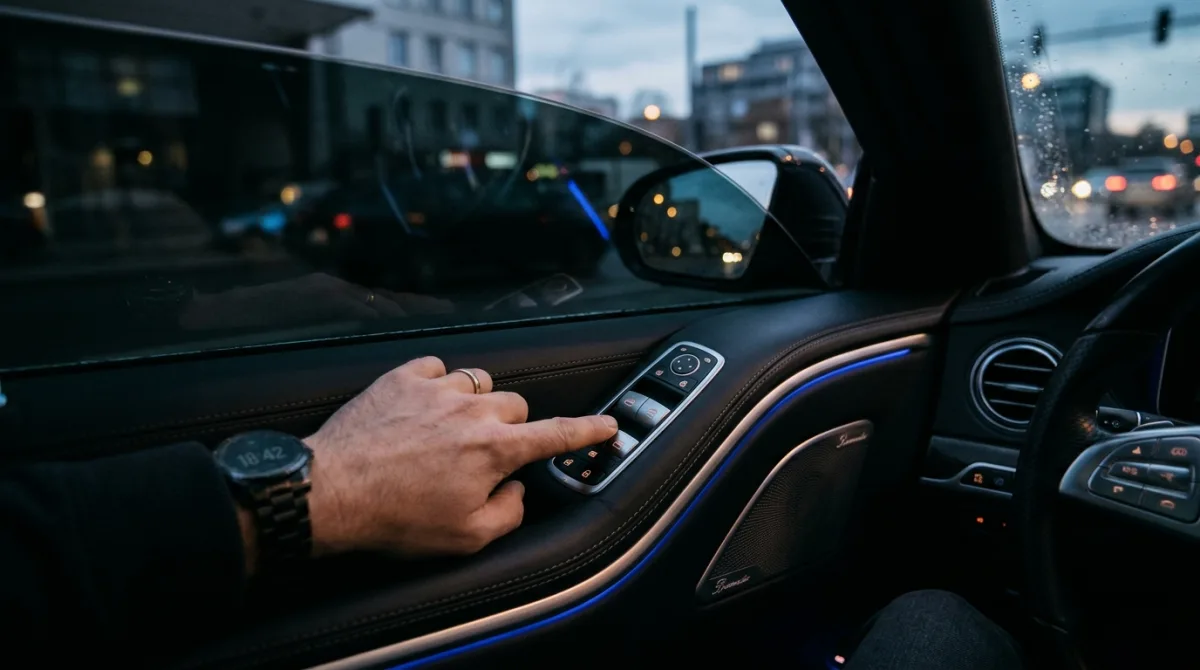
Your window rolls up, hits something halfway, and slides straight back down as if it just touched an invisible hand. Or it creeps up in short, jerky steps and stops short of the top. Sometimes it works from the driver's switch but not from the door, or it refuses to close at all on a frosty morning.
That is the anti-pinch function doing its job badly, usually because the window controller has lost its reference position (where "fully closed" lives in its memory). The fix is almost always a relearn, not a new motor. Here is how to do it safely and what to check before you assume the worst.
Safety first
Electric windows are 12V systems, so this is work a careful owner can do. But a few ground rules:
- Switch the ignition off before you start poking around. If you need power for the relearn procedure, you will turn it back on deliberately as part of the steps, not leave it on while you work.
- Keep fingers, hands and anything valuable out of the window opening during the relearn. The window must run its full travel, and the anti-pinch system is exactly what is being re-taught, so it may not stop as sensitively as usual.
- Do not disconnect the window motor or regulator wiring to "reset" it unless a workshop manual for your exact model tells you to. On some cars, pulling the motor loses the position reference and makes things worse.
- Never touch the high-voltage traction battery, the orange cables, the inverter or the charging hardware. Those are for a qualified technician only. Nothing in this guide requires going near them.
If your car has an electronically controlled tailgate or sunroof that also misbehaves, the same logic often applies, but check that model's procedure separately rather than assuming.
Check these first
Work through these in order. Most of them take under a minute.
-
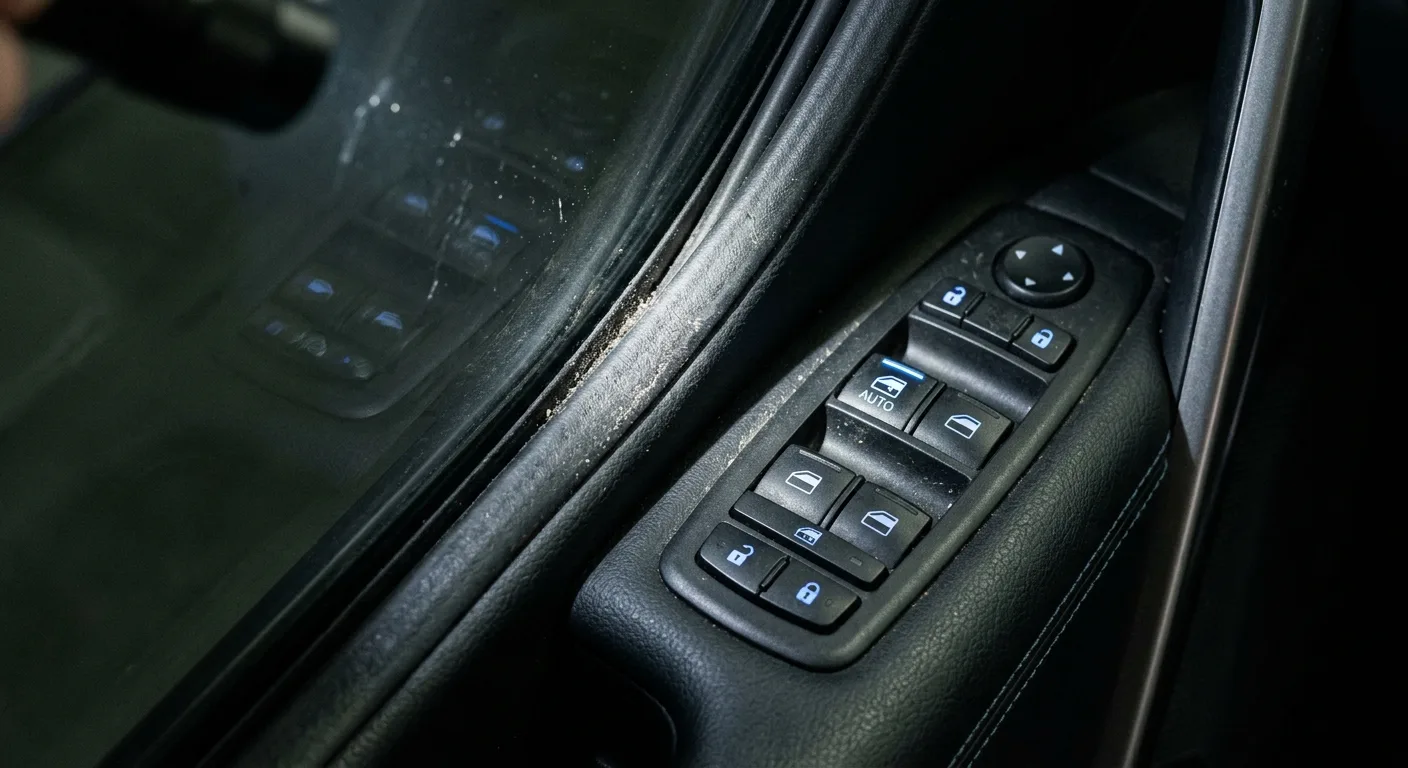
Check the window channel for grit or ice. Run a finger along the rubber seal with the window down. Normal: the rubber is clean and soft. If it fails (grit, frost, a swollen or torn seal), the window sees resistance on the way up and the anti-pinch trips. Clean the channel and let it dry before retrying.
-
Check the battery voltage. With the engine off, a healthy 12V battery sits around 12.4-12.6V; while running it should read roughly 13.5-14.5V. A voltage that sags below about 12V means the motor and controller may not complete a relearn. Charge or replace the battery first.
-
Cycle the window manually. Hold the switch down, let it reach the bottom, keep holding for 2-3 seconds, then hold up to the top and keep holding for 2-3 seconds. Normal result: the window moves smoothly and the controller stores both end stops. If it jerks or stops early, the travel is being interrupted and a relearn will not stick.
-
Try the switch from each door. Normal: both the driver's master switch and the local door switch move the window. If only one works, the problem is a switch or its wiring, not the anti-pinch calibration.
-
Look for a slow or strained motor. If the window takes noticeably longer than the other windows to travel, the regulator is stiff, the motor is tired, or the channel is misaligned. The anti-pinch will keep firing until that drag is fixed.
-
Check for a stored fault. A basic OBD-II reader can show body-control faults on many cars, though some window modules need a manufacturer-level tool. A stored fault that keeps returning after a relearn points to a hardware problem, not calibration. Our diagnostic and fuse guides cover how to read codes without guessing.
The most likely cause
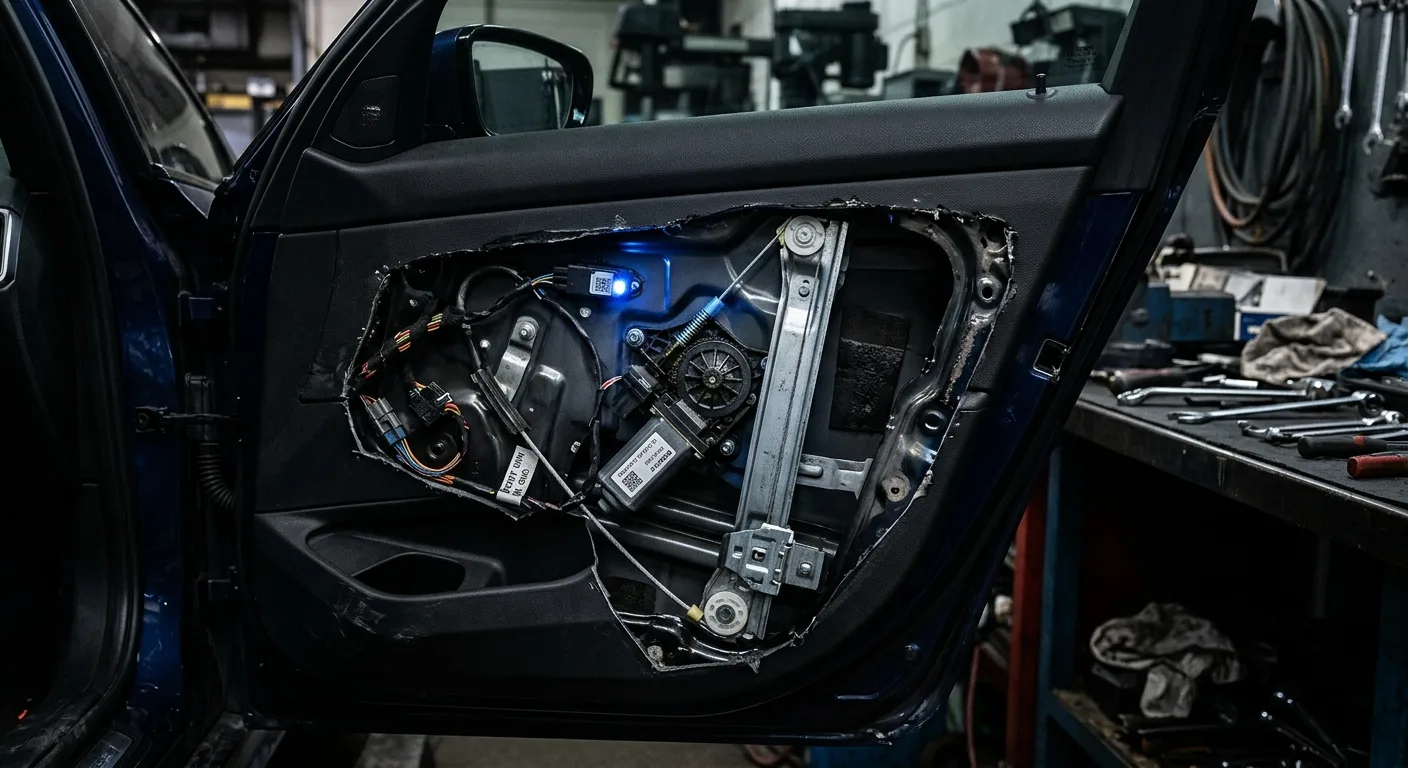
Nine times out of ten, the anti-pinch trips because the window controller has lost its end-stop reference. That happens after the 12V battery is disconnected or goes flat, after a window motor or regulator is replaced, or when a fuse is pulled. The controller no longer knows exactly where "fully closed" is, so it treats normal resistance as an obstacle and reverses.
The second most common cause is genuine drag in the channel: dirt, a dry seal or a slightly bent regulator. The motor works harder, the controller reads rising current as an obstruction, and the window bounces. If the window has always been fine and suddenly trips after a battery change, calibration is the culprit. If it has been getting slower for weeks, it is drag.
How to fix it
The relearn procedure varies by make, so treat the steps below as the common pattern and check your owner's handbook for the exact sequence.
The standard four-second relearn:
- Turn the ignition on (engine running is fine and gives you full voltage).
- Close all doors so the controller sees a stable state.
- Hold the window switch down until the window is fully open, then keep holding for 4 seconds.
- Release, then hold the switch up until the window is fully closed, and keep holding for 4 seconds.
- Release and test: press the auto-up function. If the window closes in one smooth movement, the relearn worked.
Some cars want the switch held for 2 seconds rather than 4, and a few need the window cycled twice. If the first attempt fails, try again with a longer hold before assuming a fault.
If the relearn will not stick:
- Clean and lightly lubricate the window channel with a silicone spray made for rubber seals. Do not use grease or oil, which attract grit.
- Check the regulator for a bent arm or a loose guide. A visual inspection with the door card off is usually enough, but refitting a regulator is fiddly, so consider a garage if you are unsure.
- Replace the window motor if it is slow and the channel is clean. A tired motor draws more current and trips the anti-pinch constantly; a new motor is often cheaper than repeated diagnosis.
If you are comparing replacement parts or a different car altogether, the EV model directory and the head-to-head comparisons are useful for checking what a given model actually uses before you buy.
When to see a professional
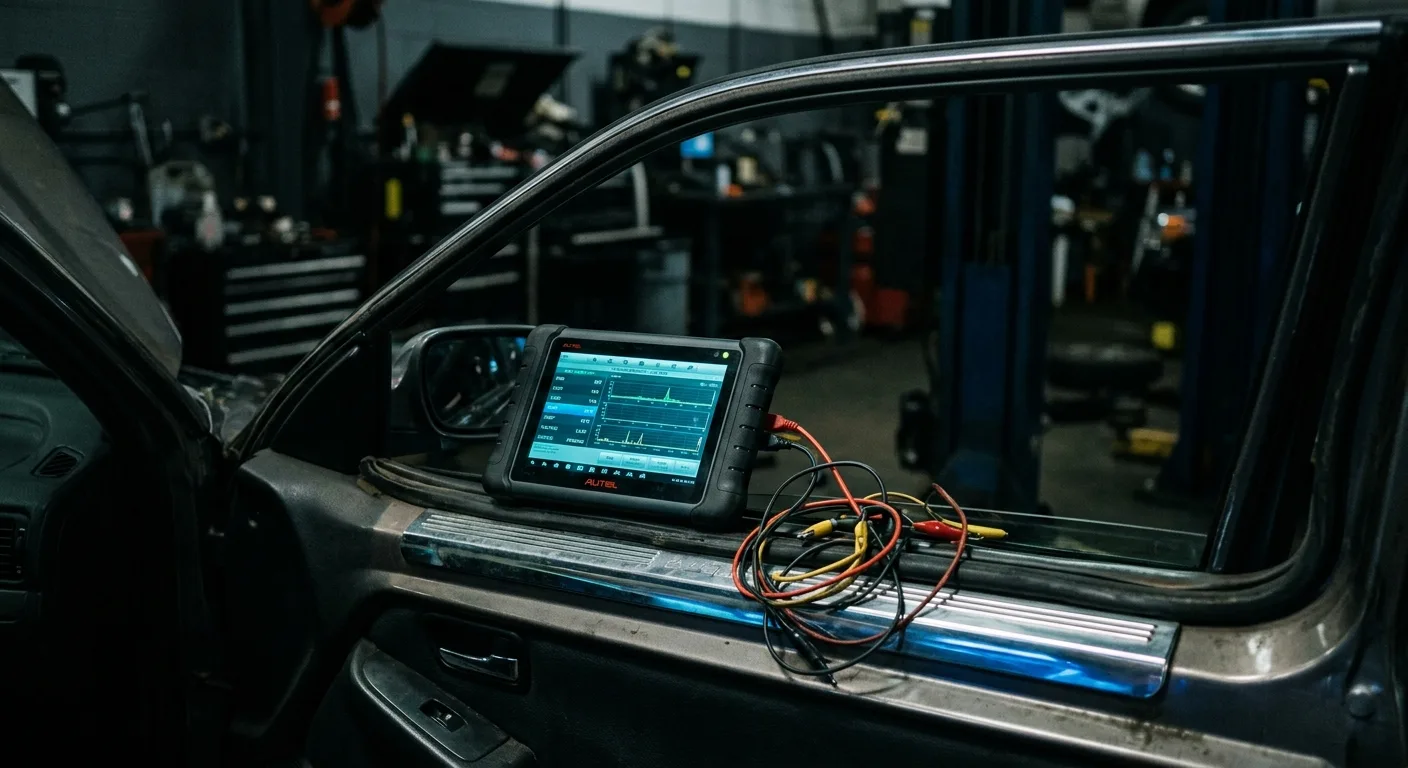
Stop and book a technician if:
- The window still reverses after two clean relearn attempts with a healthy battery.
- A fault code returns immediately after clearing.
- The window moves on its own, or the switch feels loose or burnt.
- You see damaged wiring, a melted connector or a smell of hot plastic.
- The car has a high-voltage fault warning, an orange cable is exposed, or the 12V system keeps draining. Anything touching the traction battery is a qualified-technician job, full stop.
A good independent garage can test the motor current and switch continuity in minutes. That is cheaper than firing the parts cannon at it. For more owner-level fixes, the EV troubleshooting guides cover the other systems that misbehave in the same way.
FAQ
How long does a window relearn take? About 30 seconds of holding switches, plus a test drive to confirm it stuck. If it fails twice, stop and diagnose rather than repeating it.
Do I need a diagnostic tool to reset anti-pinch? Usually not. The switch-hold method works on most cars. A few models need a manufacturer-level tool to clear the stored position, so check your handbook or a specialist forum for your exact model.
Why does my window go up then straight back down? That is the anti-pinch reversing because it read resistance as an obstacle. Clean the channel, check battery voltage, then do the relearn. If it persists, the motor or regulator is dragging.
Can a flat 12V battery cause this? Yes. A voltage dip during a window cycle can wipe the stored position. Charge the battery, then relearn.
Is it safe to keep using the window if it keeps reversing? For short trips, yes, but do not force it. A window that will not close properly is a security and weather problem, so get it fixed rather than holding the switch against the resistance.