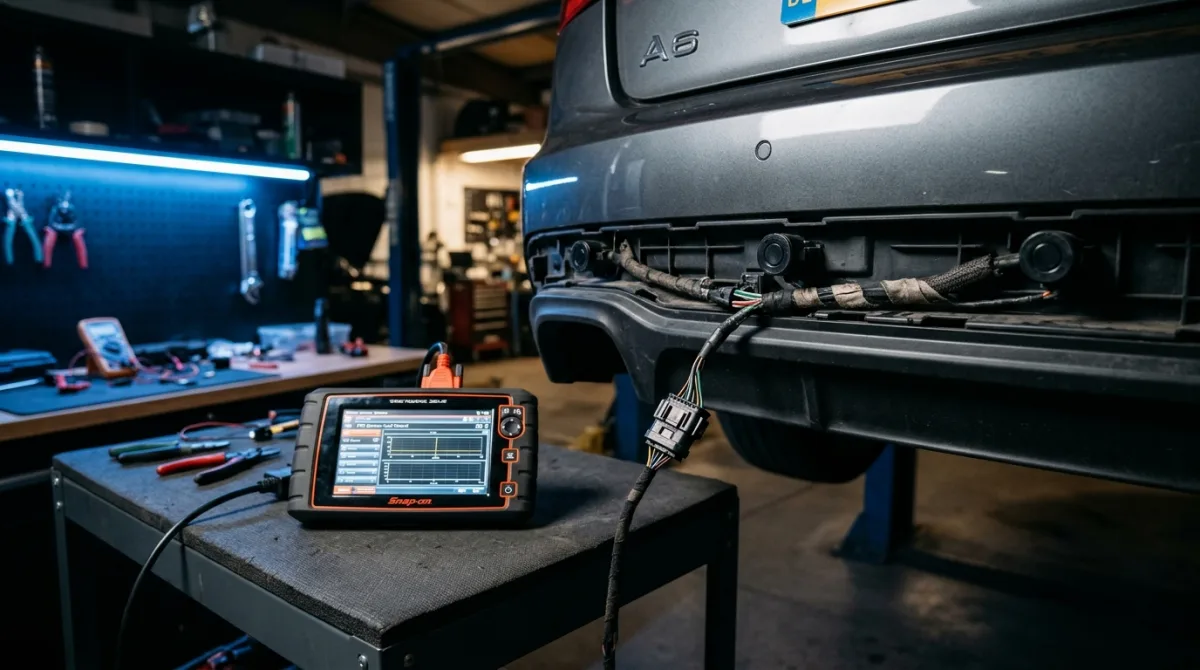
If your range has quietly dropped and the dashboard is throwing a fault code, or your accessory circuit has gone dead, the temptation is to blame the battery. Usually it is not the battery at all. Efficiency-focused drivers get more back from a few settings and one careful measurement than from any replacement pack.
This guide splits the job in two: the settings you can change today, and a safe diagnostic procedure for the low-voltage side that catches the faults behind most "my range has gone" complaints. The traction battery stays out of your hands.
Symptom: what this typically presents as
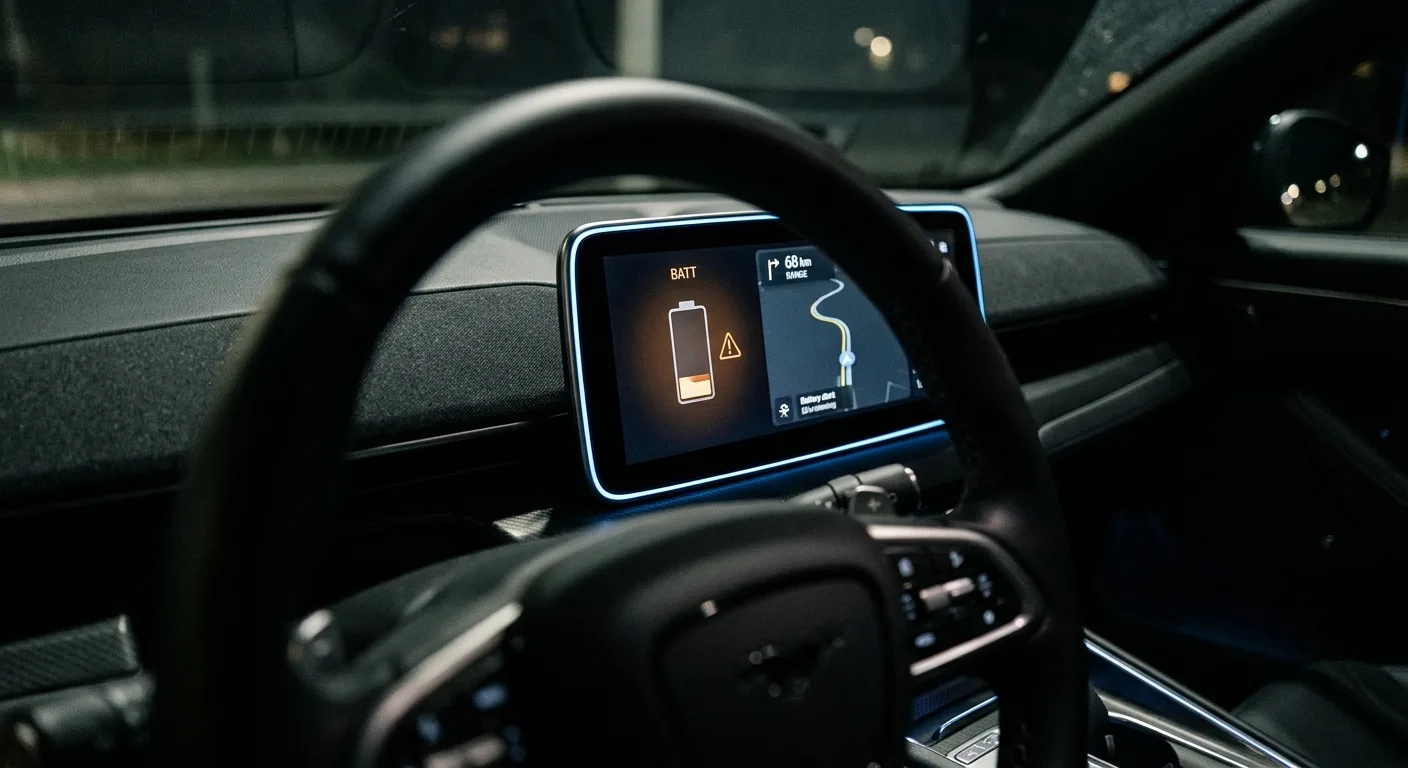
Three patterns show up again and again. First, a sudden range drop with no change in driving style, often after a software update or a service. Second, a warning light or fault code tied to the 12V system, sometimes with accessories behaving oddly. Third, a slow decline in efficiency over months, where nothing is broken but every trip costs more energy than it should.
The 12V auxiliary battery matters more than most owners realise. It runs the computers, the contactors and the sensors. When it sags, the car can throw codes that look like traction-battery faults but are not. A blown fuse on an accessory circuit produces the same red herring.
Safety first
Before anything else: isolate the circuit you are working on. Switch the vehicle off, remove the key or fob from range, and wait for the manual's stated period before touching anything. Some cars keep modules awake for several minutes after shutdown.
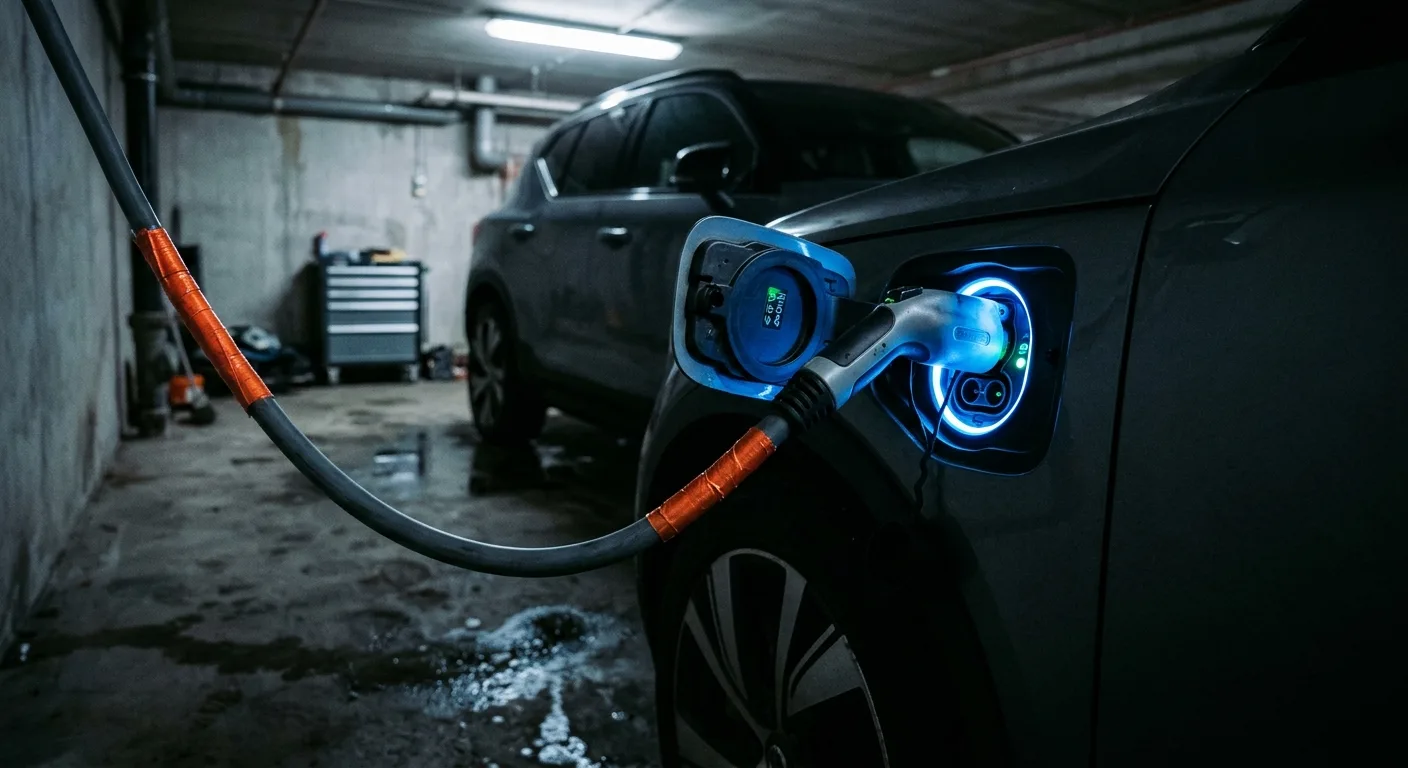
Never probe live high-voltage components. The orange cables, the traction pack, the inverter and the motor are not owner-serviceable. Do not disconnect them, do not measure them, do not "just take a look." That work belongs to a qualified technician with the right isolation training and PPE.
Everything in the measurement steps below is 12V work: low voltage, safe for a careful owner with a multimeter. If a fault points to the traction battery, stop and hand it over.
What you need
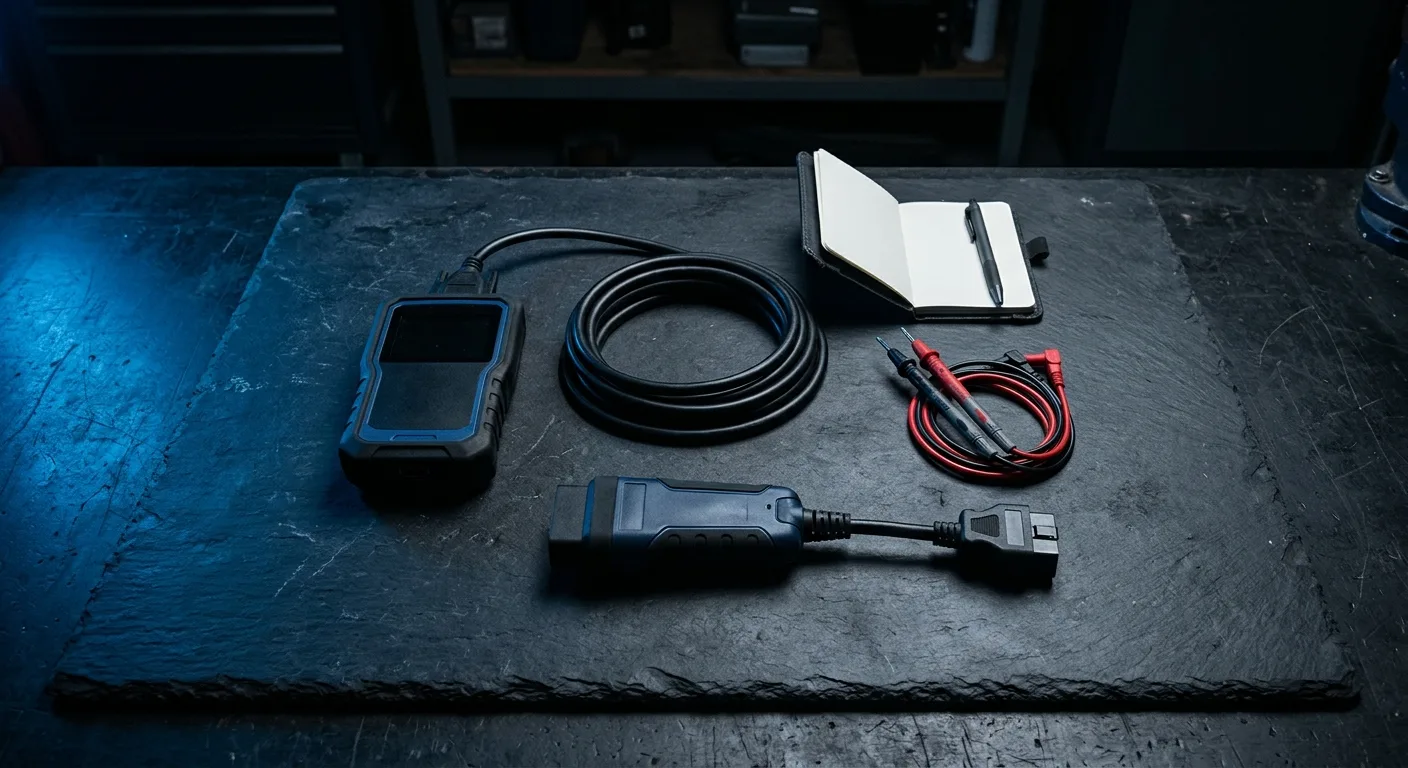
A digital multimeter with a DC voltage range covering at least 20V, plus a resistance range. A fused test lead set is worth the few pounds. You will also want the vehicle's manual or fuse diagram, because fuse locations and ratings differ by model and you must confirm them there rather than guess.
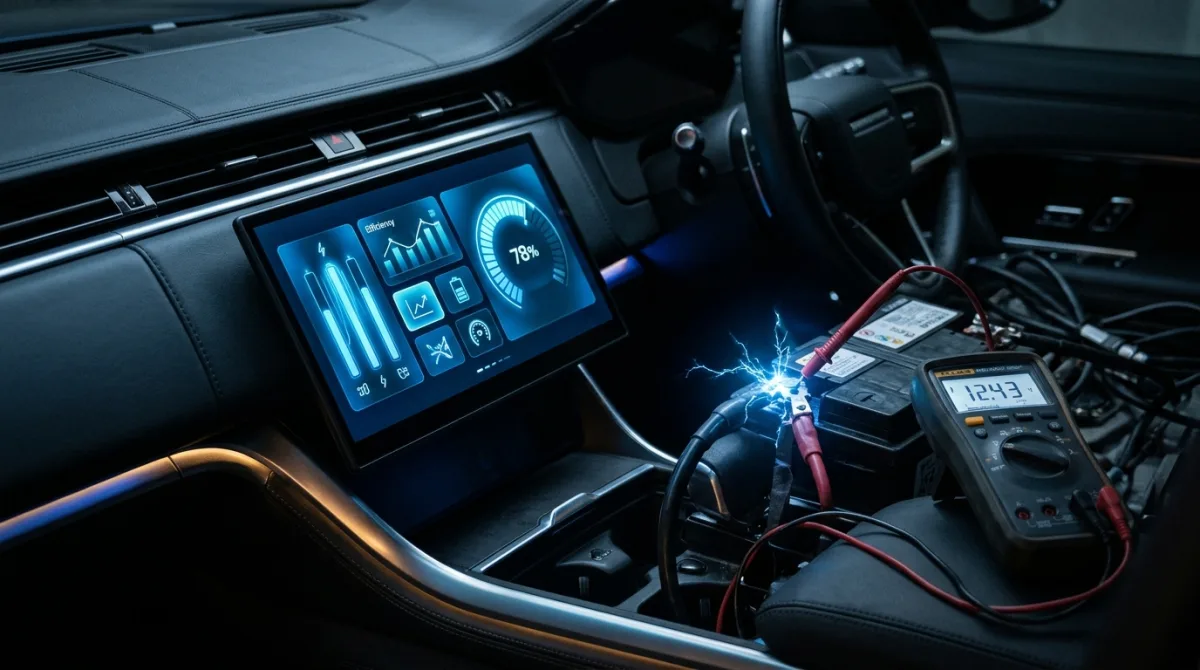
Expected readings for a healthy 12V system, engine or vehicle off: roughly 12.4V to 12.7V at the auxiliary battery. With the vehicle in its ready state, most EVs hold the auxiliary system around 13V to 14.5V as the DC-DC converter charges it. Treat those as typical ranges, not absolutes; your manual is the authority.
For resistance checks, a good fuse reads close to 0 ohms. A blown fuse reads open circuit (often shown as OL). Never measure resistance on a live circuit.
Measurement steps
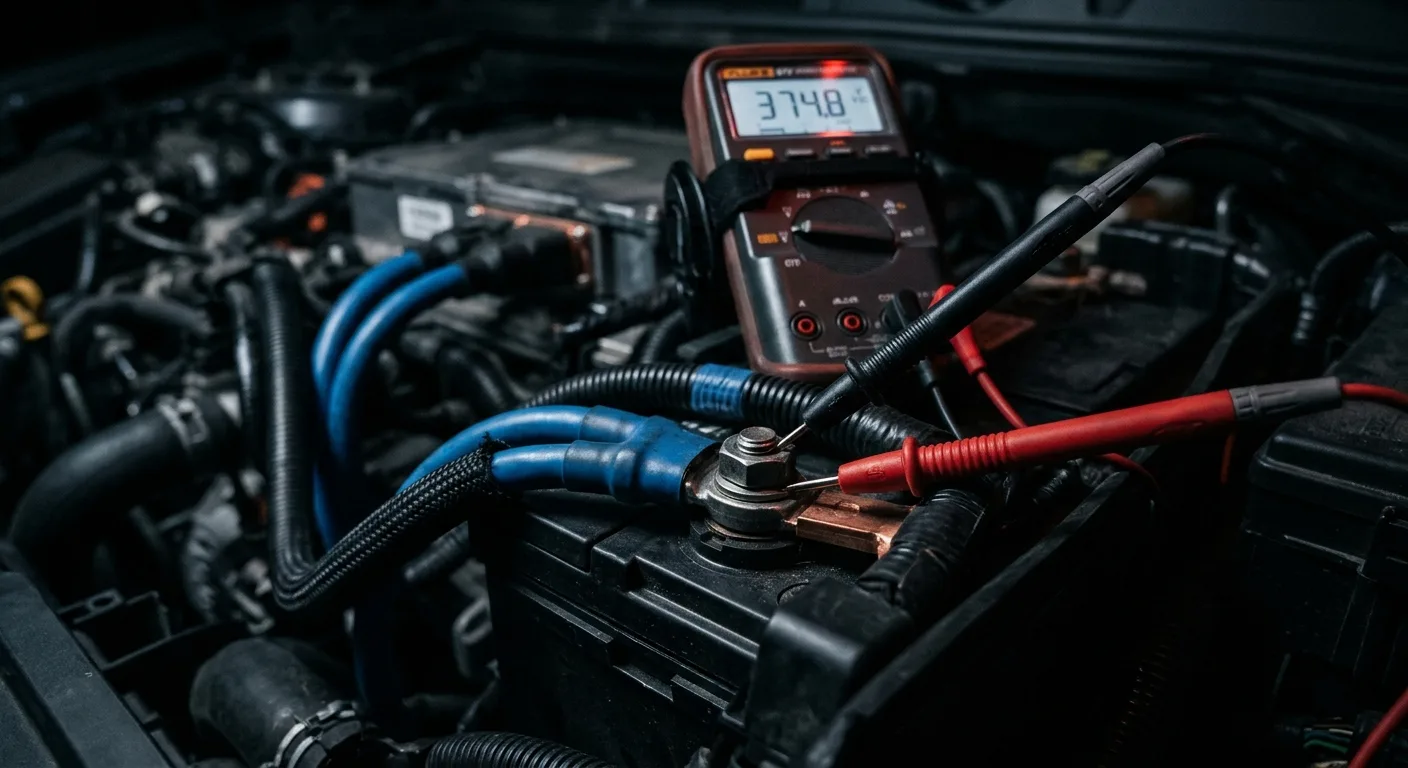
- Park safely, switch off, remove the fob from the cabin, and wait the manual's stated time.
- Locate the auxiliary 12V battery and the under-bonnet or cabin fuse box. Photograph the layout before touching anything.
- Set the multimeter to DC volts, 20V range. Place the red probe on the battery positive post and the black probe on negative. Note the reading.
- Put the vehicle into its ready state (or connect a charger as the manual allows) and repeat the voltage check. Watch whether the reading climbs into the 13V to 14.5V band.
- Switch off and isolate again. For each suspect fuse, set the meter to resistance and touch one probe to each exposed test point on top of the fuse. A good fuse reads near 0 ohms.
- If a fuse reads open, pull it and confirm the rating against the manual before replacing it with an identical one. Never uprate a fuse.
- If voltage is low and no fuse is blown, check the auxiliary battery terminals for corrosion and tightness with the vehicle off.
- Reconnect everything, start the vehicle, and recheck the auxiliary voltage. If it stays low while the car is ready, the DC-DC converter or its circuit is suspect, and that is a technician job.
For model-specific fuse maps and code lookups, the EV diagnostic and fuse guides are a sensible next stop before you start pulling covers.
What the reading means
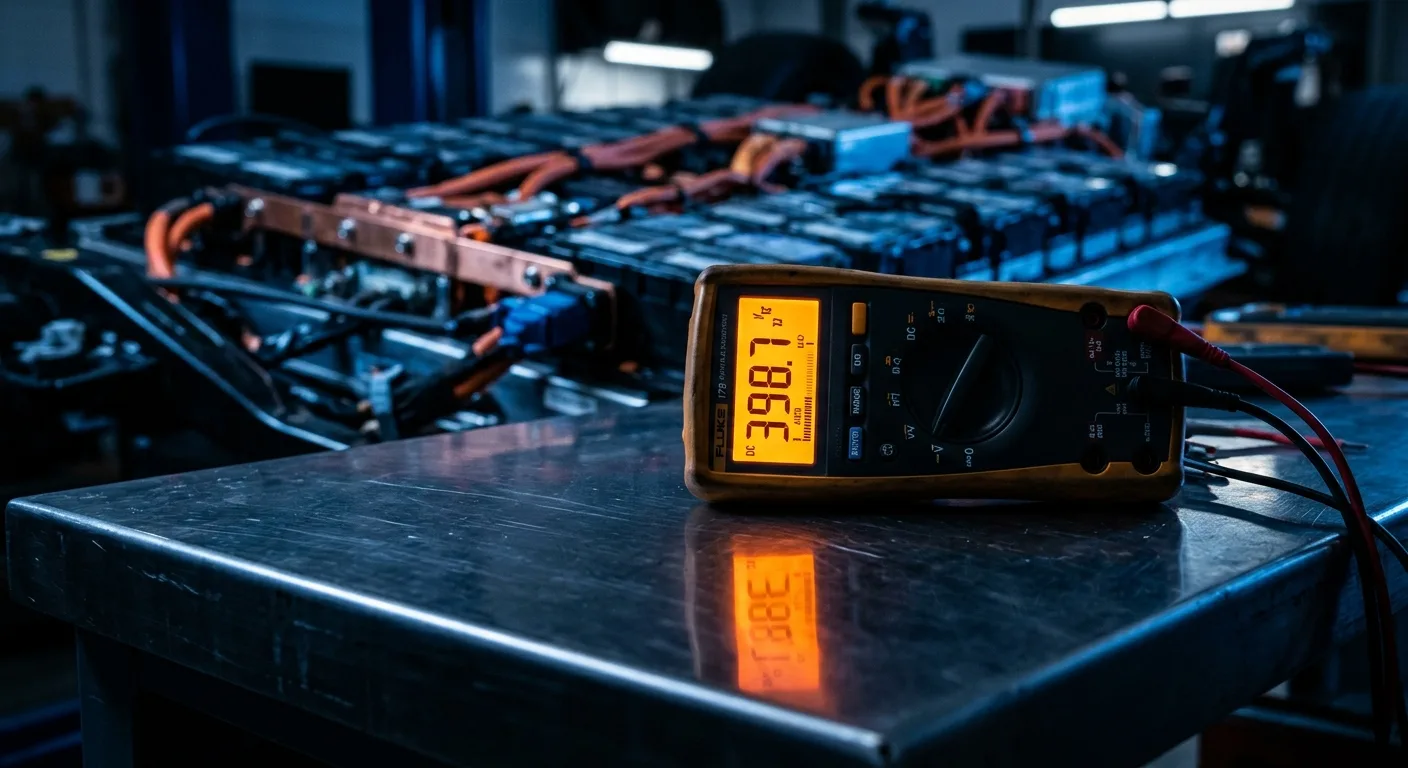
- Around 12.4V to 12.7V at rest: normal for a healthy auxiliary battery.
- 13V to 14.5V with the vehicle ready: the DC-DC converter is charging the auxiliary system as it should.
- Noticeably below 12V at rest: the auxiliary battery is flat or failing, or something is draining it.
- Low voltage even when ready: the converter is not charging, or its fuse or wiring is at fault.
- Fuse reads near 0 ohms: circuit intact.
- Fuse reads OL: open circuit, the fuse has blown. Find out why before replacing it.
- Fuse reads a steady low resistance but the accessory still fails: the fault is downstream, in the wiring or the component.
Likely causes, most to least likely

- A tired auxiliary 12V battery. They fail earlier than owners expect, especially on cars that sit.
- A blown fuse on an accessory or charging circuit, often after a jump-start or a botched accessory install.
- Loose or corroded battery terminals causing intermittent voltage sag.
- A parasitic drain from an aftermarket dashcam, tracker or misbehaving module.
- A failing DC-DC converter, which shows as low auxiliary voltage even when the car is ready.
- Settings-related efficiency losses: climate pre-conditioning left on, sentry-style monitoring enabled, or scheduled charging clashing with cheap-rate windows.
That last point is where the 12 settings come in. None of them fix a blown fuse, but together they cut wasted energy every trip:
- Use scheduled departure charging so the pack warms just before you leave, not hours early.
- Set eco or efficiency drive mode as your default.
- Turn on strong regenerative braking if your car lets you choose.
- Cap climate pre-conditioning to the trips that need it.
- Use seat and steering heating instead of cabin heat where possible.
- Set cabin temperature a degree or two lower in winter and rely on heated surfaces.
- Enable eco climate mode if fitted.
- Switch off always-on monitoring features when parked somewhere secure.
- Set a charge limit suited to daily driving rather than charging to full every night.
- Pre-condition the battery before fast charging in cold weather, using the car's own route planner.
- Disable unnecessary connected services and background updates on the road.
- Check tyre pressures monthly; underinflation quietly costs range.
If you are weighing a change of car, the head-to-head EV comparisons show which models expose these settings and which bury them in menus, and the EV model directory lets you filter by efficiency-relevant specs.
Fix or next step

Replace a blown fuse only with the identical rating from the manual, and only after you have found the cause. A fuse that blows twice means a short, and that is where you stop. Replace a weak auxiliary battery if it will not hold charge after a full top-up. Clean and tighten terminals, then recheck voltage.
If the auxiliary voltage stays low with the vehicle ready, or a fault code persists after a fuse and battery check, stop. Do not keep swapping parts. The EV troubleshooting guides help you decide whether a code is worth chasing yourself, and the free EV calculators let you sanity-check whether your range loss is real or just seasonal.
When to see a professional

See a qualified technician if: any fault points to the traction battery or high-voltage system; the DC-DC converter is suspect; a fuse blows again immediately after replacement; you find burning smells, swelling or heat near any battery; or the vehicle refuses to enter its ready state. High-voltage work is never a DIY job, and no setting or multimeter check substitutes for it.
FAQ

Can a 12V problem really cut my range? Indirectly, yes. A sagging auxiliary battery causes codes, module restarts and failed pre-conditioning, all of which waste energy. Fix the 12V side first, then judge range.
Do these 12 settings work on every EV? No. Names and availability vary by model and software version. Confirm what your car offers in its manual, and expect some settings to be missing on older software.
How often should I check the auxiliary battery? A voltage check every few months is cheap insurance. Replace it when it will not hold charge after a full top-up, and check the manual for any model-specific schedule.
Can I measure the traction battery with my multimeter? No. Never probe high-voltage components. That work requires isolation training and PPE, and belongs to a qualified technician.
Where do I find my fuse ratings? In the vehicle's manual or on the fuse box label. Ratings differ by model and circuit, so never guess or uprate.