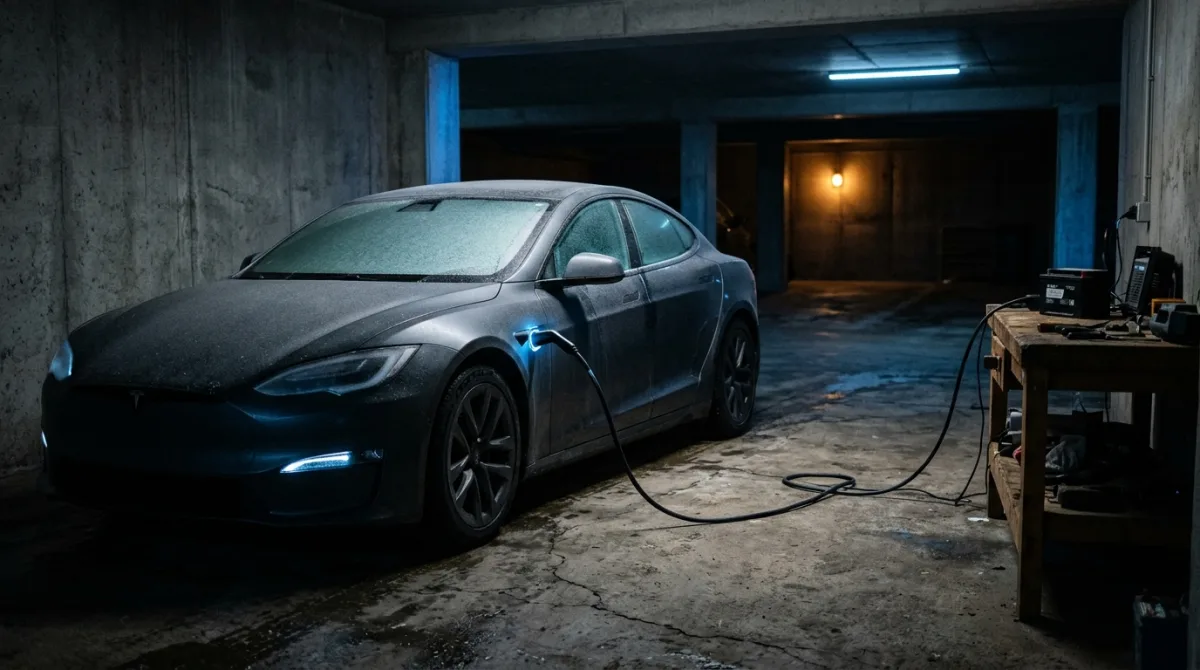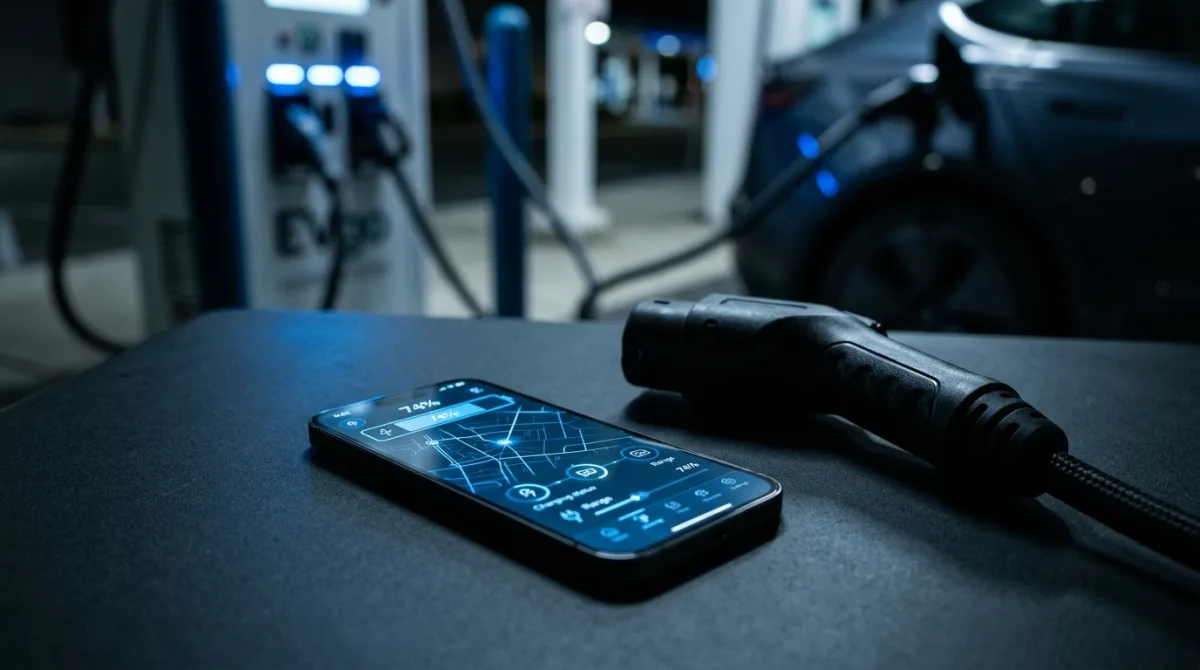
The rain started about ten minutes before I gave up. I was standing in a hotel car park at 11pm, holding a portable charger in one hand and my phone torch in the other, trying to work out which of the three unmarked sockets on the wall was actually live. My cable was too short to reach the one that clearly worked. I ended up sitting in the driver's seat with the heating on low, watching the range creep up about 4 miles for every 20 minutes, and wondering why I hadn't just paid for a proper wall unit at home and saved myself the circus.
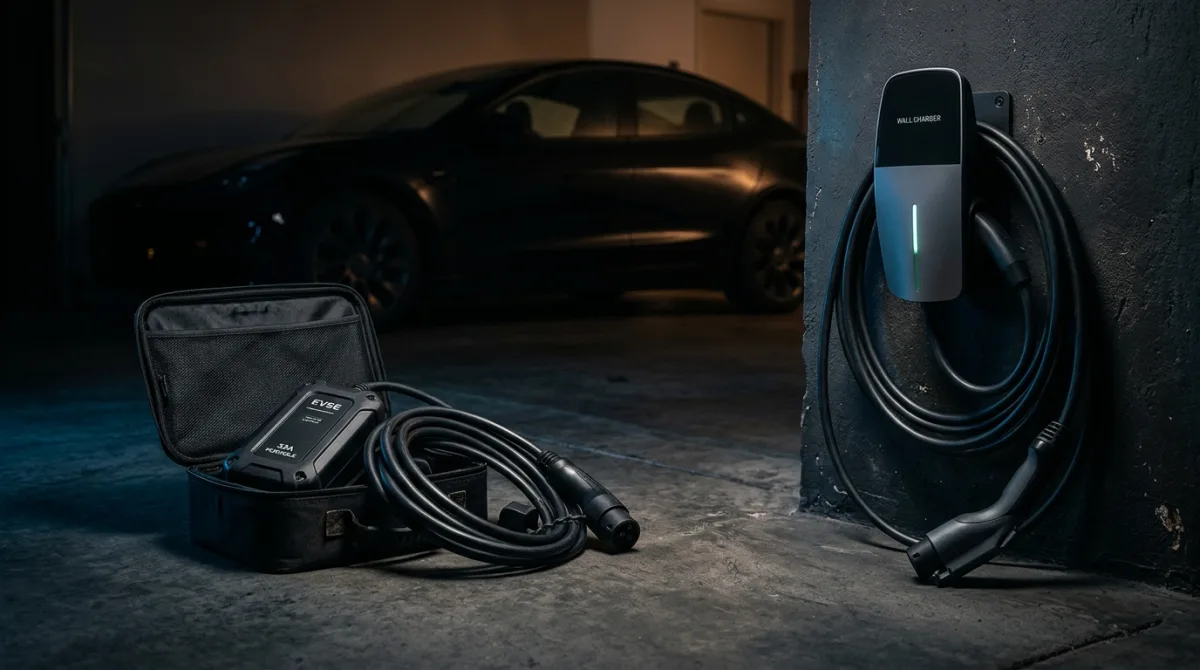
That night pushed me to properly compare the two options I'd been half-ignoring for a year: a portable charger that lives in the boot, and a fixed wall charger bolted to the side of the house. Here's what I actually learned, including the bit where I got it wrong.
Why I even bothered
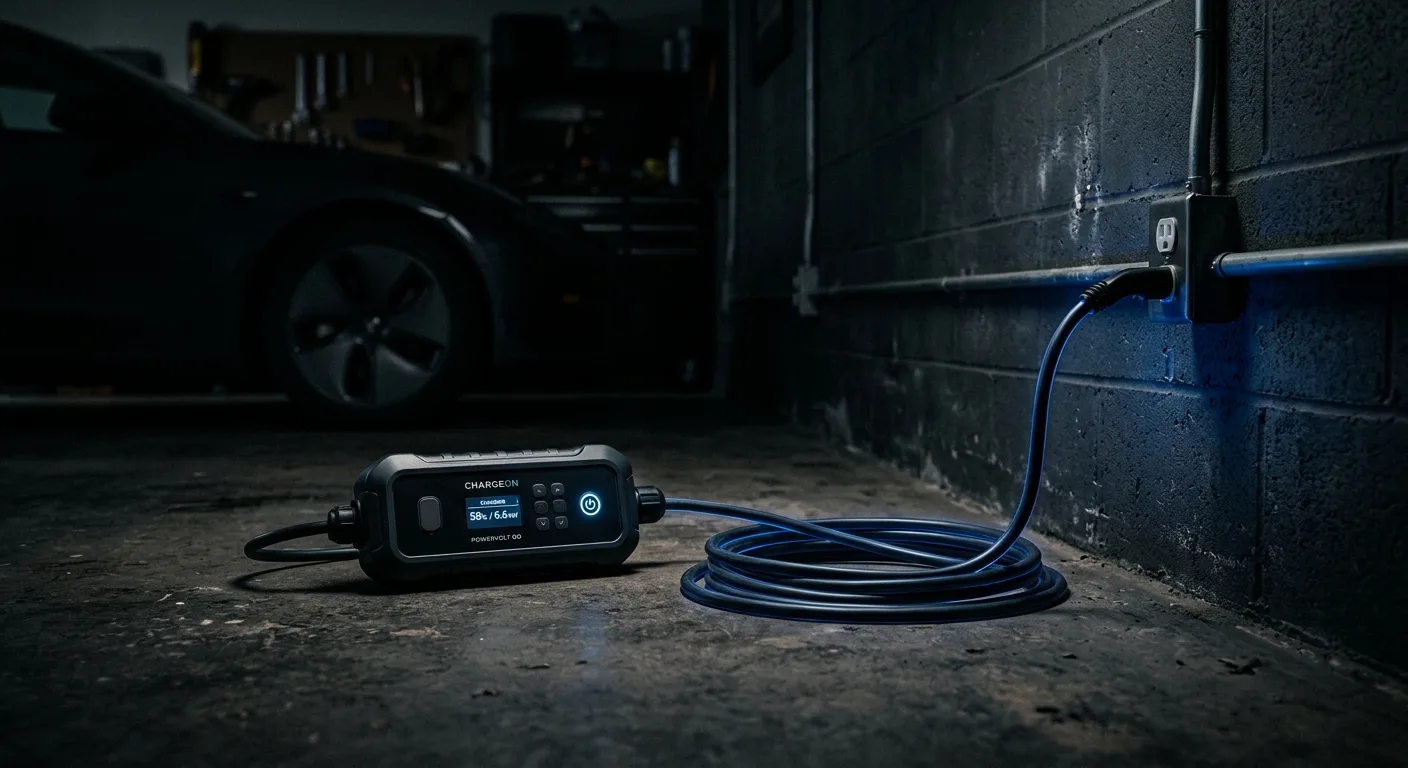
I drive a used electric hatchback with a modest battery. When I bought it, the dealer threw in a portable charger and told me it was "all you'll ever need." For the first few months that was true. I plugged it into a normal outdoor socket overnight, and by morning I had enough range for the school run and the commute. Then winter arrived, the range dropped, and I started doing longer weekend trips. Suddenly "all you'll ever need" felt like a stretch.
I didn't want to spend money without understanding what I was buying. So I ran both setups side by side for a few months, took notes like a nerd, and this is the honest version.
The portable charger: convenient until it isn't
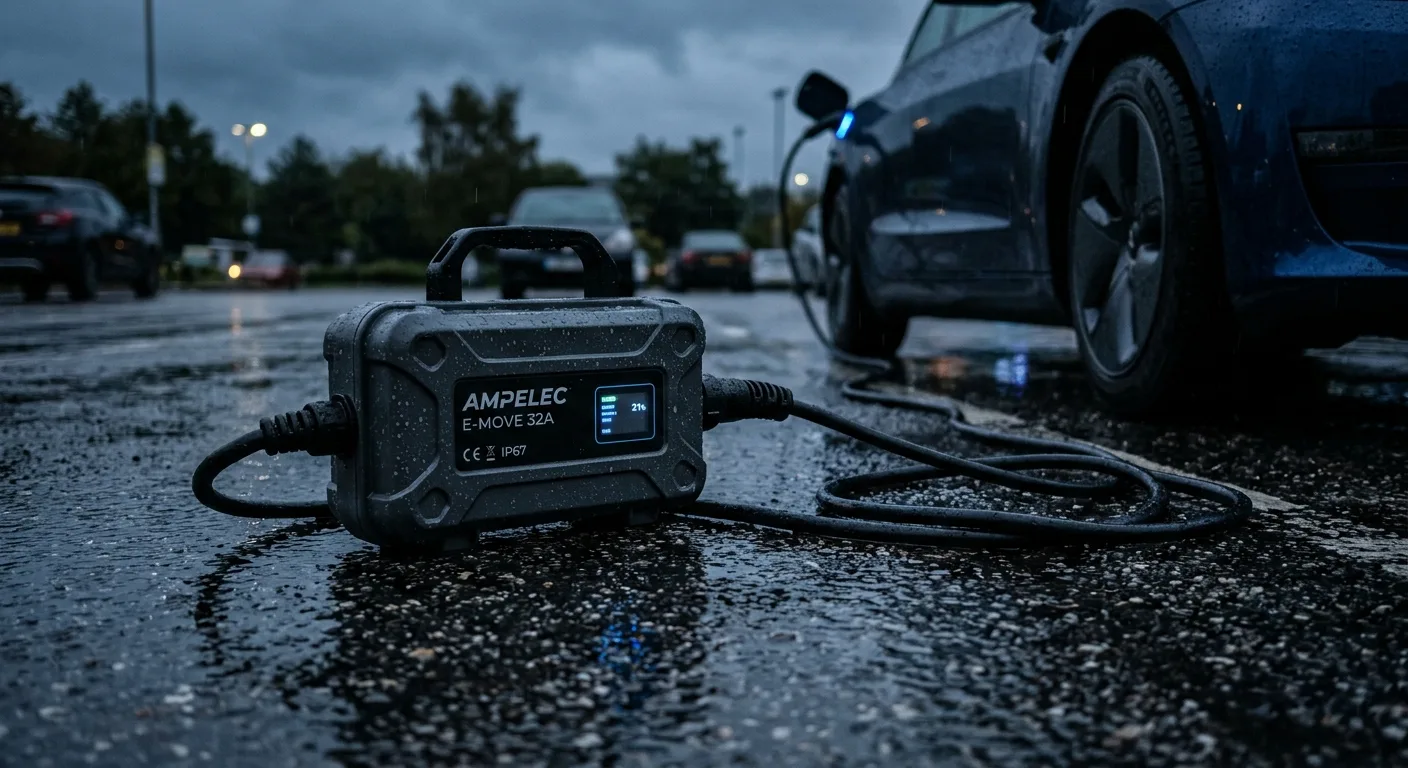
A portable charger (sometimes called a granny charger, or a mode 2 cable) plugs into a regular socket. Mine is rated for a modest current, and in practice it adds roughly 8 to 12 miles of range per hour on my car. That's fine overnight. It is not fine when you arrive somewhere with 15% left and need to leave in two hours.
The good part is obvious: it goes everywhere with me. I've used it at a friend's house, at a holiday cottage, and once, memorably, at a farm shop that let me plug in while I ate a very average sandwich. No installation, no electrician, no drilling.
The bad part is everything around it. Normal sockets aren't designed to deliver that kind of current for six hours straight, especially old outdoor ones. After a few weeks I noticed the plug was warm to the touch, which made me nervous. I had an electrician check the circuit and he told me, politely, that the socket was on a shared ring and I should stop doing that. That's a safety point worth taking seriously: if a plug or socket feels hot, stop, and get it checked. If you're ever unsure about the wiring, that's a job for a qualified electrician, full stop.
The other annoyance is the faff. Uncoiling the cable in the rain. Finding a socket. Hoping the socket is earthed properly. It gets old fast.
The wall charger: boring, expensive, and quietly brilliant
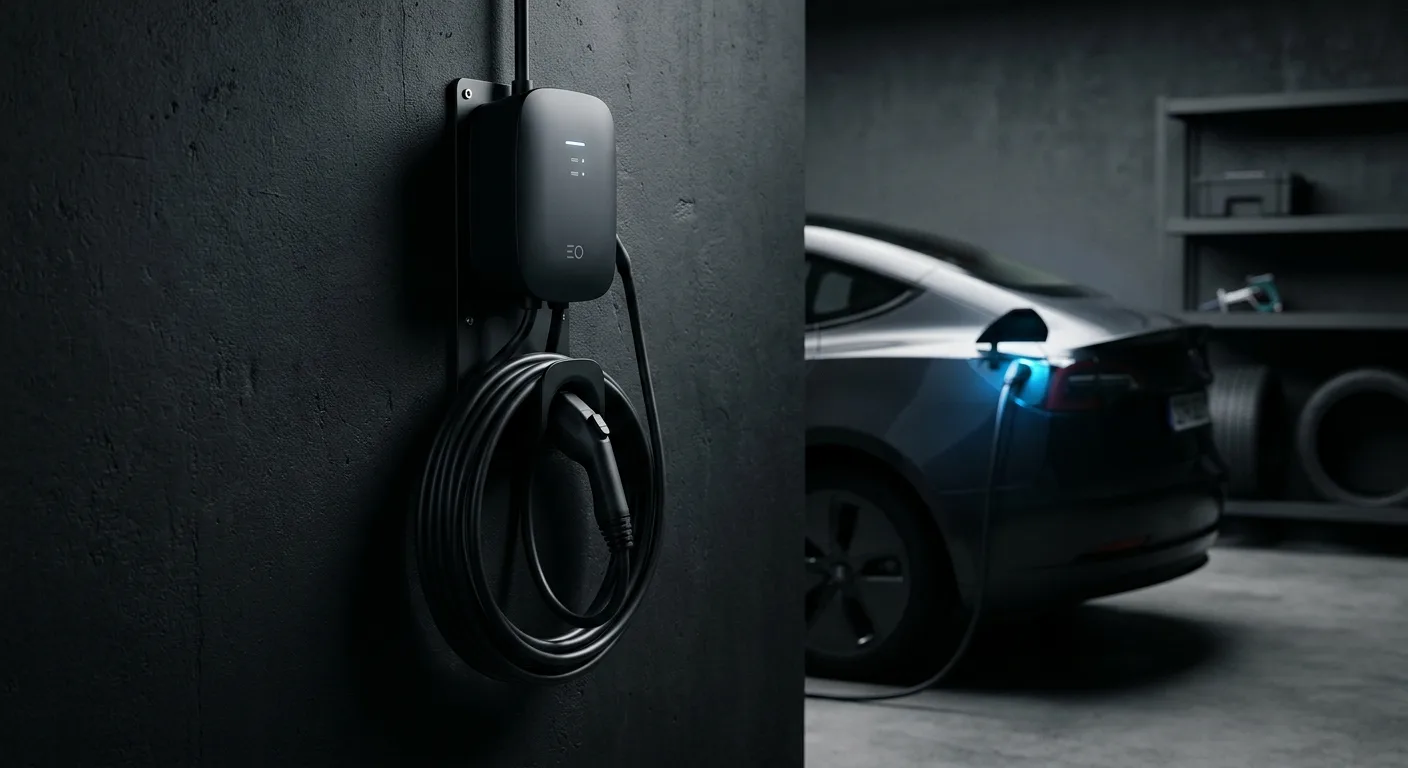
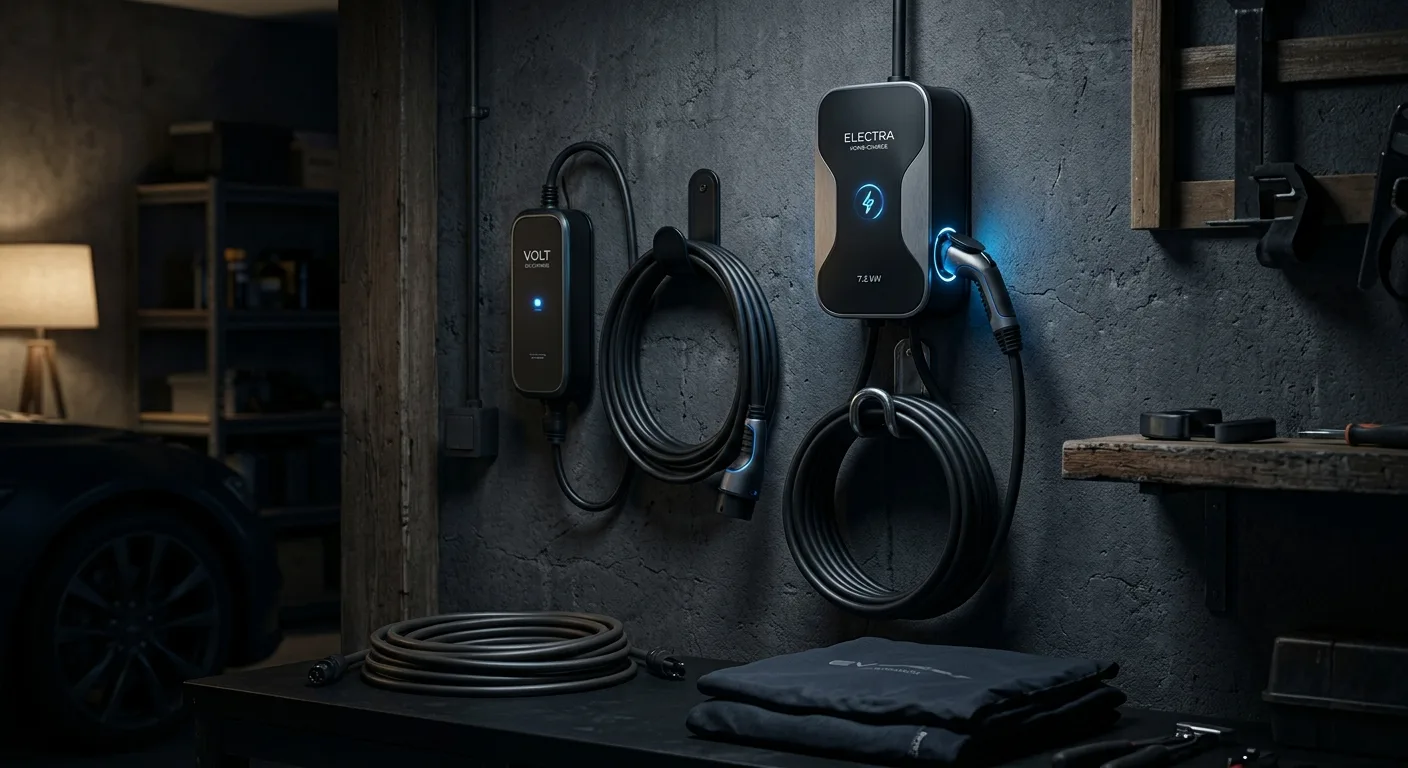
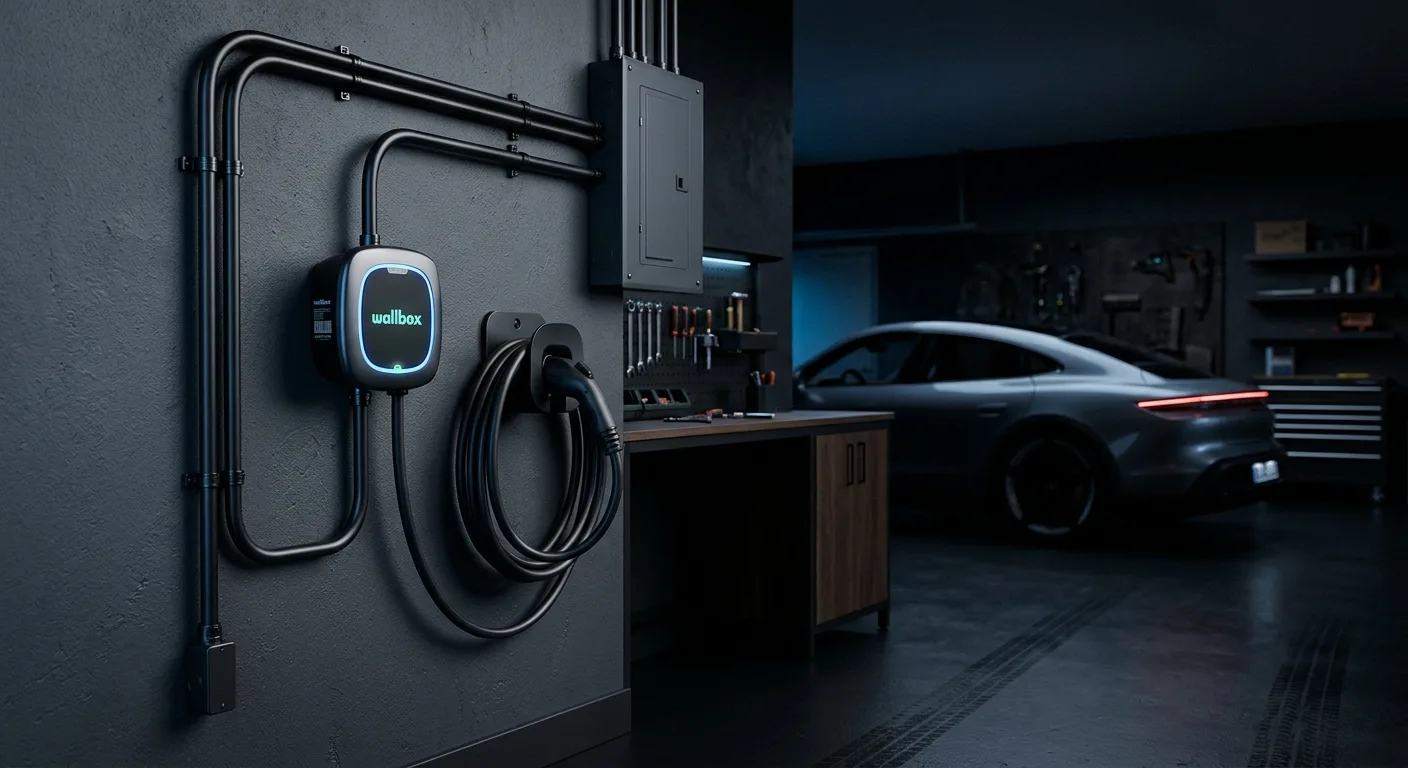
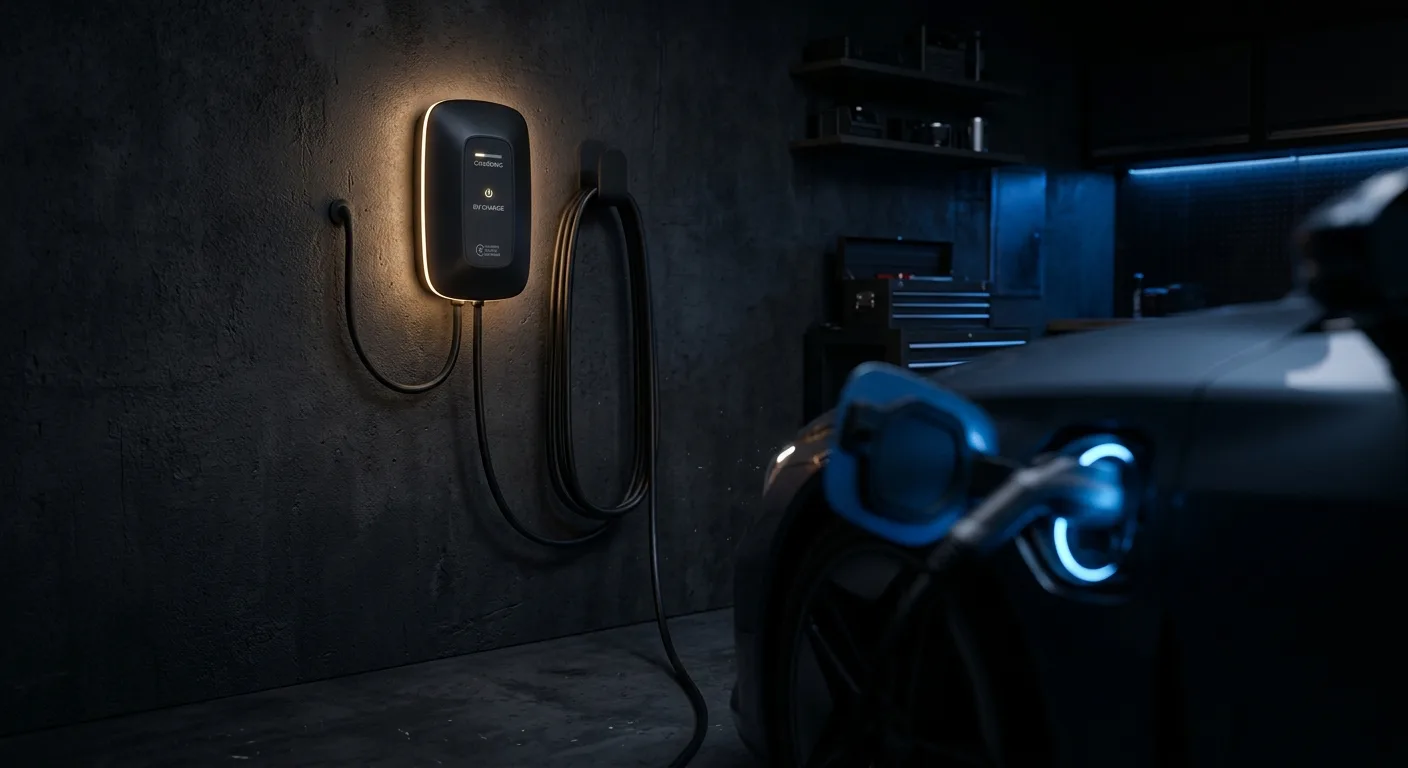
A wall charger (a dedicated 7kW-ish unit, professionally installed) changed the rhythm of my week. Instead of "will I have enough by morning," I stopped thinking about charging at all. Plug in when I get home, unplug when I leave. On my car it adds something in the region of 25 to 30 miles of range per hour, so a couple of hours covers most days and an overnight session fills it comfortably.
The catch is the upfront cost and the installation. The unit itself varies a lot by brand and features, expect roughly £400 to £1,000 for the hardware depending on what you choose, and installation on top, which can range from a few hundred pounds to well over a thousand if your consumer unit needs work or the cable run is long. Prices move, so check current quotes rather than trusting a number from a blog (including this one).
I also had to think about whether my home supply could take it. The installer checked the main fuse and the consumer unit before quoting. If yours is old, budget for that.
One thing I'd say clearly: everything I'm describing here is the low-voltage, plug-it-in side of things. Anything involving opening the car's traction battery, the high-voltage cabling, or the internals of the charger itself is not a DIY job. That's a qualified technician, every time. I'm comfortable changing a fuse; I'm not comfortable going near orange cables.
The trip where the portable saved me
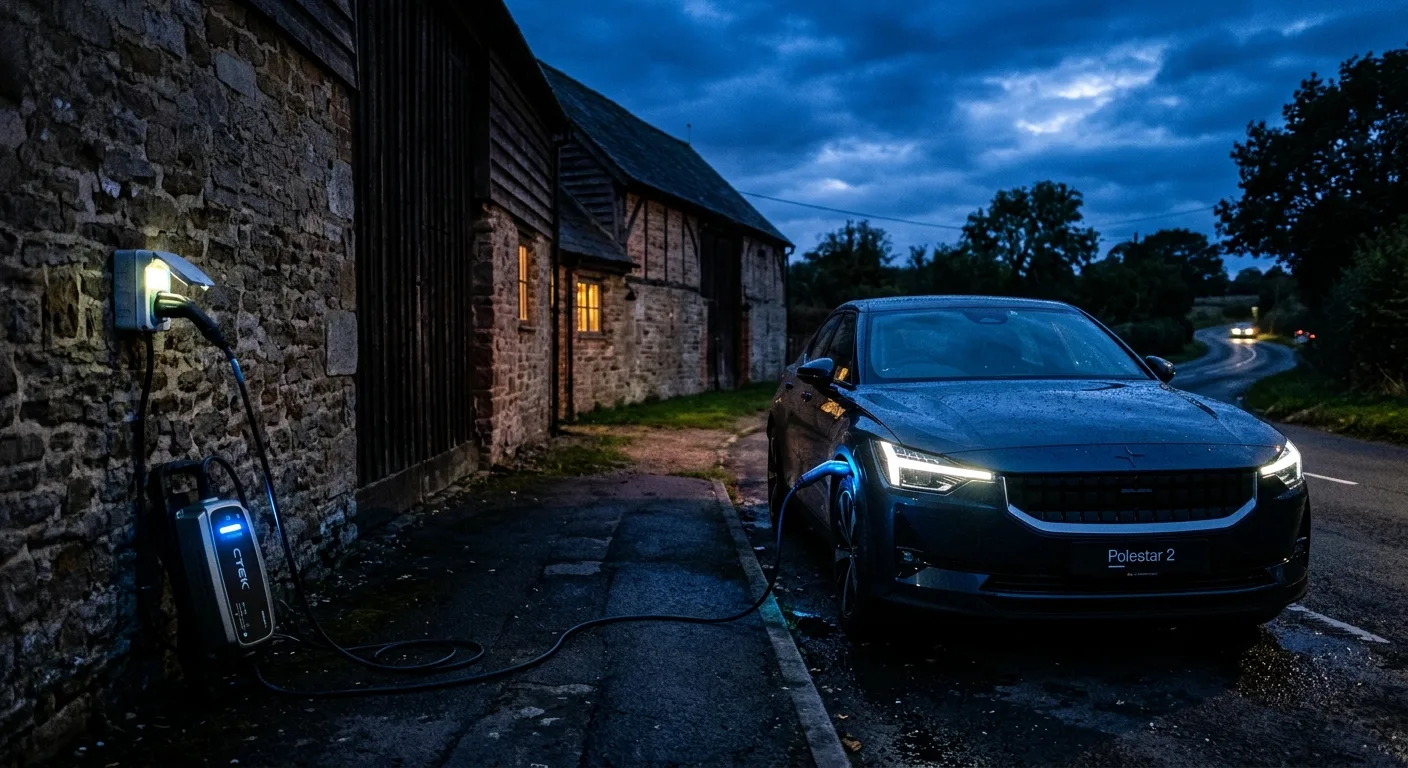
Two months in, I drove to a rural cottage with no off-street parking and one outdoor socket by the back door. The wall charger was 200 miles away and useless. The portable charger, plugged in overnight through an extension I'd checked was rated for the load, gave me enough to get to a rapid charger the next morning. That trip is the reason I still keep the portable cable in the boot. It's insurance.
I've since gotten better at planning. Before any long trip I check the route on a proper comparison of charging options and work out where the gaps are. If you're comparing cars or chargers, the head-to-head comparisons on this site are genuinely useful for that, because the "right" answer depends heavily on your car's onboard charger limit. A wall unit that can deliver 7kW is wasted if your car only accepts less.
The mistake I made
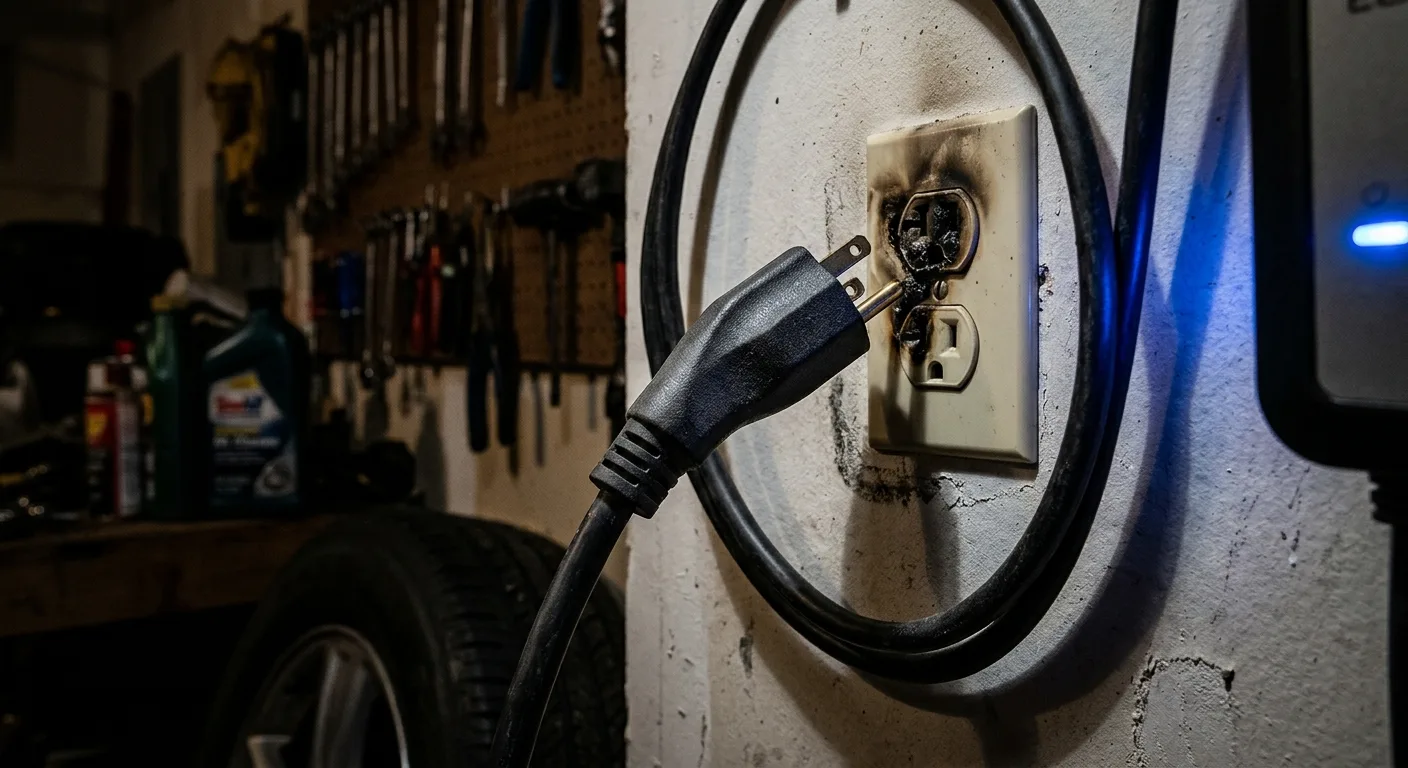
I assumed a wall charger would make the portable redundant. It didn't, and I nearly sold it. Then a family emergency meant a last-minute drive to a relative's house with no charger and no nearby rapid point. The portable cable turned a stressful evening into a manageable one. I kept it.
The other mistake was buying a cheap wall unit without checking whether it had the scheduling and monitoring features I actually wanted. I now wish I'd spent a bit more for something I could set to charge overnight on a cheaper tariff. Live and learn. If you're weighing up features, the free calculators and tools here are handy for working out what a given charging speed actually means for your daily mileage.
Honest pros and cons
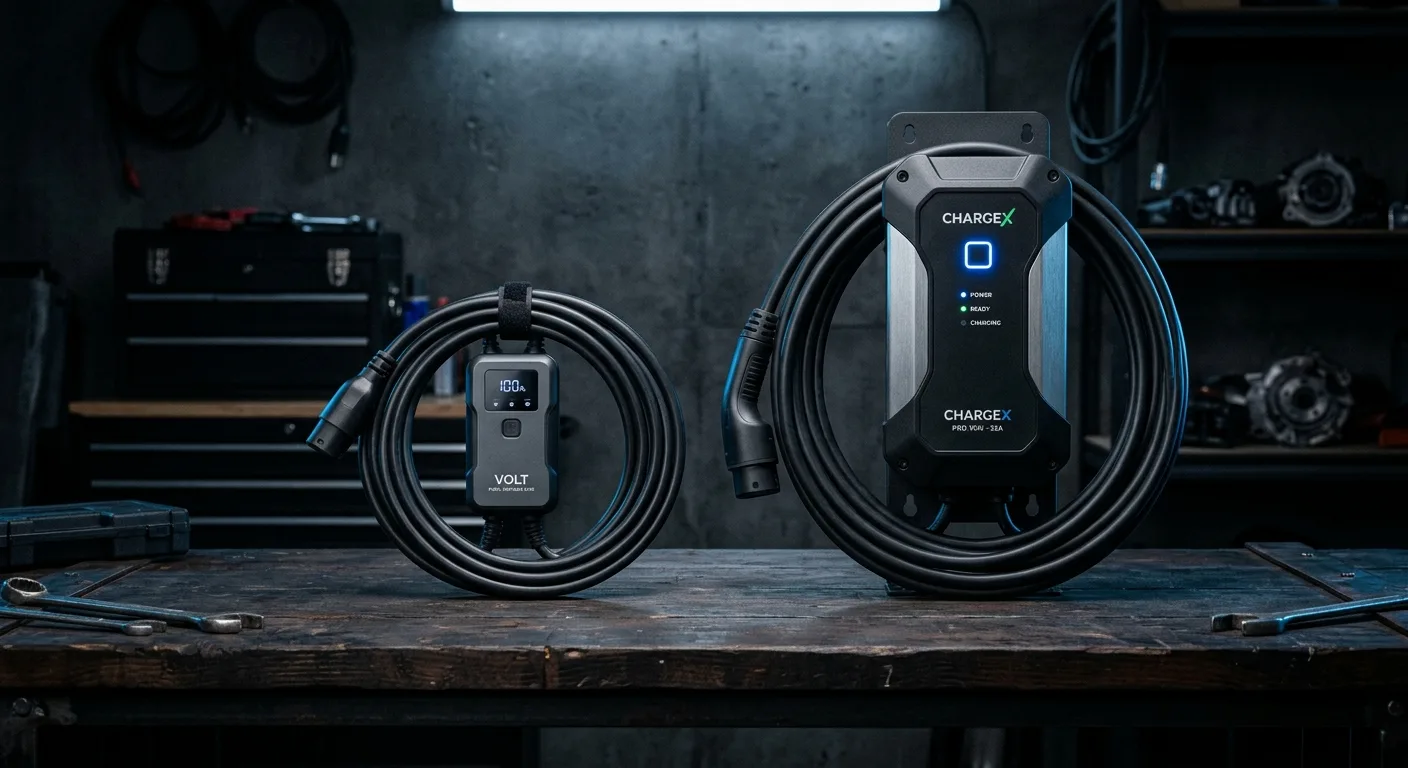
Portable charger
- Pros: cheap, no installation, goes anywhere, perfect as backup or for occasional use.
- Cons: slow, socket-dependent, can be a safety worry on old wiring, constant uncoiling.
Wall charger
- Pros: fast, permanent, tidy, set-and-forget, often smarter about scheduling.
- Cons: real upfront cost, needs professional installation, tied to one location, wasted money if your car charges slowly anyway.
If you want a deeper fault-finding walkthrough before you commit, the EV troubleshooting guides cover the common charging problems people hit, and the diagnostics and fuse guides are worth a read if something stops working and you want to understand why before calling anyone out.
What it actually cost
| Item | Approximate cost |
|---|---|
| Portable charger (bundled with car) | Free to roughly £150-£250 if bought separately |
| Wall charger hardware | Roughly £400-£1,000 |
| Professional installation | Roughly £300-£1,200+, depending on wiring and cable run |
| Electrician check of existing socket | Roughly £60-£150 |
| Extra electricity per full charge | Depends on your tariff; check current rates |
Treat every figure as a rough guide and get local quotes. Installation costs in particular swing wildly with the age of your house.
What I would do differently
- Get the socket checked before relying on the portable charger for weeks, not after.
- Buy a wall unit with scheduling and monitoring from the start. It's worth the extra.
- Check what your car's onboard charger can actually accept before paying for speed you can't use.
- Keep the portable cable even after installing a wall charger. It's cheap insurance.
- Never assume a hotel or pub socket will work. Bring a longer cable and a plan B.
Quick practical tips
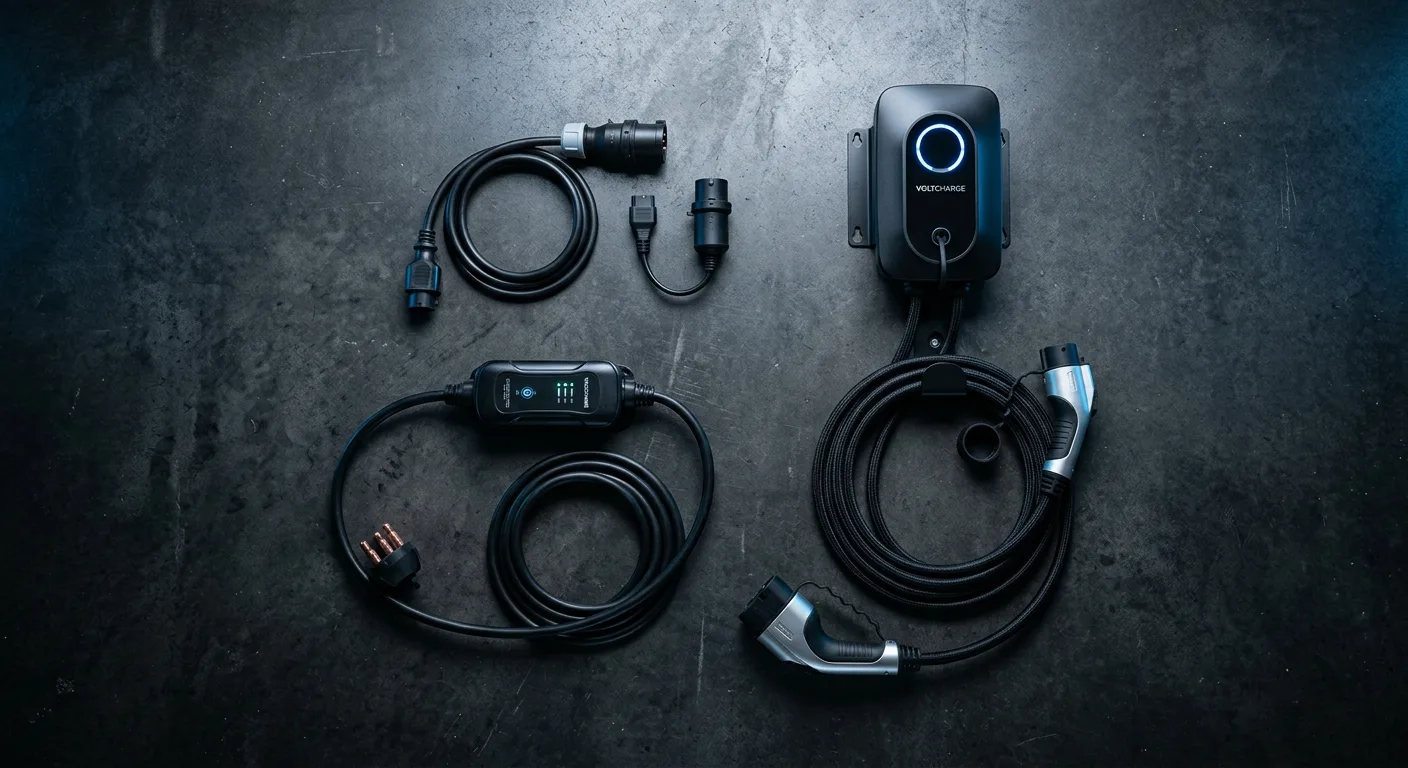
- If a plug or socket gets hot during charging, stop and get it inspected.
- Coil cables loosely, not tightly, to avoid heat build-up.
- Check your car's maximum AC charging rate before buying hardware.
- Keep a portable cable in the boot for emergencies, even with a wall unit at home.
FAQ
Can I just use a portable charger forever? You can, if your daily mileage is low and your wiring is sound. It's slow and fiddly, but it works. Just get the socket checked first.
Do I need an electrician for a wall charger? Yes. Installation involves your home's electrical supply. Don't attempt it yourself.
Is a portable charger safe outdoors in the rain? Only with properly rated outdoor sockets and equipment. If in doubt, don't. Ask an electrician.
Will a wall charger increase my range? No. It charges faster, not further. Range depends on the car and how you drive.
That rainy car park taught me more than any spec sheet. I still keep the portable cable in the boot, and I still smile a little every time I plug in at home and walk away without thinking about it.
Ready to act on what you just read? Explorethe EV model directory, head-to-head EV comparisons or the free EV calculators and tools. The rest of this site is built to help you take the next step.