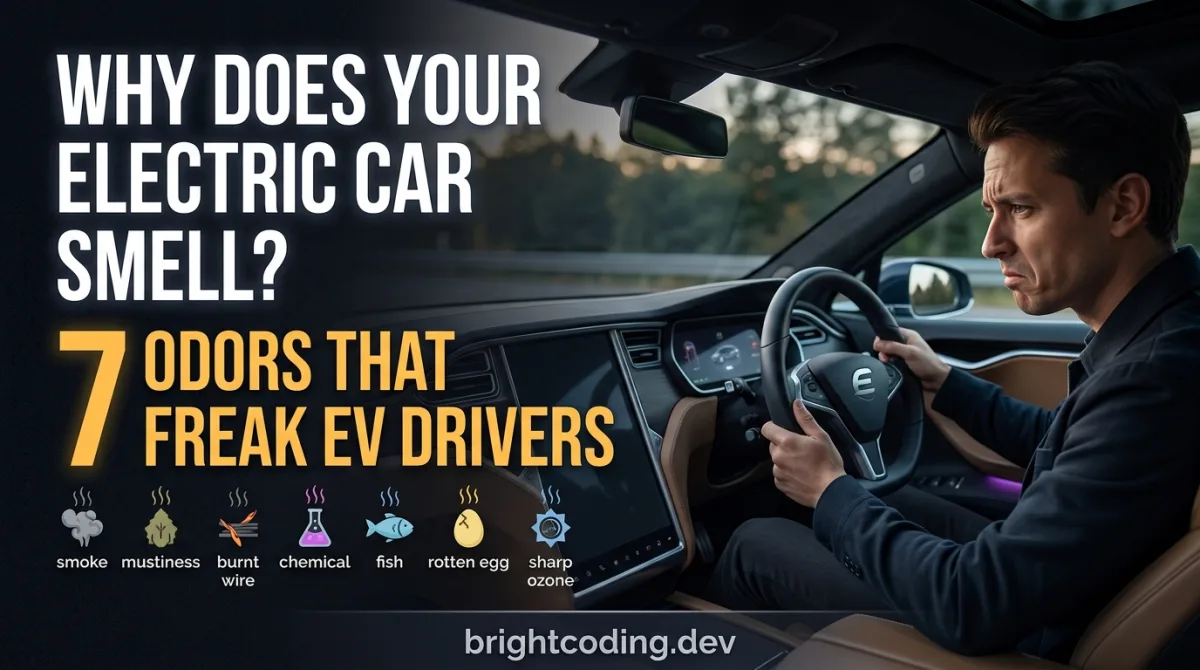
You press the start button, glide away in silence, and then… sniff. Hmm. That is not gasoline. So why does your electric car smell?
Great question. Electric cars do not have exhaust fumes, but they are still complex machines. They are full of plastics, adhesives, electronics, coolant, tires, brakes, and an HVAC system. So yes, an EV can have a smell, and the scent usually tells a story.
Here is a friendly, no-jargon guide to the most common electric car smells, how they compare to gas cars, and when you should actually worry.
The Surprising Truth: EVs Do Not Smell Like “Nothing”
One of the best things about electric cars is what you do not smell: no gasoline, no diesel, no burnt oil, no catalytic converter funk. That alone makes them feel cleaner and quieter.
But “no exhaust smell” does not mean “no smell at all.”
EVs can smell like:
- New plastic or glue
- Hot electronics
- Burning rubber
- Musty gym socks
- Sweet syrup
- Rotten eggs
- Ozone or hot metal
Some of these are totally normal. Others are a warning sign. Let’s break them down.
1. New EV Smell: That “New Car” Scent Is Really VOCs
If your brand-new electric car smells like a mix of plastic, leather, glue, and electronics, you are not imagining it.
That smell comes from volatile organic compounds (VOCs). These are chemicals released by:
- Dashboard plastics
- Seat foam and fabric
- Leather treatments
- Adhesives and sealants
- Paint and coatings
- Wiring insulation
- Battery pack sealants
Gas car vs. EV new-car smell
A new gas car has VOCs too, but it also has fuel, oil, and exhaust smells that can mask them. In an EV, you notice the plastics and adhesives more because there is no gasoline aroma covering them up.
Real-world example: Many new Tesla Model 3 and Model Y owners describe a “sweet plastic” smell for the first few weeks. Nissan Leaf and Hyundai Ioniq 5 owners often report something similar.
Is it dangerous?
Usually not in small amounts. But if it is strong, ventilate the cabin. Open the windows, run the fan on fresh air, and avoid parking in direct sun for long periods. The smell usually fades within a few weeks or months.
Pro tip: An activated carbon cabin filter can help absorb VOCs faster.
2. Burning Smell After Driving: Normal or Nope?
This is the one that makes EV owners panic. You park, step out, and smell something burning. What is it?
It depends on the type of burning smell.
Normal burning smells in an EV
- New brakes bedding in: Even EVs have brake pads. When they are new, they can smell hot.
- Rust burning off brakes: EVs use regenerative braking a lot, so the friction brakes are used less. They can rust, then smell when you finally use them hard.
- Tires: EVs are heavy and have instant torque. Hard acceleration can scrub tires and create a rubbery burn smell.
- Road debris: A plastic bag stuck to the exhaust area? EVs do not have exhaust, but debris can still touch hot components.
- Motor or inverter heat: Performance driving can heat up the drive unit. A faint hot-metal smell can be normal after hard use.
Concerning burning smells
- Burning plastic or wire smell
- Smoke from the battery area
- Sharp chemical smell
- Burning smell with a battery temperature warning
- Burning smell after fast charging that does not go away
Real-world example: A Nissan Leaf owner fast-charges on a hot day and notices a hot electronics smell. That can be normal heat soak. But if it smells like burning insulation or comes with a warning light, stop driving and get it checked.
Gas car comparison: In a gas car, a burning smell often means oil leaking onto the exhaust, coolant burning, or transmission fluid. In an EV, the usual suspects are brakes, tires, coolant, or high-voltage electronics.
3. Musty, Sour, Gym-Sock Smell: It Is Probably Your AC
This is one of the most common EV complaints, and it is not really an “EV thing.” It is an HVAC thing.
Your air conditioning system has an evaporator core. It gets cold and collects condensation. If moisture sits there, mold and bacteria can grow. Then you turn on the fan and get a musty, sour, dirty-sock smell.
Why it is more noticeable in an EV
Gas cars have engine noise, vibration, and exhaust smells that distract you. EVs are silent and clean, so a musty AC smell stands out immediately.
Real-world example: Tesla Model Y and Model 3 owners frequently report a musty smell after a year or two. Nissan Leaf and Chevy Bolt owners report it too.
How to fix it
- Replace the cabin air filter. Choose an activated carbon filter if you can.
- Clean the evaporator core.
- Check the AC drain tube for clogs.
- Run the fan on high with fresh air for a few minutes before parking.
- Avoid leaving recirculation on all the time.
Gas car comparison: Same problem, same fix. EVs just make it more obvious.
4. Sweet Smell: Coolant Leak
A sweet, syrupy smell is usually coolant. EVs use coolant to manage battery, motor, and inverter temperatures.
If you smell something sweet:
- Check the coolant level.
- Look for leaks under the car.
- Watch for warning lights.
- Do not ignore it. Battery and motor cooling are critical.
Real-world example: A Chevy Bolt with a coolant leak may give a sweet smell near the front or under the battery pack. If you also see a battery warning, stop driving and call service.
Gas car comparison: In a gas car, sweet smell often means a radiator or heater core leak. In an EV, it is usually battery or drive-unit coolant.
5. Rotten Egg Smell: Usually the 12V Battery
A rotten egg smell means sulfur. In gas cars, that often points to a failing catalytic converter. In EVs, the usual culprit is the 12V lead-acid battery.
Yes, EVs still have a small 12V battery to run computers, lights, and accessories. If it is overcharging or boiling, it can release sulfur gas.
What to do: Do not ignore it. Get the 12V battery tested or replaced. It is a cheap fix compared to major electronics damage.
6. Ozone or Hot Metal Smell: Electrical Warning
Ozone smells like the air after a lightning storm, sharp and clean but weird. In an EV, it can come from:
- High-voltage arcing
- Faulty electrical connections
- Inverter issues
- Aftermarket electronics
- Some cabin ionizers
A hot metal smell can come from a hot motor, inverter, or brake component.
If you smell ozone or hot metal with performance loss, warning lights, or a burning plastic odor, treat it as a serious electrical issue. Park safely and get it inspected.
EV Smell vs. Gas Car Smell: Quick Comparison
| Smell | Gas Car Cause | Electric Car Cause | Example |
|---|---|---|---|
| Exhaust | Constant | None | N/A |
| New car | VOCs plus fuel and oil | VOCs from plastics, adhesives, sealants | New Tesla Model 3 |
| Burning | Oil, coolant, exhaust | Brakes, tires, motor, inverter, wiring | Nissan Leaf after fast charging |
| Sweet | Radiator coolant | Battery or motor coolant | Chevy Bolt coolant leak |
| Musty | AC evaporator | AC evaporator | Tesla Model Y |
| Rotten egg | Catalytic converter, 12V battery | 12V battery overcharge | Any EV with old 12V |
| Ozone | Alternator or electrical | High-voltage arcing, inverter | Rare but serious |
| Rubber | Tire wear, clutch | Tire wear, hard launches | Hyundai Ioniq 5 spirited driving |
When Should You Worry About an EV Smell?
Call for service or stop driving if you notice:
- Burning plastic or wire smell
- Smoke from the battery area
- Sweet smell plus low coolant
- Rotten egg smell plus battery warning
- Ozone smell plus electrical faults
- Musty smell plus wet carpets
- Any smell with a battery temperature warning
- A smell that gets worse quickly
If you suspect a battery fire risk, park outside, away from buildings, and evacuate. Do not charge the car.
How to Get Rid of Common EV Smells
- Ventilate: Open windows and run fresh air.
- Replace cabin filter: Use activated carbon.
- Clean AC evaporator: Kills musty smells.
- Check for leaks: Coolant, washer fluid, water intrusion.
- Inspect brakes and tires: Especially after hard driving.
- Do not mask it: Air fresheners hide problems. Fix the source.
- See a technician: For electrical, coolant, or battery smells.
FAQ: Electric Car Smells
Do electric cars have a smell?
Not exhaust, but yes, they can have new-car VOCs, hot electronics, musty AC, coolant, tire, and brake smells.
Why does my electric car smell like burning rubber?
Usually tires or brakes. EVs are heavy and torque-rich, so hard launches can scrub tires. Regen braking can let brakes rust, then smell when used.
Why does my EV smell sweet?
Likely coolant. EVs use coolant for battery and motor thermal management. Check for leaks.
Why does my EV smell musty?
AC evaporator condensation and a dirty cabin filter. Replace the filter and clean the evaporator.
Why does my EV smell like rotten eggs?
Usually the 12V lead-acid battery overcharging. Get it tested.
Why does my EV smell like gas?
It should not. You may be smelling outside exhaust, a spilled lawnmower can, or something in the trunk. EVs do not produce gasoline fumes.
Is new EV smell toxic?
It is VOCs. Usually low risk, but ventilate and consider an activated carbon filter.
Final Thoughts
Electric cars do not smell like gasoline, oil, or exhaust, and that is a win. But they can still smell like plastic, hot electronics, musty AC, sweet coolant, or burning brakes. Most smells are harmless and temporary. Some are clear warning signs.
Learn your EV’s normal scent. Then pay attention when something changes. Your nose is one of the cheapest diagnostic tools you own.