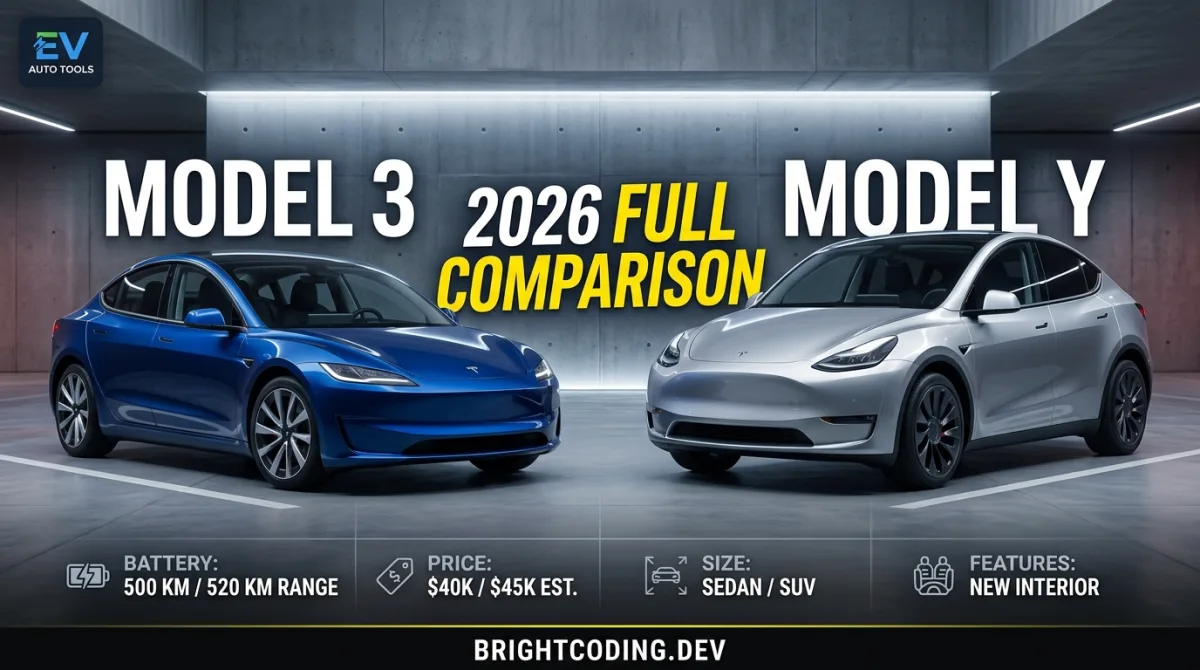
Tesla Model 3 vs Model Y: Full Comparison 2026
You have narrowed it down to two of the most popular electric vehicles on the planet. You have watched the reviews, crunched the numbers, and maybe even taken a test drive. Yet here you are, still staring at the configurator, unable to click "Order." The Tesla Model 3 and Model Y look similar, share the same platform, and promise the same software ecosystem. So why does this decision feel so difficult?
It feels difficult because it is difficult. These two vehicles are not just different body styles. They represent two fundamentally different ways of living with an electric car. One prioritizes efficiency and driving feel. The other trades some of that for versatility and cabin space. The wrong choice will cost you money, convenience, and satisfaction for the next five to ten years.
This article will give you a clear framework to decide. We will look at what actually separates these two Teslas in 2026, why buyers get stuck, and how to pick the one that fits your real life—not just your driveway.
The Problem: Two Cars, One Platform, Endless Confusion
Tesla built the Model Y on the same architecture as the Model 3. They share motors, batteries, software, and even most of their interior. On paper, they look like the same car wearing different outfits. That is exactly the trap.
In reality, the Model 3 is a sport sedan. The Model Y is a compact crossover. That single difference cascades into everything: how the car drives, how much you can carry, how easy it is to get in and out, how much you pay, and how efficiently you use electricity.
The mistake most buyers make is treating this like a spec-sheet exercise. They compare range numbers and acceleration times and assume the higher number wins. But your satisfaction depends on how the car fits your daily routine. A family of four with two car seats will have a very different experience in a Model 3 than a single commuter will. A buyer who does frequent road trips with luggage will notice the cargo difference immediately. Someone who parks in a tight urban garage will feel the size gap every single evening.
If you choose wrong, you do not just get a car you mildly dislike. You get a car that makes your life harder.
Why It Happens: The Spec-Sheet Illusion
Tesla's marketing does not help. Both cars are promoted with the same language: industry-leading range, Autopilot, over-the-air updates, minimalist interior, Supercharger access. When every headline uses the same superlatives, the real differences get buried.
There is also the price problem. The Model Y typically costs more than an equivalent Model 3, but not by an amount that feels decisive. It is not a jump from a Toyota to a BMW. It is a few thousand dollars. That small gap tricks buyers into thinking the decision is trivial. They shrug and pick one, then discover six months later that the rear seat is too cramped for their growing toddler, or that the taller ride height was exactly what their bad knee needed.
Finally, there is fear of missing out. The Model Y looks like the "practical" choice, so sedan lovers worry they are being irresponsible if they pick the Model 3. The Model 3 looks like the "fun" choice, so crossover shoppers worry they are being frivolous. Neither worry is true, but both create paralysis.
The Solutions: How to Choose the Right Tesla
The only way out of this is to match the car to your life, not to an abstract ideal. Here are the four decision factors that actually matter in 2026.
1. Interior Space and Practicality
The Model Y is taller, wider, and offers a hatchback trunk. That means easier child-seat loading, more headroom for rear passengers, and roughly three times the cargo volume with the seats folded. If you haul strollers, bikes, camping gear, or Costco runs, the Model Y removes friction from your life.
The Model 3 is a traditional sedan with a smaller fixed trunk opening. It is fine for groceries and luggage for two people. It is less convenient for bulky items. However, the lower roofline and smaller footprint make it easier to park in tight structures and navigate narrow city streets.
When it makes sense: Pick the Model Y if you regularly carry passengers and cargo. Pick the Model 3 if you rarely fill the back seat and value maneuverability.
2. Driving Dynamics and Efficiency
The Model 3 sits lower to the ground. That lower center of gravity gives it sharper handling, less body roll in corners, and a more connected feel to the road. It is the driver's car of the two.
The Model Y sits higher, which improves outward visibility and ease of entry, but adds weight and aerodynamic drag. You will feel more roll in fast corners, and you will use slightly more electricity per mile.
On efficiency, the Model 3 wins. A lower, lighter sedan cuts through the air more cleanly. Over thousands of miles, that difference adds up to real money and fewer charging stops on road trips.
When it makes sense: Pick the Model 3 if you enjoy driving and want maximum range per kilowatt-hour. Pick the Model Y if you prioritize comfort and a commanding view of traffic.
3. Ride Comfort and Daily Usability
The Model Y's extra suspension travel and taller sidewalls absorb potholes and broken pavement better than the Model 3. If your commute involves rough roads, you will notice the difference in your spine.
The Model 3's firmer setup feels sportier but transmits more road imperfections into the cabin. It is not harsh, but it is less forgiving.
When it makes sense: Pick the Model Y for rough urban roads or if you have mobility concerns that make step-in height important. Pick the Model 3 if you prefer a planted, sporty feel.
4. Total Cost of Ownership
The Model 3 usually carries a lower purchase price than a comparably equipped Model Y. Insurance can also be slightly lower. Because it is more efficient, your electricity costs drop over time. If budget matters, the sedan is the rational economic choice.
The Model Y costs more upfront and uses more energy, but it may save you from needing a roof box, trailer rental, or second vehicle for family trips. Sometimes paying more for the right tool is cheaper than paying less for the wrong one.
For a deeper look at how these costs stack up against gas cars and other EVs, our EV cost breakdown covers total cost of ownership, tax credits, and hidden expenses you should factor in before signing.
The Best Choice: Which Tesla Wins for You?
There is no universal winner. There is only the winner for your situation.
Choose the Model 3 if:
- You are a solo commuter or a couple without kids.
- You care about handling, acceleration feel, and maximum efficiency.
- You park in tight garages or dense urban areas.
- You want the lowest possible running costs.
Choose the Model Y if:
- You have young children or plan to soon.
- You carry bulky cargo at least twice a month.
- You take road trips with multiple passengers and luggage.
- You prefer a higher seating position and easier entry.
If you are still torn, our interactive EV comparison tool lets you line up the Model 3 and Model Y side by side across range, charging, price, and real-world ratings. Seeing the numbers in parallel often makes the decision obvious.
Step-by-Step Action Plan
Do not just read and hope clarity arrives. Follow this checklist.
- Audit your trunk. For one week, notice what you actually carry. If it includes a stroller, golf clubs, or large boxes more than twice, favor the Model Y.
- Measure your parking. If your garage or street parking is tight, the Model 3's smaller footprint will reduce daily stress.
- Test the seats. Bring your actual car seat or booster to a Tesla showroom. Install it in both cars. Time the process. Friction matters.
- Drive your commute. Take both cars on your actual daily route, not just around the dealership. Feel the potholes. Notice the visibility.
- Run the five-year math. Include purchase price, estimated electricity, insurance, and maintenance. Factor in any 2026 federal or state EV incentives.
- Sleep on it. If you still cannot decide after 48 hours, choose the Model Y. It is the more versatile machine, and versatility ages better than sportiness when life changes.
Common Mistakes to Avoid
- Buying for a future you do not have yet. Do not get the Model Y "just in case" you have kids in three years. Buy for your life today.
- Ignoring the charging network. Both cars use Tesla's Supercharger network, but if you live in an apartment without home charging, the Model 3's extra efficiency gives you more buffer between sessions.
- Assuming the Model Y is safer because it is bigger. Both cars earn top safety ratings. The Model Y's height helps in some collisions but increases rollover risk slightly. Size is not the same as safety.
- Forgetting about tires. The Model Y's heavier weight and larger diameter wheels mean tires cost more to replace. Factor this into ownership costs.
- Overvaluing acceleration specs. Both cars are fast. In daily driving, you will rarely use the difference between 3.5 seconds and 4.0 seconds to 60 mph. Focus on comfort and space instead.
- Skipping the back seat test. Many buyers sit in the driver's seat, fall in love, and never climb into the rear. If you carry passengers, that is where the real comparison happens.
Expert Takeaway
The Tesla Model 3 and Model Y are not competitors. They are siblings with different personalities. The Model 3 is the athlete. The Model Y is the utility player. Neither is better. One is simply better for you.
The most expensive mistake is not picking the wrong Tesla. It is picking the wrong Tesla because you compared numbers instead of lifestyles. Match the car to your real weekly routine, not your fantasy one, and you will be happy for years.
FAQ
Is the Tesla Model Y worth the extra money over the Model 3 in 2026? It depends on your needs. If you regularly carry passengers and cargo, the extra space and easier access justify the premium. If you drive alone and value efficiency, the Model 3 is the smarter financial choice.
Which has better range, the Model 3 or Model Y? The Model 3 is more aerodynamic and lighter, so it typically delivers more miles per charge than an equivalent Model Y trim. The gap is usually 20 to 40 miles depending on configuration.
Is the Model 3 or Model Y better for families? The Model Y wins for families with young children. The hatchback trunk, extra headroom, and higher seating position make daily life easier. The Model 3 works for families with older kids who do not need strollers or bulky gear.
Can I use Tesla Superchargers with both models? Yes. Both the Model 3 and Model Y are fully compatible with Tesla's Supercharger network, including the latest V4 stations, with plug-and-charge convenience.
Should I lease or buy a Tesla in 2026? Leasing can make sense if you want to upgrade every three years or if you want to take advantage of the commercial lease loophole for tax credits. Buying is better if you plan to keep the car long-term and want to avoid mileage limits. Our EV buying guides break down the full lease-versus-buy math.