A long EV trip is not harder than a petrol one, but it rewards planning in a way a petrol car never does. After reading this you will be able to build a route with charging stops that actually work, set your car up so the battery arrives in good shape, pack the right kit, and know what to do when a charger is broken or a leg runs longer than expected. Set aside 45-60 minutes the evening before you leave, plus a few minutes each morning of the trip.
What you need before you start
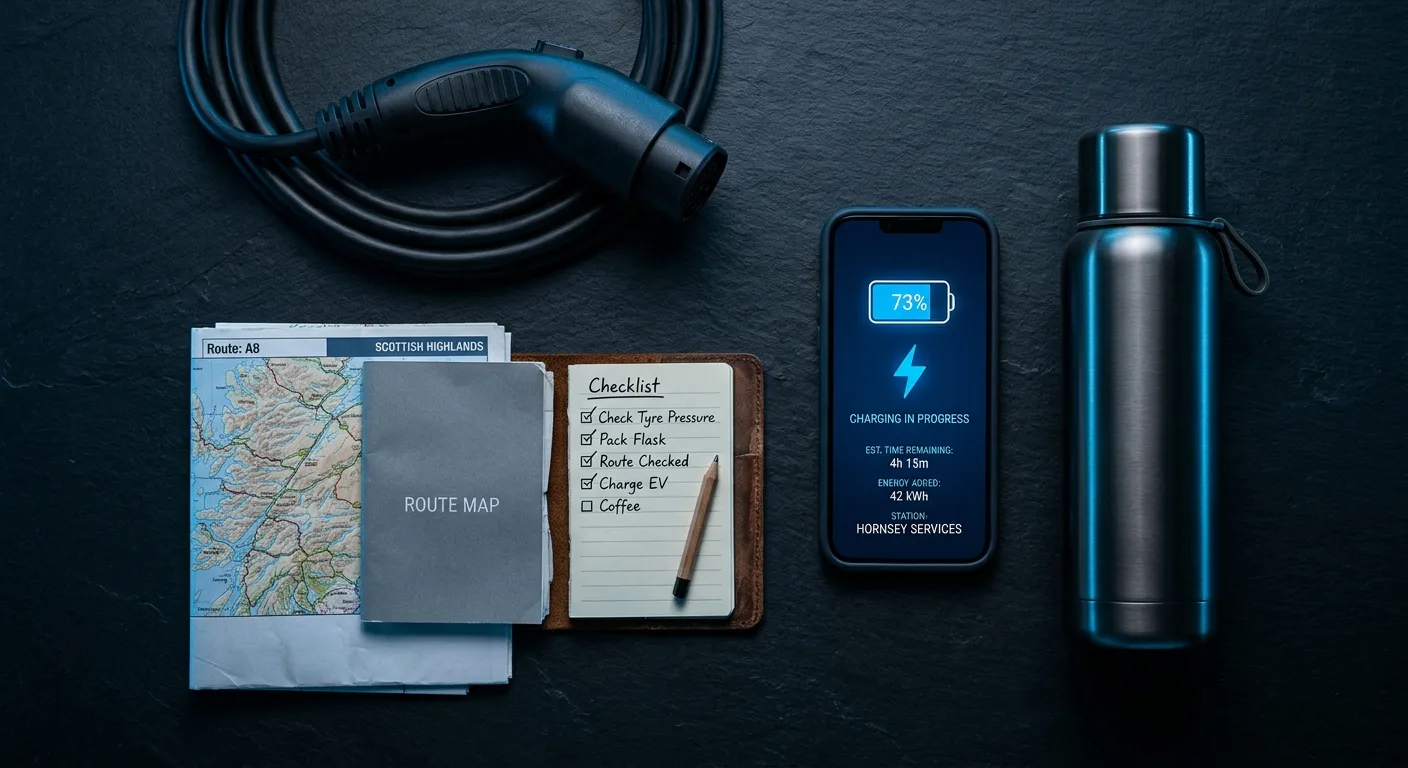
- Your car, charged and with the manual to hand (paper or in the dash menu).
- A route-planning app that shows live charger status. Several well-known options exist; pick one and learn it before you leave, not at a motorway services.
- A phone mount and a charging cable for the phone.
- A tyre pressure gauge, and the car's recommended pressures in bar or psi (check the door pillar sticker, not a guess).
- Your charging accounts and RFID cards or apps, already logged in.
- A simple kit: warning triangle, hi-vis vest, torch, gloves, a 5-litre water bottle, and a Type 2 cable if your car uses one for public AC points.
Step 1: Know your real range, not the brochure number
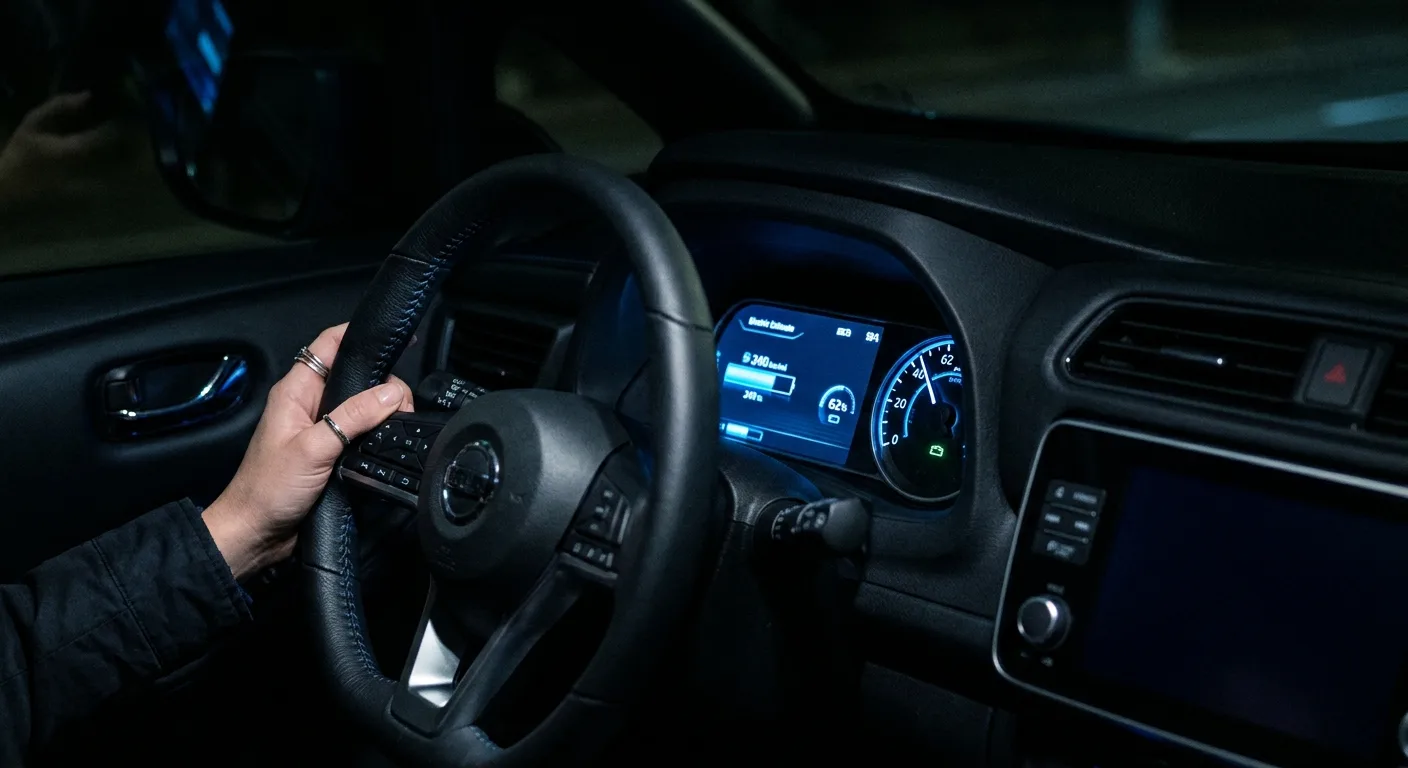
Before you plan a single stop, work out the range you will actually get. The dashboard figure is optimistic on a cold day at motorway speed. A rough rule many owners use: knock 15-25% off the official range for steady 110-120 km/h driving, and more in winter or with a roof box. Verify against your own recent trips rather than trusting any single number.
Why it matters: every charging stop you plan is built on this figure. Overestimate and you will be hunting for a charger with 4% left.
Tip: If you are still choosing a car, the EV model directory lists real-world range notes, and the free calculators can help you convert consumption figures into a trip budget.
Step 2: Charge to the right level the night before
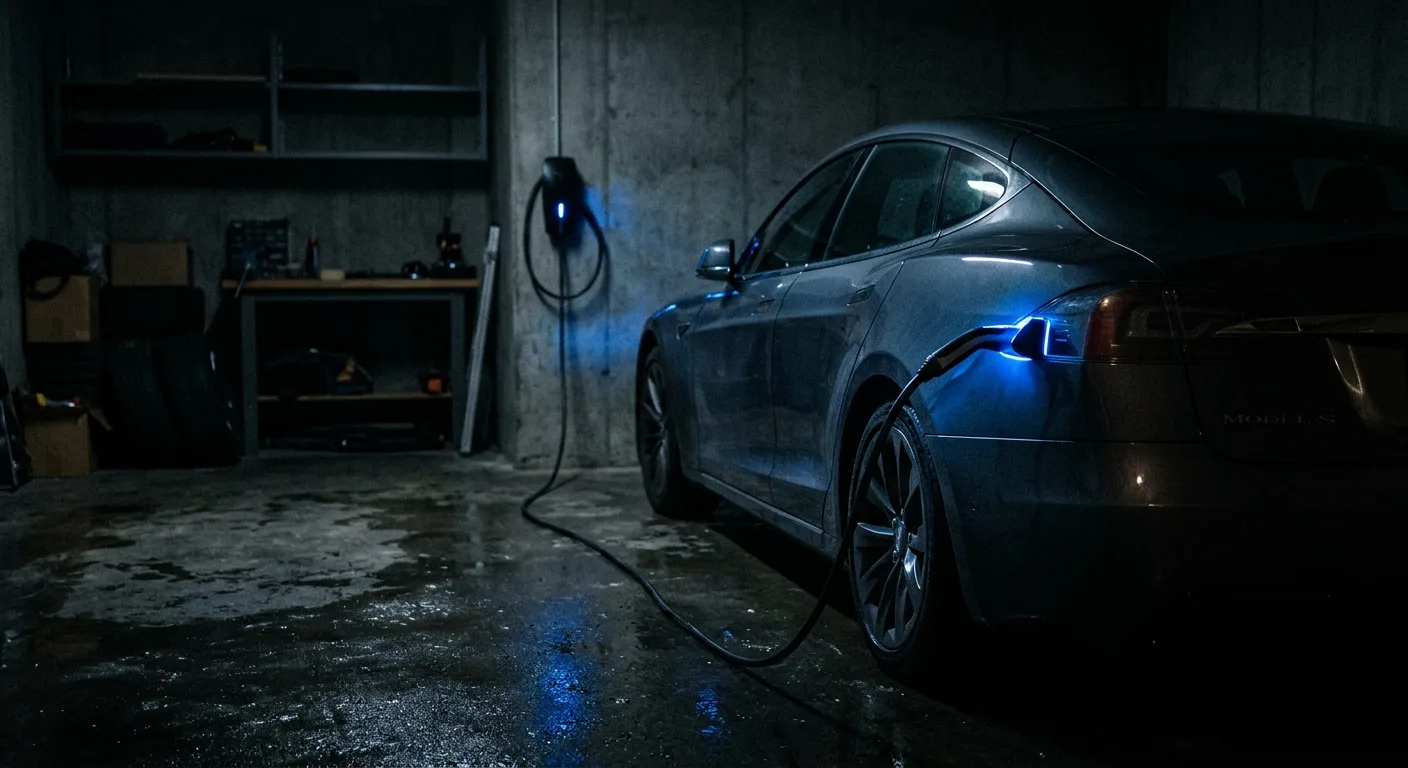
For most trips, charge to 100% at home the night before you leave, provided your car allows it and you are leaving soon after. For daily driving, many manufacturers recommend a lower ceiling (often around 80%) to look after the battery, but a full charge before a long drive is normally fine. Check your manual for the exact recommendation for your model.
Why it matters: a full battery on departure day can remove an entire charging stop from the first morning.
Tip: If you have a departure timer or pre-conditioning schedule, set it so the cabin is warm and the battery is at temperature when you leave. That saves energy on the first leg.
Step 3: Plan the route around chargers, not the other way round
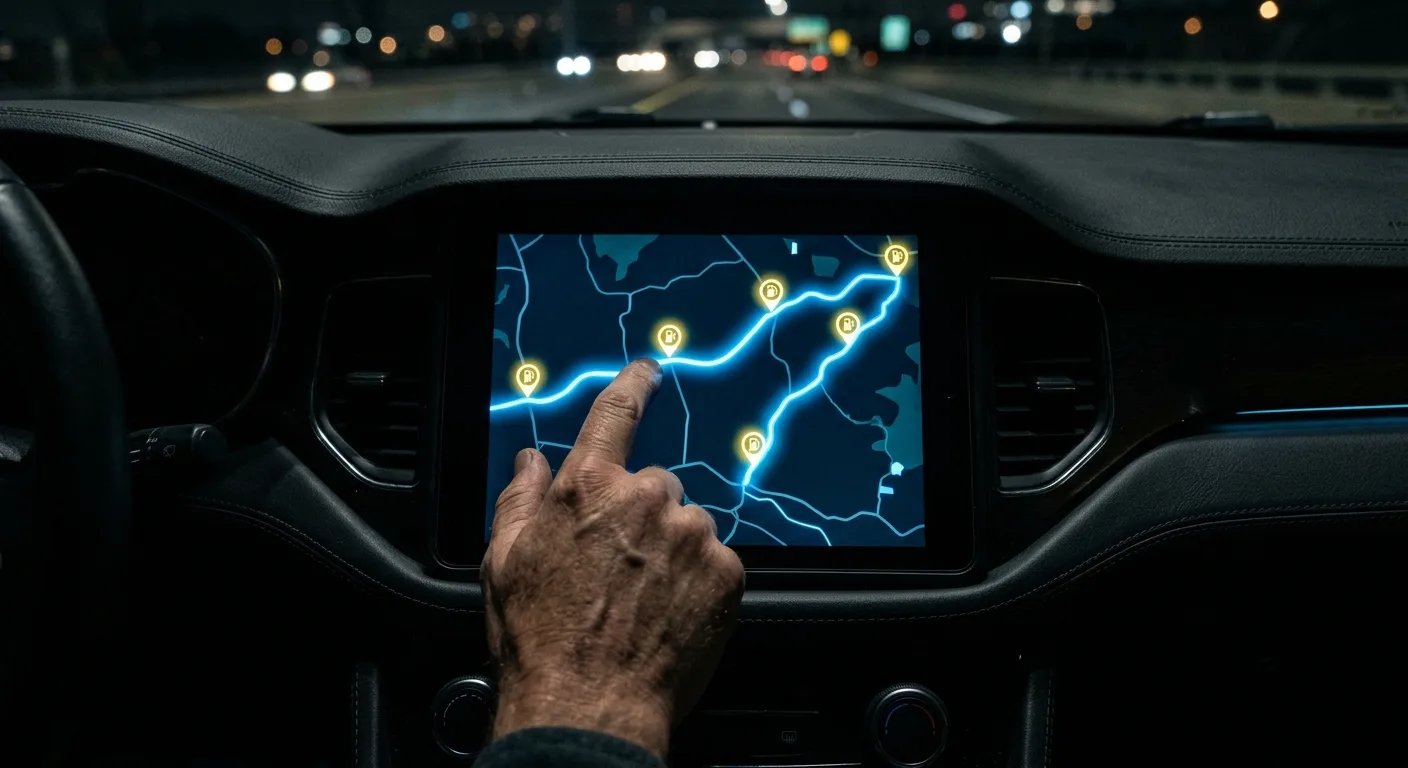
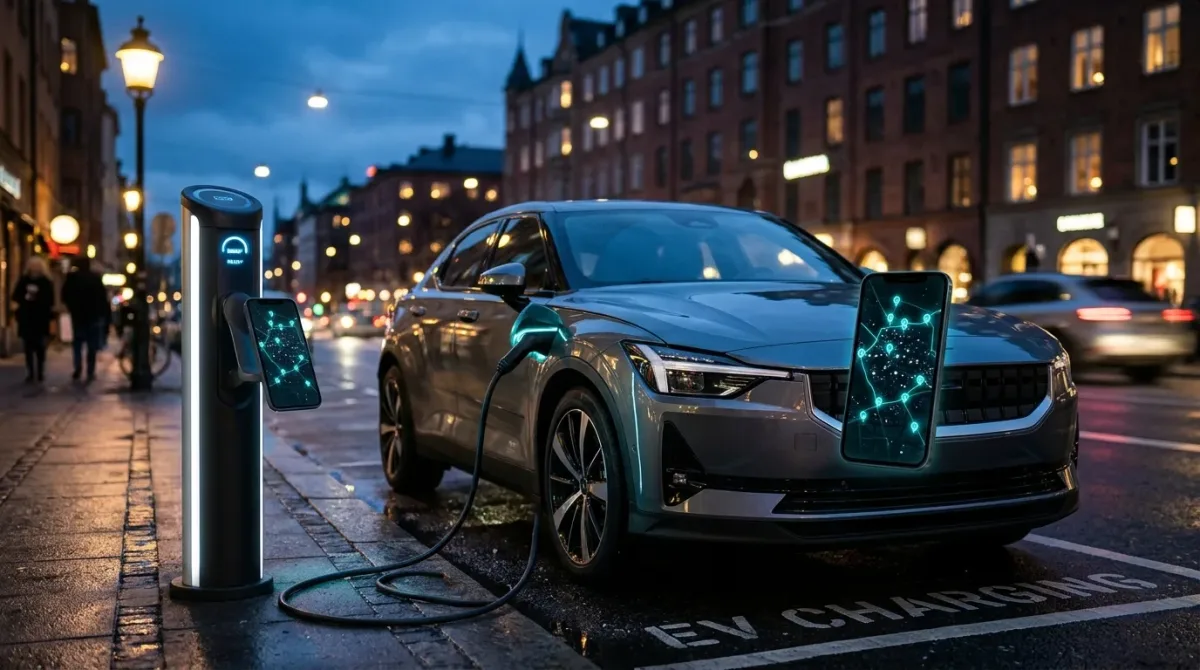
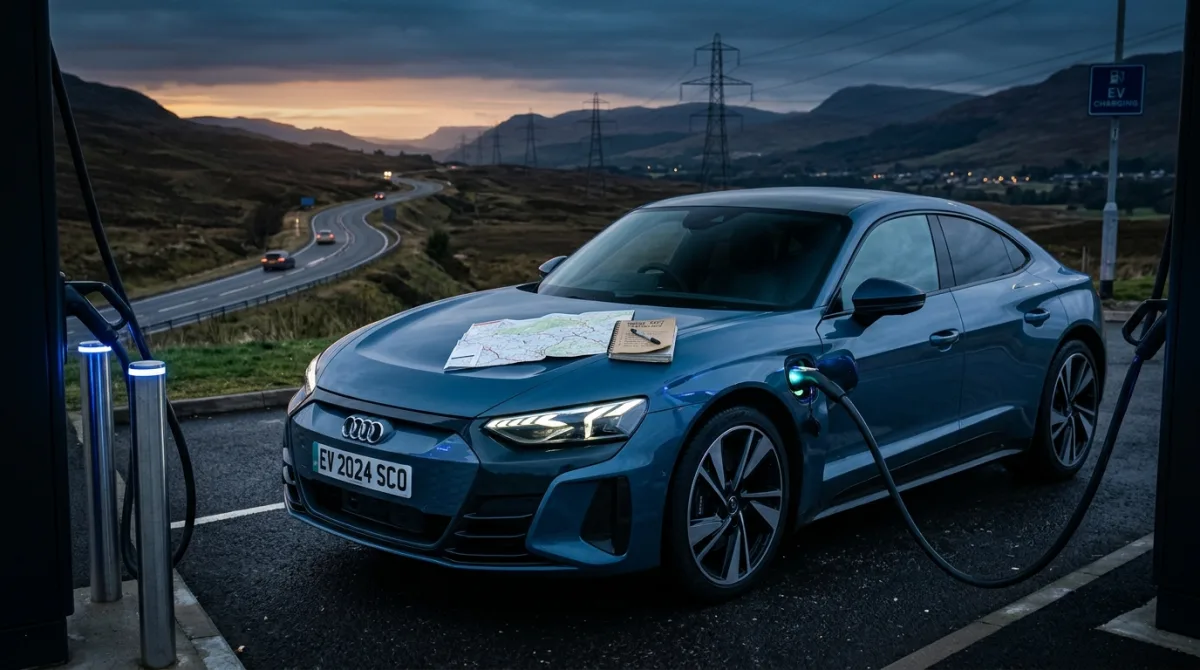
Open your route planner, enter the destination, and let it place charging stops. Then look at each stop and ask three questions: is there more than one charger nearby, is it a network you have an account with, and is there food or a toilet? A 20-minute stop with nothing to do feels twice as long.
Why it matters: a single charger in a remote spot is a single point of failure. Two networks within a few kilometres gives you a backup.
Tip: Aim to arrive at each charger with 10-15% remaining rather than crawling in on 2%. It gives you margin for a detour and keeps the battery in a healthier window for fast charging.
Step 4: Check charger status and reviews the morning you leave
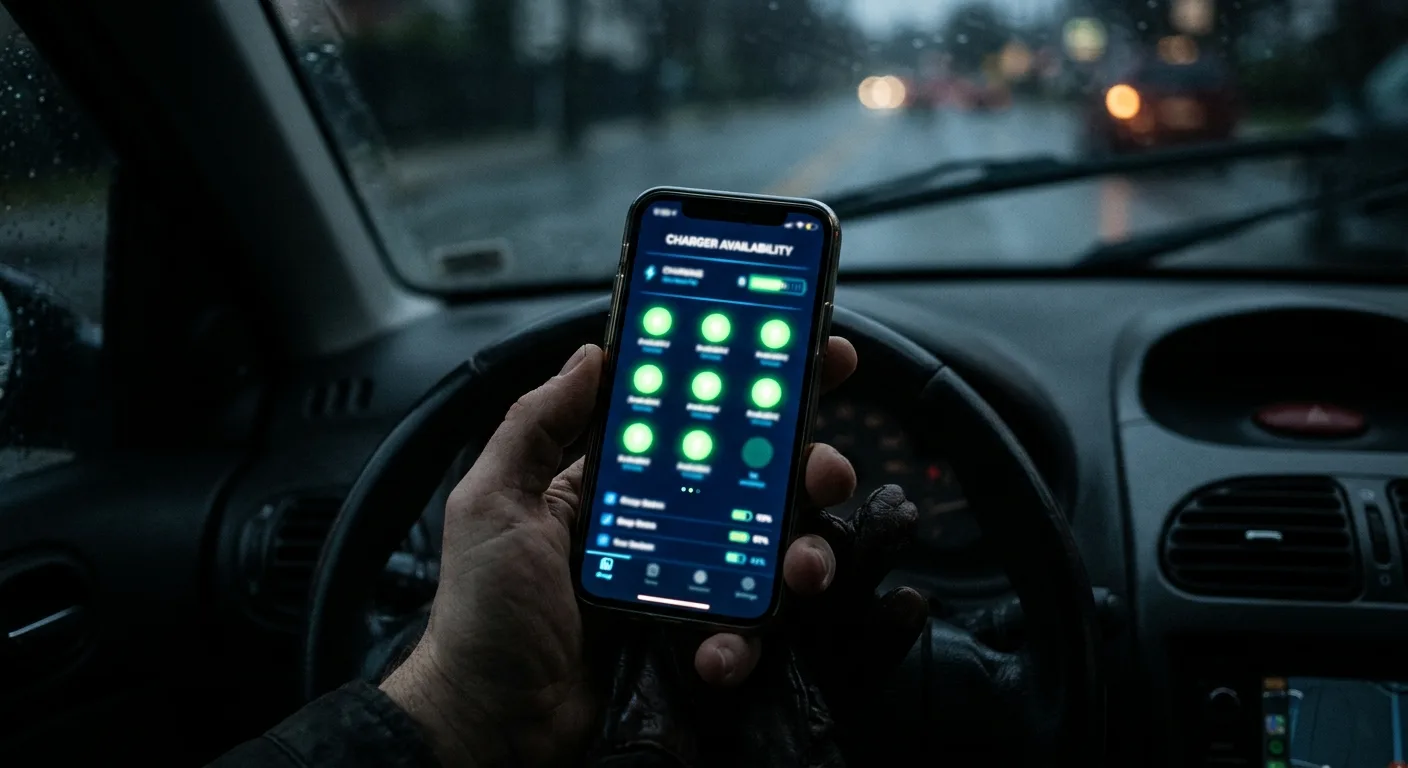
Live status in the app is useful, but reviews from the last day or two tell you more. If three people report a connector down, believe them.
Why it matters: a charger that was fine last month may be offline today, and you do not want to discover that after a 90 km detour.
Tip: Save the next two stops on your route, not just the next one. If stop one fails you already know where you are going.
Step 5: Set the car up for efficient motorway driving
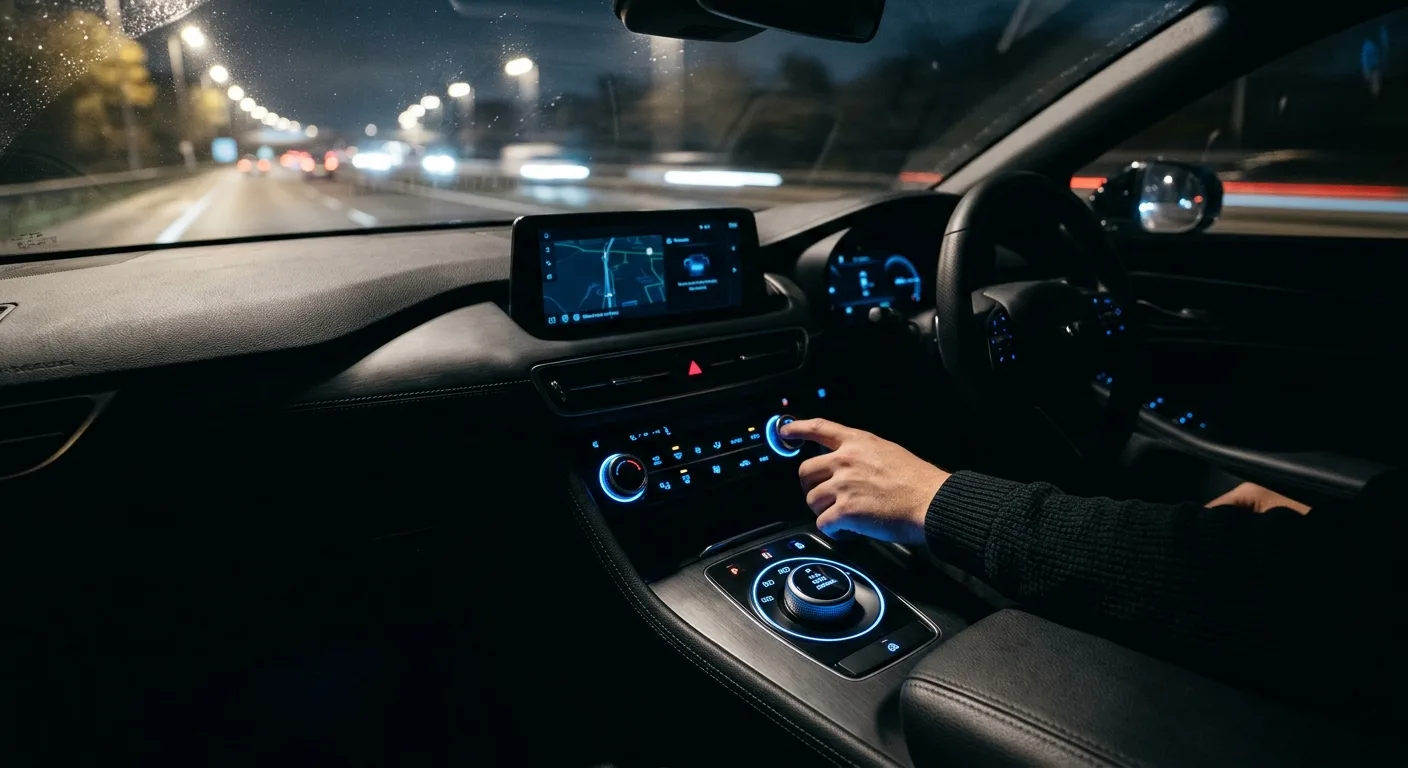
Pick Eco or the most efficient drive mode if your car has one, set climate control to a sensible temperature (around 20-21°C works for most people), and use seat heating instead of cranking the cabin heat where you can. Set cruise control to a steady speed rather than surging. On most EVs, 110 km/h costs noticeably less energy than 130 km/h.
Why it matters: small habits on a 500 km day can be worth a meaningful chunk of range. Exact savings vary by car, so treat any claimed figure with suspicion and measure your own.
Tip: If your car offers a battery pre-conditioning option for fast charging, switch it on roughly 20-30 minutes before a DC stop in cold weather. Check the menu name in your manual; it differs between brands.
Step 6: Check tyres, fluids and the 12V battery

Set tyre pressures to the loaded figure in the manual (often higher than the daily figure when the car is full). Top up washer fluid. Check the coolant level if it is visible and the manual says you may. Have a quick look at the 12V battery terminals for corrosion. Low-voltage work like this is fine for a careful owner.
Why it matters: under-inflated tyres cost range and grip. A tired 12V battery can leave you stranded at a charger with a perfectly healthy traction pack.
Tip: If the 12V battery is more than about four or five years old and has been sluggish, get it tested before you go. The diagnostic and fuse guides explain the symptoms to look for.
Step 7: Test your charging setup before departure
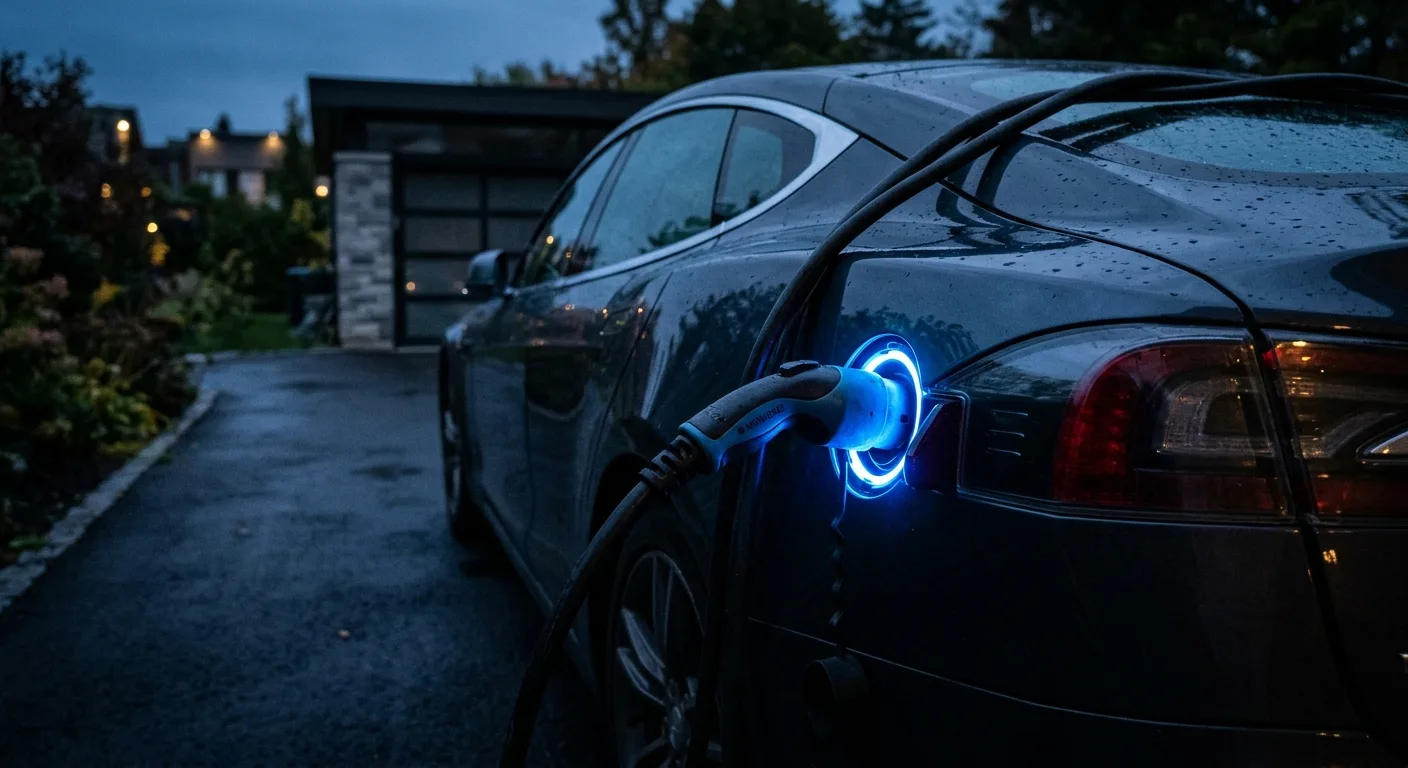
Plug in at home, confirm the car charges, then unplug and check the cable and connector for damage. Open each charging app you plan to use and confirm you are logged in with a payment method saved. If you have an RFID card, check it is in the car.
Why it matters: the worst time to discover an expired card is at a empty services at 11pm.
Tip: Do one public AC charge near home in the week before. It confirms the car's AC charging works and that your cable or app behaves as expected.
Step 8: Pack for charging stops, not just for the destination

Bring a warm layer, water, snacks and a phone charger. A blanket costs nothing in range and makes a cold charging stop far more bearable. Keep the warning triangle and vest where you can reach them without unpacking the boot.
Why it matters: you will spend real time standing around chargers. Comfort is part of trip planning.
Tip: A small folding umbrella and a torch live permanently in our car. Both have earned their place.
Step 9: Build a plan B for every long leg
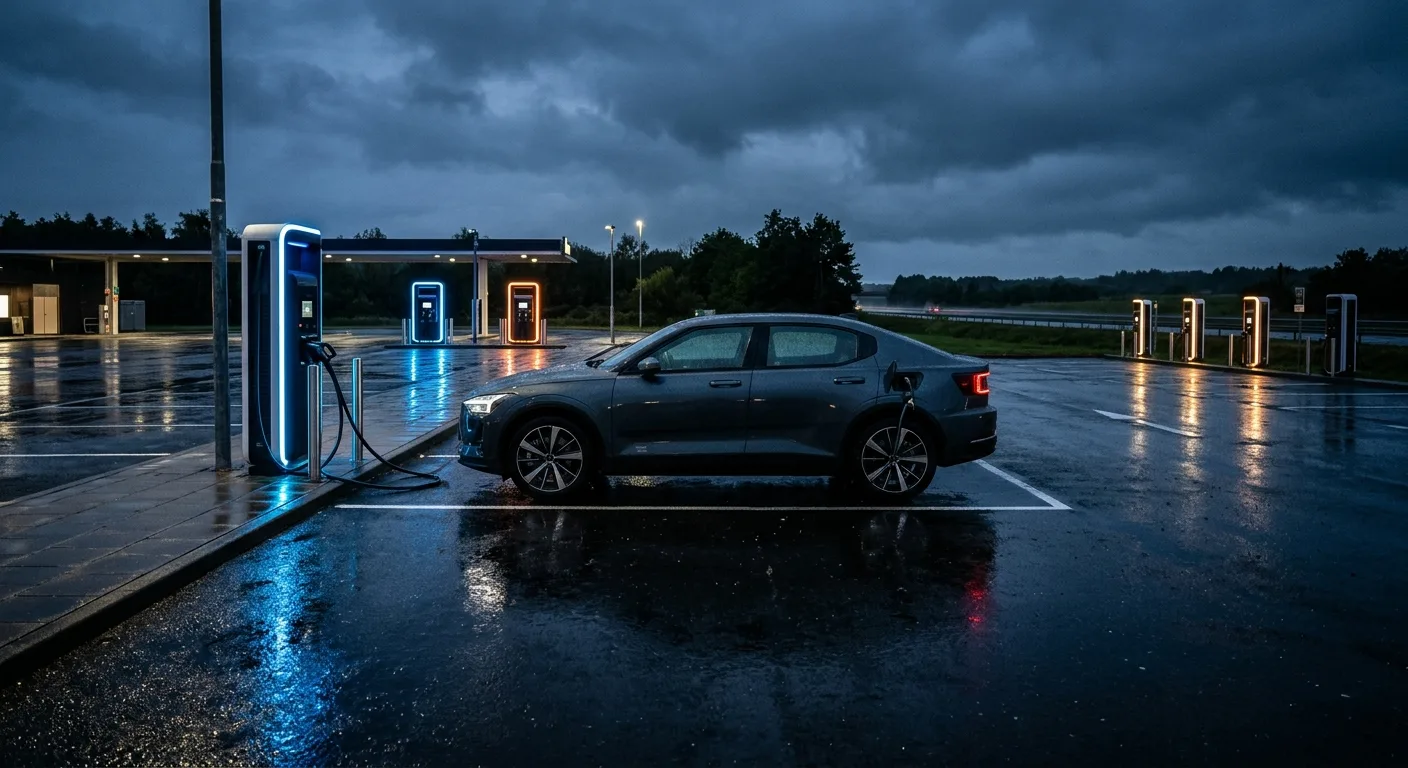
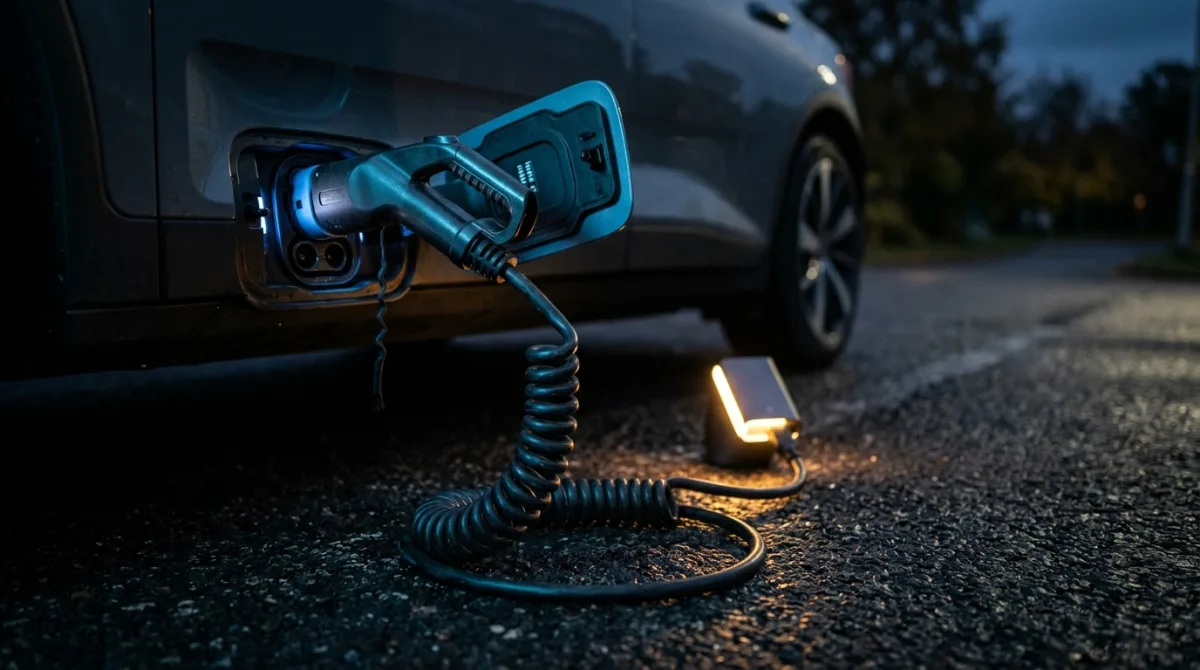
For each stretch longer than about 150 km, note the nearest alternative charger and roughly how far it is. If your car supports it, check that you know how to use the emergency charging cable or a granny charger, and where you could plug in overnight.
Why it matters: chargers fail, get iced, or have queues. A plan B turns a crisis into an inconvenience.
Tip: Accommodation with a 13A socket or a destination charger is worth more than a hotel near a rapid charger. Ask before you book.
Step 10: Do a five-minute pre-departure check each morning
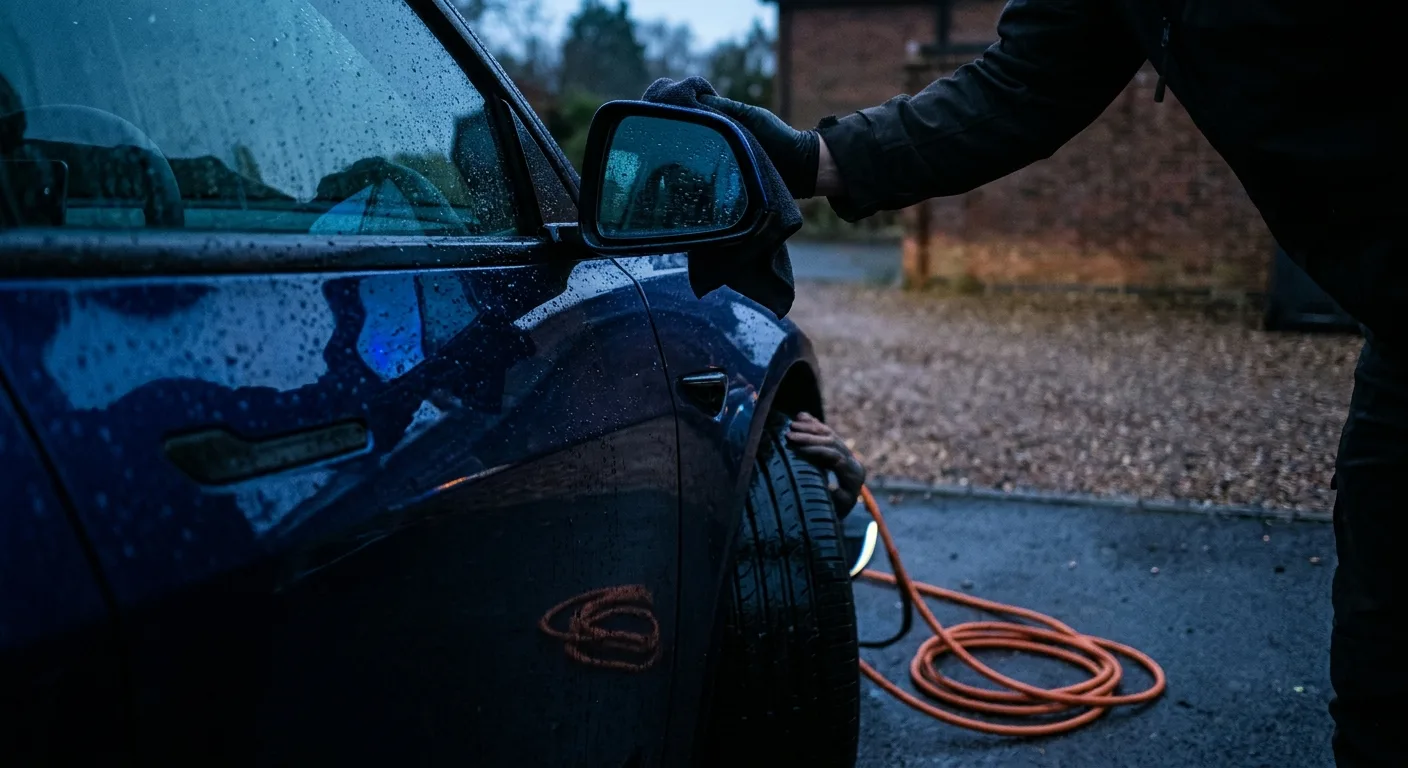
Each morning: charge level, next stop saved, tyre pressures if the temperature dropped sharply overnight, and a glance at the app for the day's chargers. That is it.
Why it matters: cold nights change pressures and range. A quick check catches it before you are on the motorway.
Tip: Take a photo of your dashboard range and consumption at the start of each day. It gives you a real record for future trips.
Pro tips
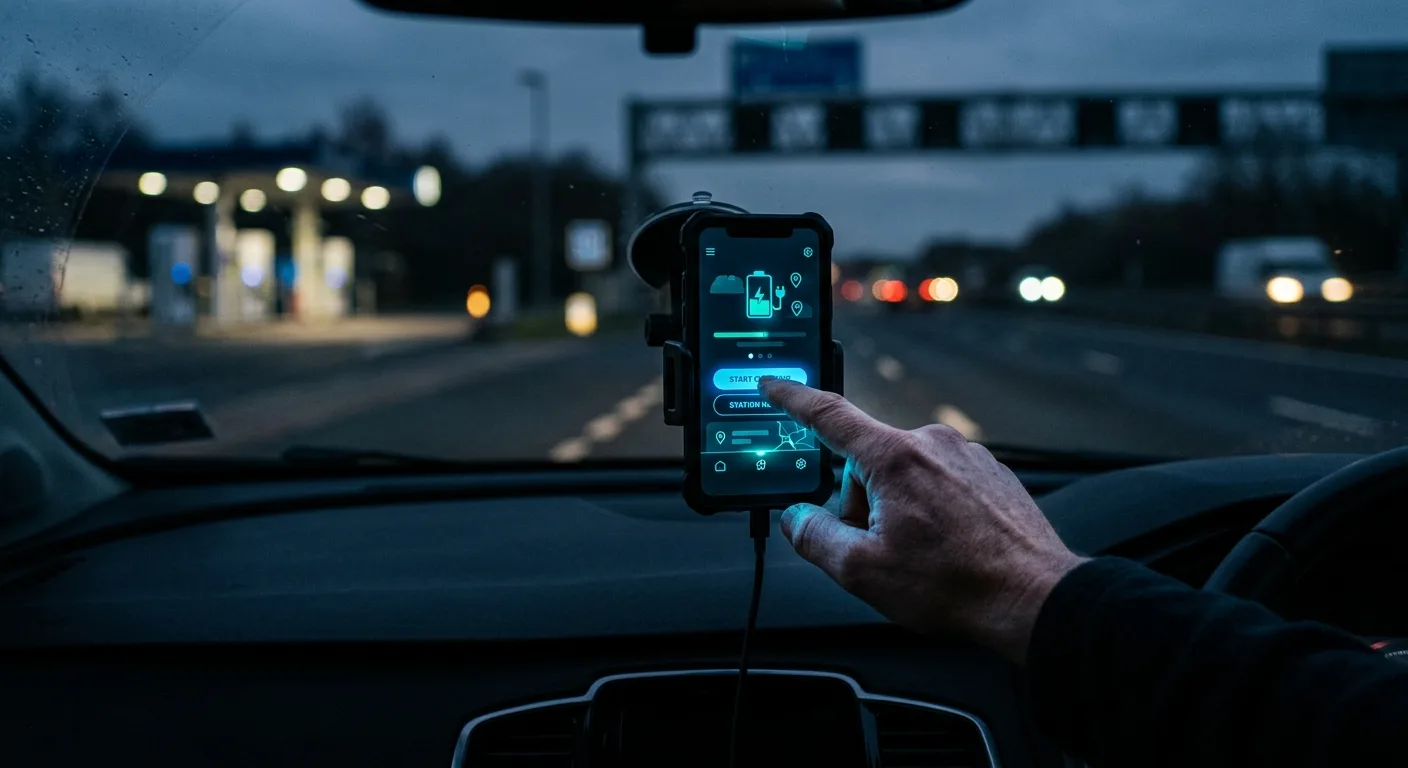
- Charge where you sleep or eat, not where you queue. A destination charger overnight can replace a daytime rapid stop entirely.
- On a long day, two shorter charging stops often beat one deep one, because charging slows sharply above roughly 80% on most cars.
- If a queue forms at a rapid charger, ask the waiting drivers what they need. A five-minute top-up and a friendly swap keeps everyone moving.
- Keep a note of which networks worked well for you. The EV blog covers practical ownership habits worth a read before a big trip.
- In winter, pre-heat the cabin while plugged in. It costs grid power, not range.
Common pitfalls
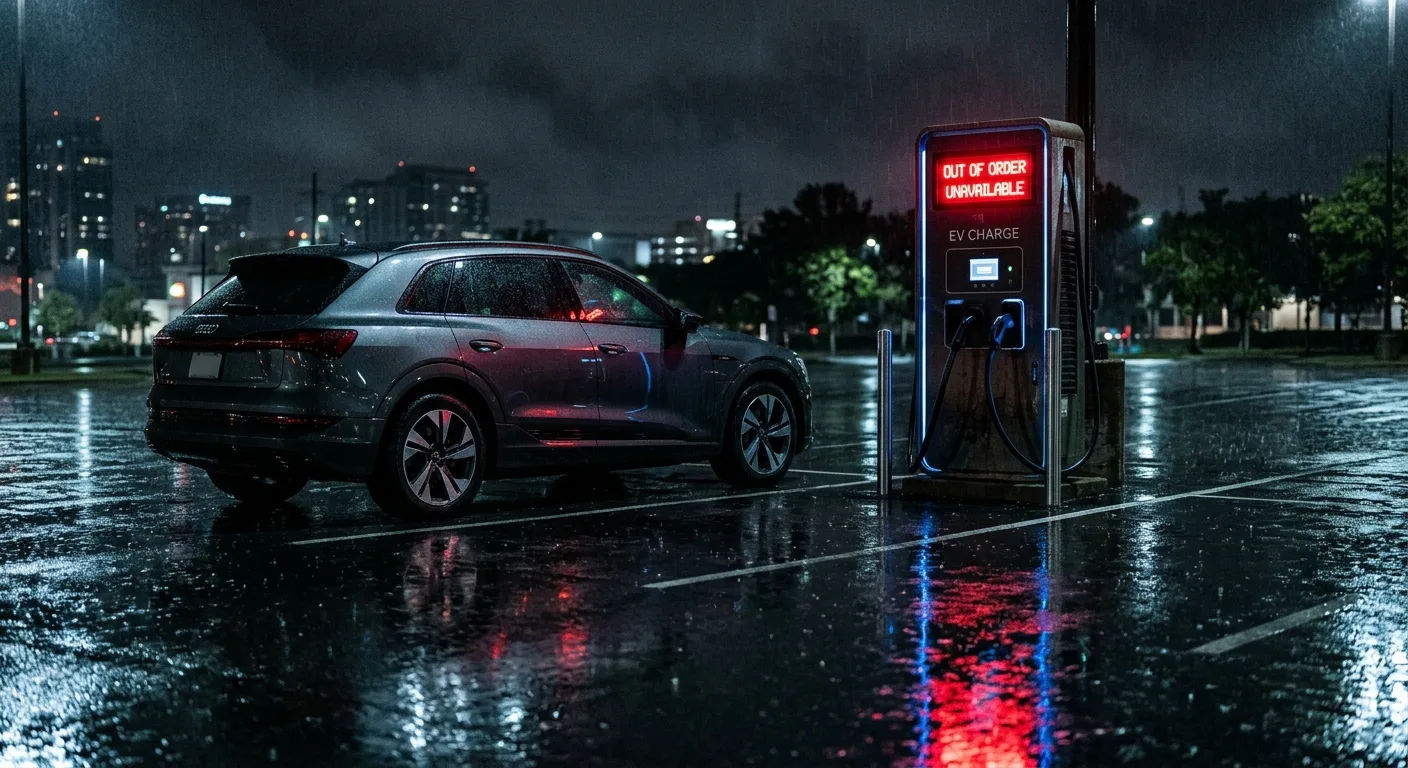
- Trusting the dashboard range on the motorway. It drops fast at speed. Plan on your own measured figure, not the optimistic one.
- Arriving on 2%. It leaves no margin for a closed charger or a detour. Aim for 10-15%.
- Only planning one charger per stop. Check for an alternative within a few kilometres.
- Forgetting the 12V battery. It fails quietly and strands you at a charger. Test it if it is old.
- Charging to 100% at every rapid stop. It is slow and, on many cars, not what the manufacturer recommends daily. Use it when you need the range, not out of habit.
Useful resources
For choosing between models before you commit, the head-to-head EV comparisons put range, charging speed and running costs side by side. When something goes wrong on the road, the EV troubleshooting guides walk through the common faults in plain language. And if a warning light appears, the diagnostic and fuse guides help you decide whether it is a fuse, a sensor or a job for a technician. Anything involving the high-voltage traction battery is always a job for a qualified professional; do not open, probe or repair it yourself.
FAQ
How much range should I plan to lose on a motorway trip? A cautious planning figure is 15-25% below the official range at 110-120 km/h, and more in cold weather or with a roof box. Measure it on your own car and verify before relying on it.
Can I charge to 100% before a long trip? Usually yes, if you are leaving soon after and your manual does not say otherwise. Check your manufacturer's recommendation for your model.
What if a charger is broken when I arrive? Go to your saved alternative. This is why you save the next two stops, not just one.
Do I need a Type 2 cable? Many cars need one for public AC charging, and some do not include it. Check what came with your car and whether the chargers on your route need it.
Is it safe to check the 12V battery myself? Yes, low-voltage checks like terminal condition and voltage are fine for a careful owner. Leave the high-voltage system alone and see a qualified technician for anything involving the traction battery.
One last thing
The first long EV trip feels like a project. The second feels like a drive. Plan the route, know your real range, keep a plan B, and the charging stops become part of the trip rather than an interruption.