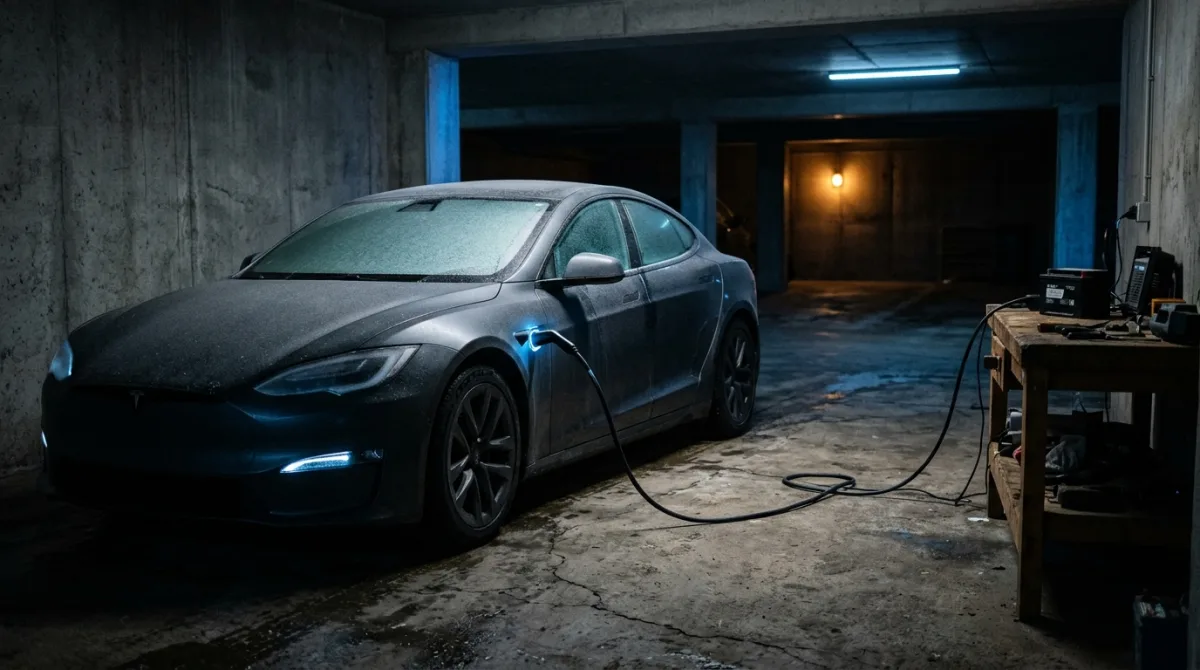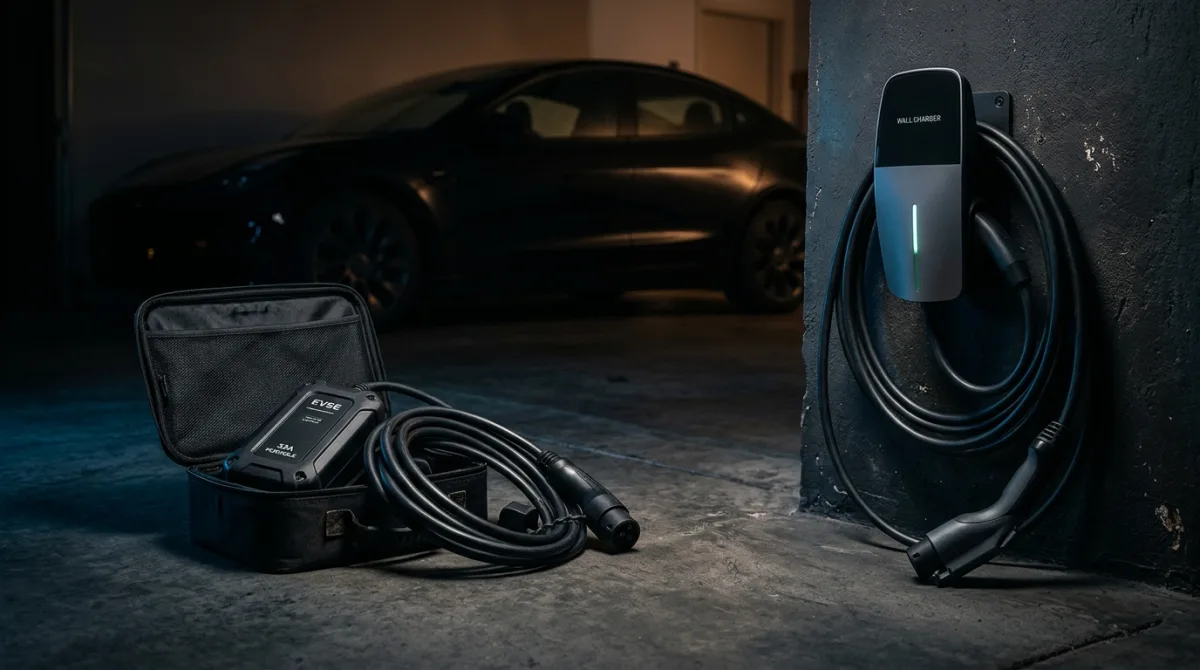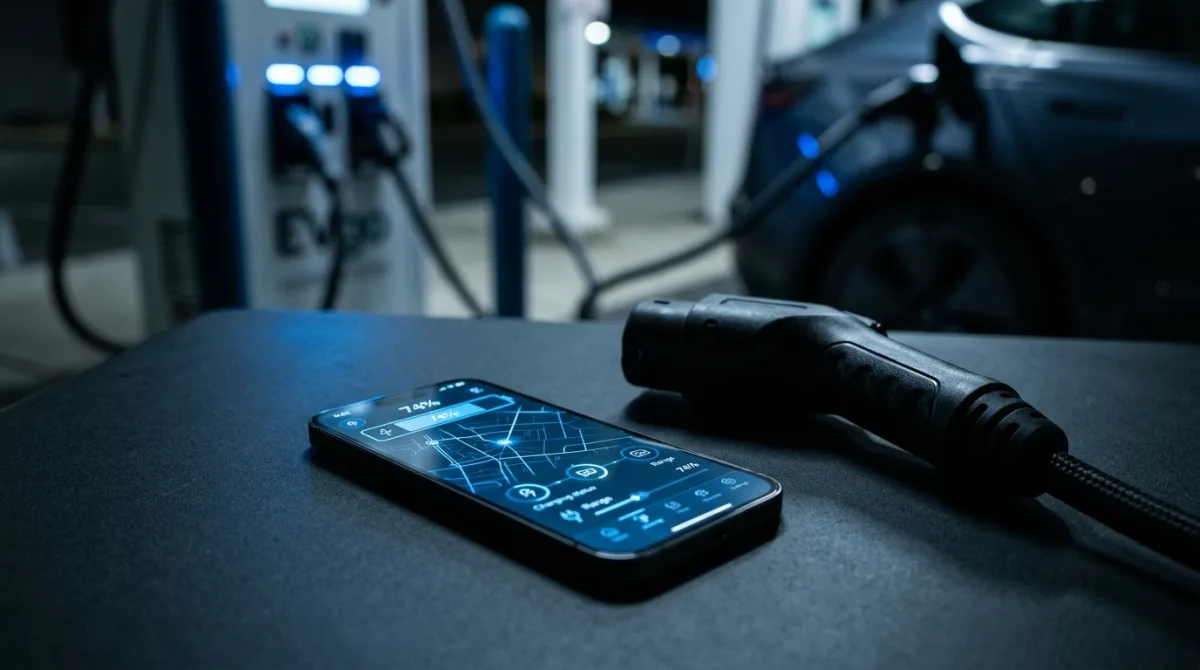
The rain was coming down in that fine Scottish way that soaks you without ever quite looking like rain, and I was standing in a car park at 11pm trying to work out why my charge port flap wouldn't open. I'd owned the car for four months. I thought I knew it. Then I found the manual release, hidden behind a little panel in the boot, and realised I'd been driving a car full of things I didn't know about.
That was the night I started digging. Here's what I found, told properly, with the mistakes included.
Why I bothered looking
I bought a used electric hatchback mainly because the maths worked: my commute is about 32 km each way, and home charging on a cheap overnight tariff was costing me roughly a third of what petrol had been. What I didn't expect was how much of the car's behaviour was buried in menus, held behind long-presses, or just never mentioned by the dealer. So I spent a few weekends going through settings and reading forums, and I started keeping notes. Some of what follows saved me real money. Some of it is just nice.
The things I actually found
1. You can pre-condition the cabin from the app, and it matters more than you think
I'd dismissed this as a gimmick until a frosty morning in February. I tapped the app ten minutes before leaving, and got into a car that was warm and, more usefully, had a defrosted windscreen. The real benefit isn't comfort, though; it's that heating the cabin while still plugged in means you're not pulling that energy from the battery once you drive off. On cold mornings my indicated range was noticeably better than on days I forgot. Expect around 5-10% difference depending on how cold it is, but check your own car's behaviour: some models pre-condition the battery too, some only the cabin.
2. The charge port has a manual release, and you will need it one day
This is the one from the car park. Most electric cars have a physical release cable or lever, usually behind a trim panel in the boot or under the bonnet. Mine was behind a small clip-off panel on the right-hand side of the boot. It took me twenty minutes to find, in the rain, with a torch. Find yours now, while it's dry, and note it down. It also helps if the car's 12V battery has gone flat, which is a separate thing entirely.
3. One-pedal driving is adjustable, and the default is rarely the best setting
Every EV I've driven has some form of regenerative braking strength adjustment, usually via paddles behind the wheel or a menu. The default on mine was mild. I switched to the strongest setting and my efficiency improved by a small but real margin, mostly in town. The trade-off is that passengers notice it: my other half described the first week as "being driven by someone who keeps changing their mind". Give it a fortnight before you judge.
4. There's a 12V battery, and it will strand you before the big one does
Nobody told me this. The traction battery gets all the attention, but the ordinary 12V battery runs the computers, lights and locks, and when it fails the car simply won't start, even with a full main pack. I had a no-start on a mild morning at about 40,000 km. Jump-starting it from a booster pack got me going, but the lesson is to know where the 12V terminals are and to treat a sluggish unlock or dimming interior lights as a warning. Anything involving the high-voltage system itself is not a job for you; that needs a qualified technician, no exceptions.
5. Scheduled departure times are a charging feature, not a comfort feature
I'd assumed "departure time" was about having a warm car. It's actually about having a warm battery at the moment you leave, which affects how much energy the pack will accept and how efficiently it delivers it. Setting a departure time on a cold morning meant the car was ready to accept a fast charge on the way, rather than crawling up slowly. If you want to understand how much this matters on your own route, the free EV calculators and tools on this site let you model charging times against your real distances.
6. The car will tell you where chargers are, but the car's data is often stale
My built-in charger map once sent me to a unit that had been removed six months earlier. I now cross-check with an app before committing, and I treat any in-car charger list as a starting point. The bigger lesson: plan a stop with a buffer, not a hope. On a 300 km motorway run in about 8°C, I arrived at my planned stop with around 12% left, which was tighter than I'd intended, because I'd been driving at 120 km/h rather than the 110 I'd planned for.
7. Speed kills range in a way that's almost linear, and you can feel it
The difference between 110 and 130 km/h on the same stretch cost me roughly 15-20% more energy. I started setting the cruise control lower and arriving about ten minutes later. On a long trip, that's often the difference between one charging stop and two.
8. There's usually a way to see live energy consumption, and it changes how you drive
Mine was buried two menus deep. Once I found it, I spent a week driving like a learner trying to keep the figure low, then relaxed. Even so, watching it taught me that air conditioning and heated seats cost very different amounts, and that the heated seat is the cheaper way to stay warm.
9. Tyre pressure matters more than on a petrol car
The extra weight and instant torque mean under-inflated tyres hurt efficiency more noticeably. I check mine monthly now, cold, and I keep them at the upper end of the manufacturer's range. It's a boring tip. It also saved me a measurable amount over a year.
10. The car logs faults, and reading the log before the dealer does saves arguments
Most EVs store fault history you can view through a diagnostic app or an OBD reader, and the codes are often just a starting point rather than a diagnosis. If something's misbehaving, note the symptoms and the conditions (cold, wet, after a fast charge) before you book it in. The EV diagnostic and fuse guides here are a sensible place to start before you assume the worst.
Honest pros and cons
The good: these features genuinely changed how I use the car, mostly by making charging and cold-weather driving less stressful. Knowing the manual release alone was worth the evening I spent looking for it.
The less good: almost none of this was explained at handover. The manual is 400 pages and the useful bits are scattered. Some features differ between model years of the same car, so a forum post about a 2021 car may not apply to yours.
What it actually cost
| Item | Approximate cost |
|---|---|
| Home charging, per month (commuter use) | Roughly £25-£45 depending on tariff and mileage |
| Public rapid charge, per session | Expect around £8-£15 for a 20-80% top-up |
| OBD reader and app | Roughly £20-£60 |
| Replacement 12V battery, fitted | Roughly £90-£180 |
Prices vary by region and supplier, so check locally rather than trusting my figures.
What I would do differently
- I'd find the manual charge release and the 12V terminals on day one, in daylight, before I needed them.
- I'd read the efficiency and charging sections of the manual properly, not skim them.
- I'd set a realistic motorway speed from the start rather than discovering it the hard way.
- I'd check tyre pressures monthly from week one.
- I'd keep a short note of any odd behaviour, with the weather and the state of charge, so a technician has something to work with.
Quick practical tips
- Test the app's pre-conditioning on a cold morning before you rely on it.
- Find your car's manual charge release and photograph its location.
- Cross-check in-car charger data against an app before you commit to a stop.
- Note your real-world efficiency at a steady speed, not the official figure.
FAQ
Do all EVs have a manual charge port release? Most do, but the location varies widely. Check your manual rather than assuming.
Can I jump-start an EV myself? You can usually boost the 12V battery with a suitable pack, following the manual exactly. Never touch the high-voltage system; that is strictly a job for a qualified technician.
Why does my range drop so much in winter? Cold reduces battery performance and cabin heating draws energy. Pre-conditioning while plugged in helps, but expect a real drop.
Is one-pedal driving bad for the car? No. It's a driving preference, and the strongest setting usually helps efficiency in town.
I still keep that note in my phone, and I still check the charge port flap before I close the boot. Old habits, and one very wet evening.
Ready to act on what you just read? Explorethe EV model directory, head-to-head EV comparisons or the free EV calculators and tools. The rest of this site is built to help you take the next step.