Range anxiety is mostly a math problem that nobody taught you. The dashboard says 240 miles, you drive 80 and somehow 170 have vanished. This article walks through the twelve habits that quietly drain your battery, and the small changes that get those miles back.
Why most people get this wrong
Most drivers treat an EV like a petrol car with a different fuel gauge. They fill up, drive normally, and blame the car when the range estimate drops faster than expected. The estimate is not lying. It is recalculating based on how you are actually driving right now.
The second trap is fixating on one big fix. There is no single setting that adds 50 miles. Range comes from a stack of small decisions: speed, climate use, tyre pressure, how you brake, what you carry, where you park. Each one is worth a little. Together they are worth a lot.
So this is not a list of hacks. It is a list of leaks. Plug enough of them and your real-world range climbs without touching a single component.
1: Driving at motorway speeds like it is a race
You set the cruise to 80 mph because the limit allows it. Wind resistance rises with the square of speed, so the jump from 70 to 80 costs far more energy than the jump from 60 to 70. On a long trip, dropping to 65-70 mph can meaningfully stretch your range. Stay in the slow lane and arrive with charge to spare.
2: Treating the heater like a free resource
A cold morning, you crank the cabin heat to 24°C and leave it there. Resistive heating can pull serious power, and in winter it is often the single biggest range killer. Use seat heaters and a heated steering wheel instead, pre-condition the cabin while still plugged in, and set the climate a couple of degrees lower than you would at home.
3: Ignoring tyre pressure
Your tyres have been at the same pressure since the last service. Under-inflated tyres increase rolling resistance, and you will never notice it from the driver's seat. Check pressures monthly when the tyres are cold, and use the door-jamb placard, not the number on the sidewall. It is the cheapest range improvement available.
4: Carrying your life in the boot
Golf clubs, a roof box, three crates of tools. Every extra kilogram costs energy, and roof racks are worse because they add drag even when empty. Clear out what you do not need for the trip, and remove roof bars when they are not in use. If you are comparing cargo space between models, the head-to-head EV comparisons lay it out side by side.
5: Braking like you are in a petrol car
You coast up to a junction and press the brake pedal. In an EV, lifting off earlier lets regenerative braking recover energy instead of turning it into heat. Learn one-pedal driving if your car supports it, or at least anticipate stops. Around town, this is where the biggest gains hide.
6: Charging to 100% out of habit
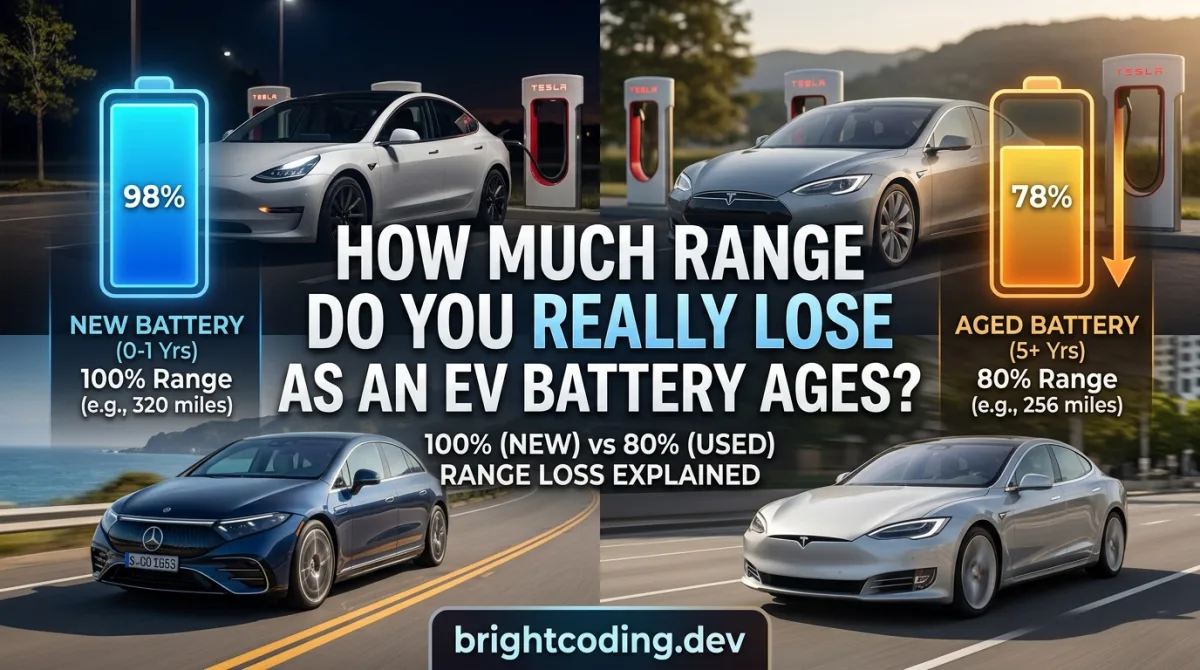
You plug in every night and top up to full. Lithium batteries age faster when held at very high states of charge, and a degraded pack gives you less range every year. For daily driving, charge to 80% and save 100% for the morning of a long trip. Check your car's manual for its recommended daily limit.
7: Leaving the car plugged in at 100% for days
You charge to full, then leave it sitting for a week. This is the habit that quietly costs you capacity over time. If you are not driving tomorrow, do not finish the charge tonight. Many cars let you schedule charging, so use it.
8: Pretending the terrain does not matter
You plan a route that looks short on the map. It climbs 1,200 metres. Hills punish range hard, and the descent on the way back does not fully repay the climb. If you want to plan realistically rather than guess, the free EV calculators and tools can help you sanity-check a route before you commit.
9: Using the wrong drive mode
You leave it in Sport because it feels better. Sport sharpens throttle response, which means more energy for the same journey. Eco mode dulls the pedal and often trims climate output too. Try Eco for a week of commuting and see what your range estimate does.
10: Letting the battery bake or freeze
You park in direct summer sun or leave the car outside on a freezing night. Extreme temperatures hurt both immediate range and long-term battery health. A garage, a carport or a shaded spot makes a real difference. If you must park outside, plug in when you can so the car can manage its own temperature.
11: Trusting the range estimate blindly
The number on screen is a guess based on recent driving. After a fast motorway run it will be pessimistic. After gentle city driving it will be optimistic. Learn your car's real consumption in miles per kWh, and do the arithmetic yourself. That number does not flatter you.
12: Skipping the warning signs
Your range drops noticeably compared to last year, or the car charges slower than it used to. These can be normal seasonal effects, or they can point to a genuine fault. Do not guess. Start with the EV troubleshooting guides before assuming the worst, and if you are chasing an electrical fault, the diagnostic and fuse guides are the safer place to begin.
A quick note on safety: checking tyre pressures, clearing the boot and changing drive modes are all 12V-level jobs any careful owner can do. Anything involving the high-voltage traction battery, its cabling or its enclosure is not. That work belongs to a qualified technician, every time.
Do this instead
- Check tyre pressures monthly, cold, to the door placard.
- Charge to 80% for daily use and 100% only before a long trip.
- Pre-condition the cabin while plugged in, then lean on seat heating.
- Anticipate stops and let regenerative braking do the work.
- Ease off the motorway speed by 5-10 mph on long runs.
- Strip the roof rack and empty the boot when you do not need the space.
- Use Eco mode for routine commuting.
- Park in shade or a garage when you can.
- Track your real miles per kWh instead of trusting the dashboard estimate.
FAQ
Does air conditioning drain range as much as heating? Usually less, because cooling a cabin takes less energy than heating it in cold weather. Both matter, and both are worse at extremes. Set a moderate temperature and use the fan rather than max settings.
Will hypermiling actually add meaningful miles? Yes, but think in percentages rather than a fixed number. Combined changes to speed, climate and driving style can add a noticeable slice to your real-world range. The exact gain depends on your car, your route and the weather. Verify with your own trip data rather than a claimed figure.
Is it bad to always charge to 100%? For daily driving, yes, it is best avoided. Most manufacturers suggest an 80% daily limit and 100% only when you need the full range. Check your own manual, because recommendations vary.
Can I improve range just by changing my route? Often, yes. A flatter route with steadier traffic usually beats a shorter but hilly one. Planning tools help, and so does knowing your car's consumption on the roads you actually drive.
Does a degraded battery mean I need a new one? Not automatically. Some loss over the years is normal. If the drop seems sudden or severe, get it checked by a qualified technician before spending anything.
Where can I compare how different EVs handle range in practice? Browse the EV model directory to compare models on the criteria that matter to you, from usable range to charging speed.
Real range comes from a dozen small habits, not one magic setting.