Let’s be honest: switching to an EV feels like a cheat code. You skip the oil changes, the spark plugs, and the exhaust-shop visits. It’s just you, the silent whir of the motor, and the smug satisfaction of passing gas stations.
Then the tire bill arrives and suddenly, the honeymoon is over.
If you’ve noticed that your EV seems to chew through rubber faster than your old gas car, you’re not imagining things. Study after study confirms it: EVs typically wear their tires 15% to 20% faster than equivalent combustion vehicles, and some fleet data suggests the gap can be even wider. But here’s the good news that doesn’t get enough airtime: you can absolutely fight back. With a handful of habits some obvious, some surprisingly counterintuitive you can stretch a quality set of EV tires to 50,000 kilometres or more.
This is your no-fluff, friendly guide to making EV tires last. Let’s dig in.
First, Why Do EV Tires Wear Faster? (The 30-Second Science)
You can’t fix a problem you don’t understand. And EV tire wear isn’t a design flaw it’s physics.
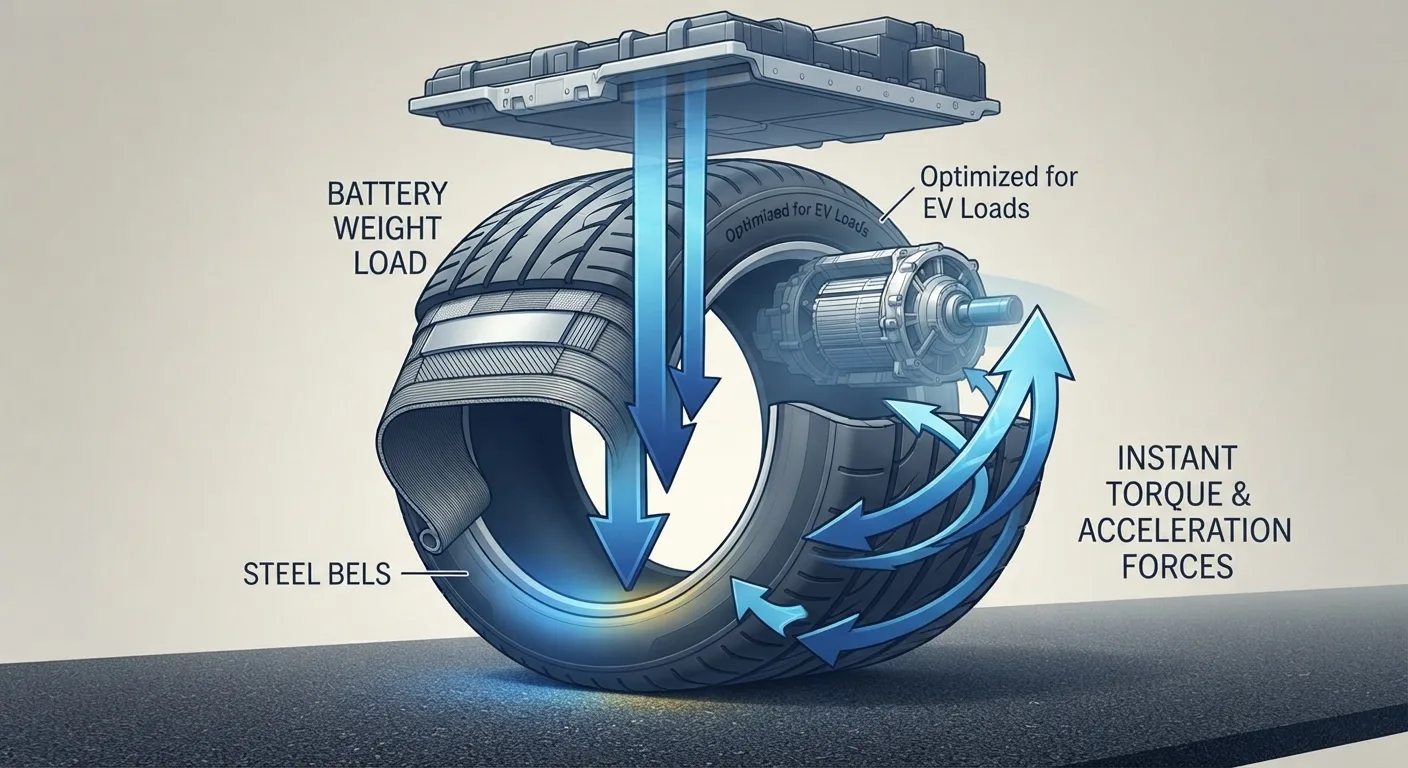
There are two heavyweight culprits. The first is weight. Battery packs are heavy, and EVs often tip the scales 20–30% heavier than their gas-powered siblings. Every extra kilogram presses the tire into the road, and that load adds up mile after mile. One controlled study found that once researchers accounted for the extra weight of an electric BMW iX1 versus its combustion twin, the wear difference largely disappeared weight was the main driver.
The second culprit is instant torque. Electric motors deliver maximum twist the moment you touch the accelerator. There’s no revving, no buildup just a direct hit of force to the driven wheels. That’s thrilling on a highway on-ramp, but it’s brutal on tread blocks. Add in the fact that regenerative braking shifts deceleration forces onto the tires in a different way than traditional brakes, and you’ve got a recipe for accelerated wear.
The takeaway? EV tires live a harder life by default. But “harder” doesn’t mean “hopeless.”
Rule #1: Treat Tire Pressure Like a Religion (Check It Monthly)
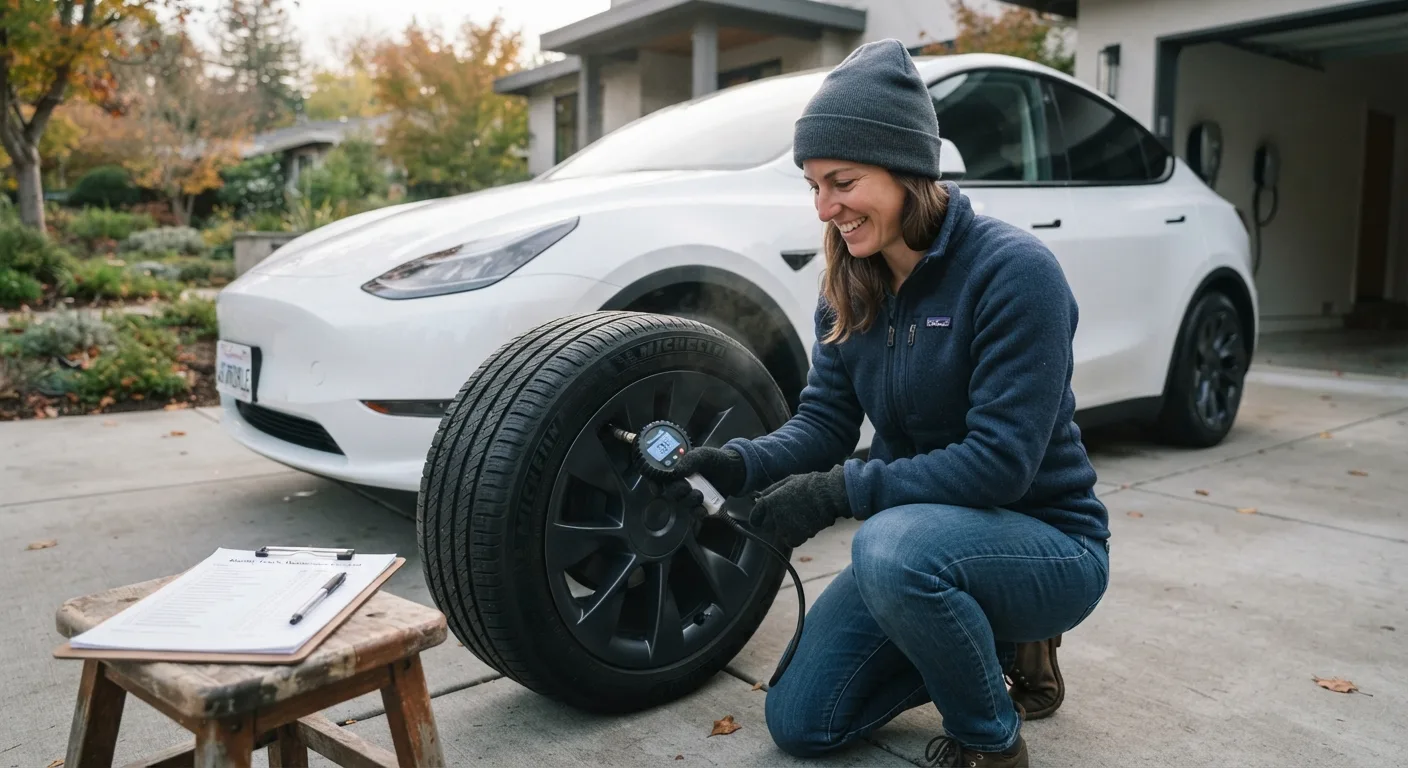
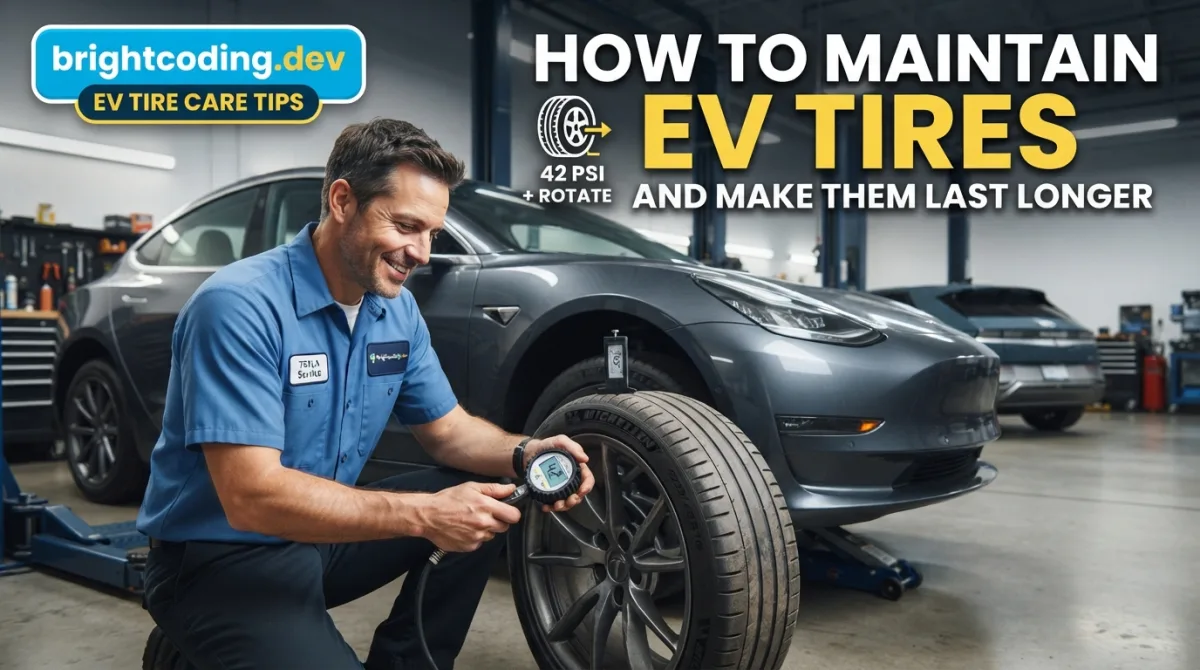
If you only do one thing after reading this article, make it this: check your tire pressure every single month, when the tires are cold.
This isn’t just about safety though underinflation absolutely compromises handling and braking distance. It’s about money. Tires naturally lose about 1 PSI per month, and an EV’s extra weight magnifies the consequences of neglect. Underinflated tires wear prematurely on the outer shoulders because the contact patch isn’t sitting flat on the road. Overinflated tires wear out the center of the tread just as fast. Either way, you’re throwing away tread life.
And here’s the EV-specific kicker: low pressure increases rolling resistance. That means your car has to work harder to move, which drains your battery and shrinks your range. A five-minute pressure check can protect both your tires and your kilometres-per-charge.
Pro move: Use the PSI listed on your car’s door-jamb placard or owner’s manual not the maximum pressure printed on the tire sidewall. Your EV’s manufacturer knows the right number for the load. Trust them.
Rule #2: Rotate Earlier Than Your Gut Tells You
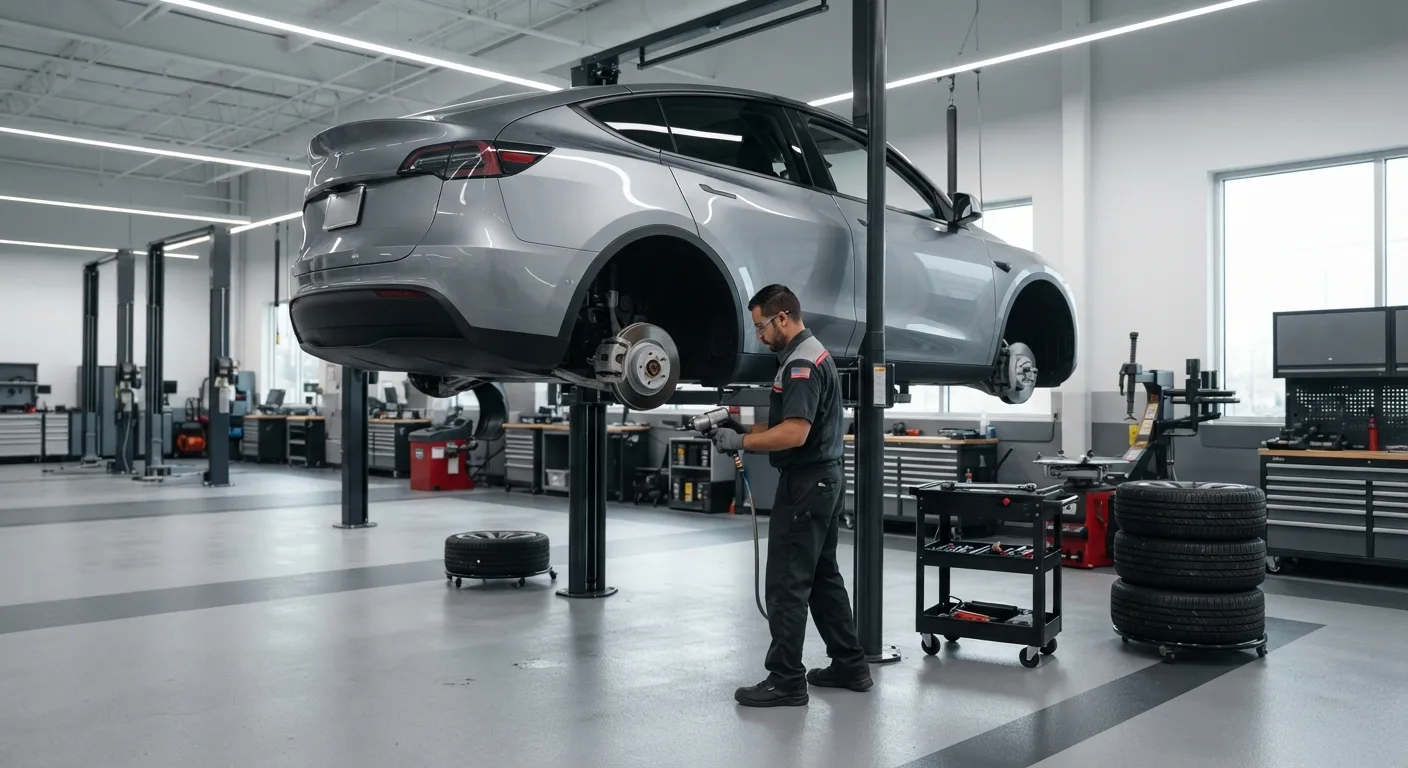
Here’s where EV ownership requires a mental reset. On a gas car, you might have rotated tires every 10,000 km and called it a day. On an EV, that’s often too late.
Because the driven wheels are constantly handling instant torque, they wear faster than the non-driven axle. If you don’t shuffle the tires around, one pair can wear out long before the other and you’ll be replacing tires in mismatched pairs instead of as a set.
The sweet spot? Most manufacturers and tire experts recommend rotating EV tires every 6,000 to 8,000 kilometres (roughly 4,000–5,000 miles) if you want maximum life. Michelin suggests 8,000 to 12,000 km, while Tesla’s manual calls for 10,000 km but the underlying message is the same: don’t wait for your next service appointment if it’s scheduled for 20,000 km. An EV will likely need a separate trip to the tire shop halfway between services. Skipping that trip is the fast track to uneven wear.
One caveat: Some performance-oriented EVs have staggered setups wider rear tires than front tires. These can’t be rotated front-to-rear. In that case, you can still swap left-to-right on the same axle (if the tires aren’t directional) to balance shoulder wear, but you’ll ultimately replace them in pairs, one axle at a time.
Rule #3: Your Right Foot Is a Tire’s Best Friend (or Worst Enemy)
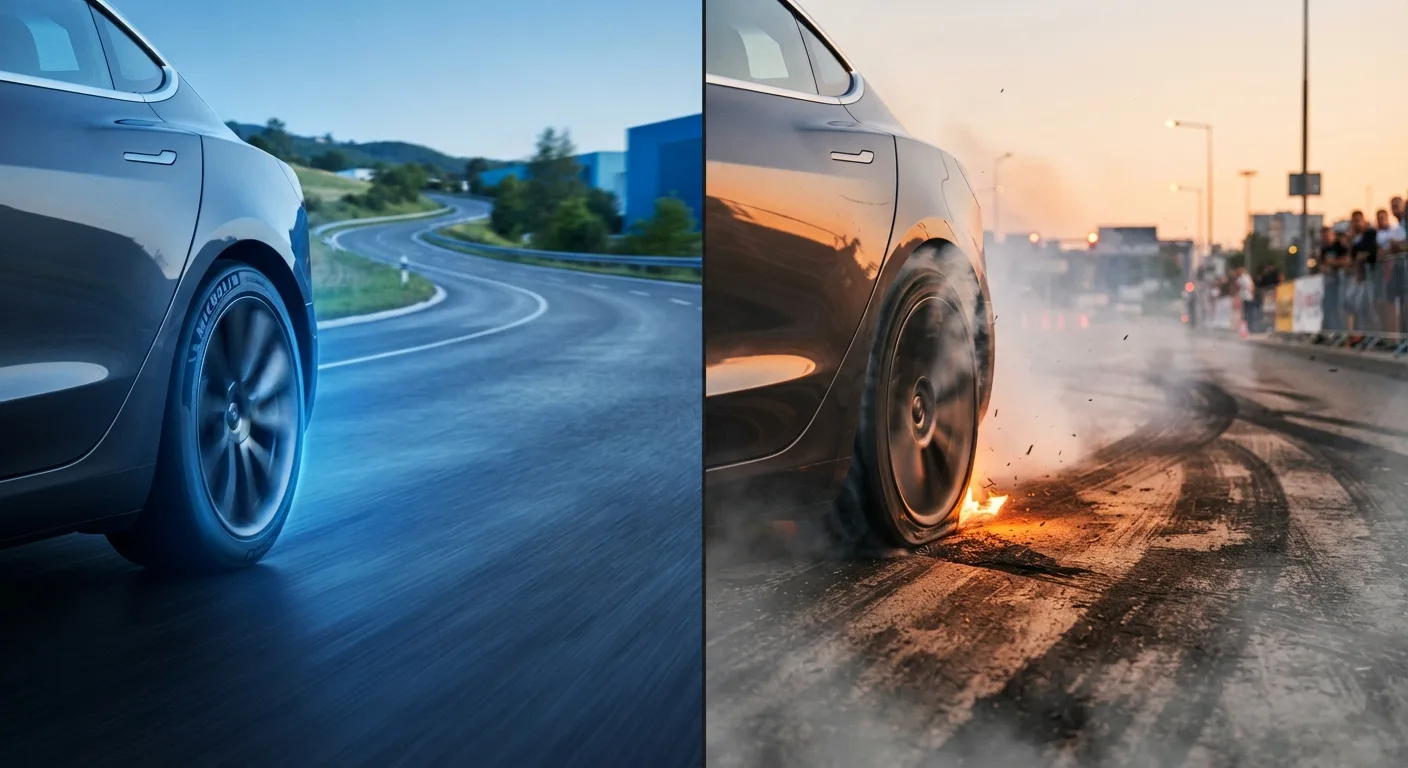
We get it instant torque is addictive. But those satisfying launch-control starts come at a cost. Hard acceleration puts enormous torsional stress on the driven tires, and doing it regularly can shave thousands of kilometres off their life.
The fix isn’t to drive like you’re on eggshells. It’s to be smooth and progressive with the throttle. Rolling onto the power instead of stabbing it gives the tires a chance to manage the force gradually. The same goes for cornering: maintaining a steady speed through turns and making gentle steering inputs reduces the scrubbing and tearing that chew up rubber.
And what about regenerative braking? It’s fantastic for your brake pads but it doesn’t make tire wear disappear. The deceleration forces still travel through the contact patch. The key is to anticipate stops and let regen do its thing smoothly, rather than treating every red light like a personal challenge.
Bottom line: Smooth driving is the cheapest tire modification you’ll ever make. It costs nothing and pays you back in tread life.
Rule #4: When It’s Time to Replace, Go EV-Specific (or At Least EV-Ready)
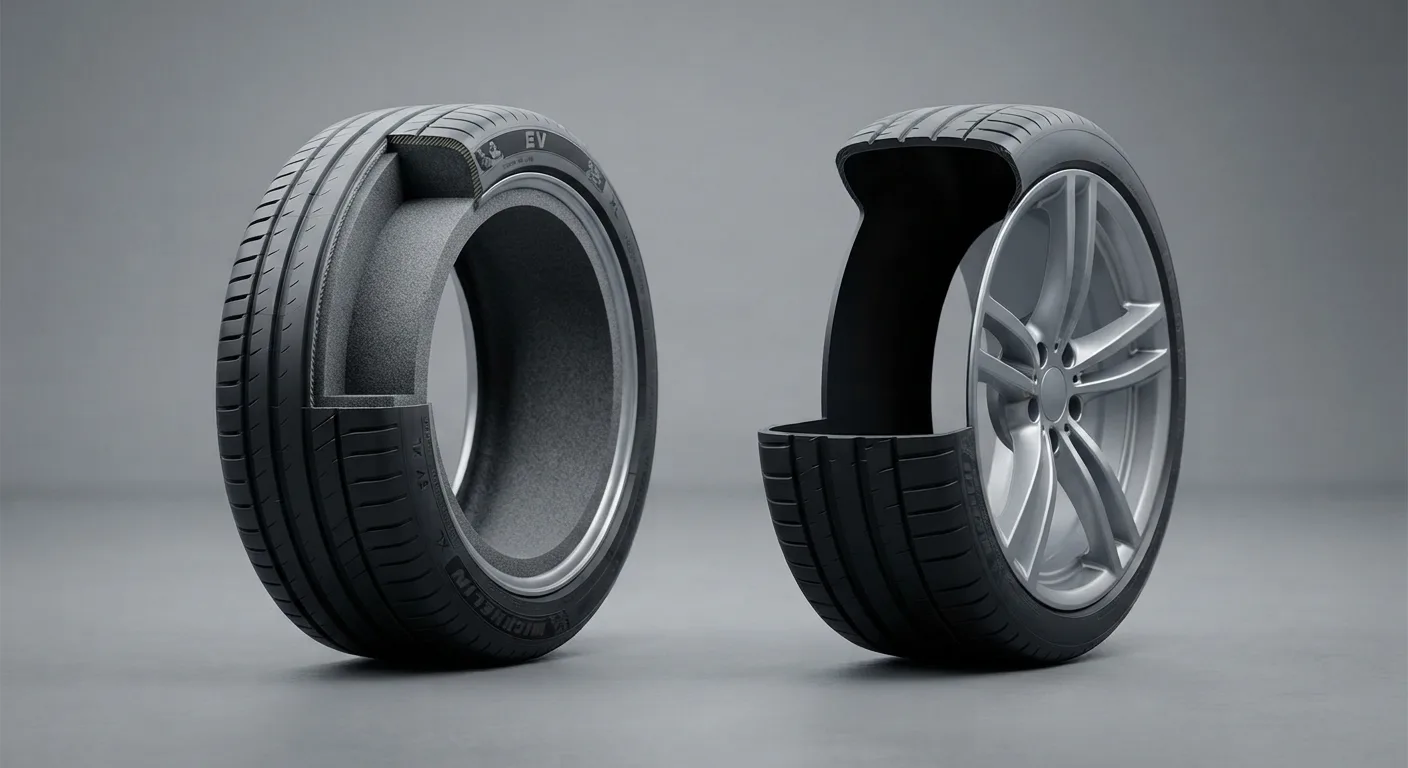
Not all tires are created equal, and standard passenger tires may not be up to the task of an EV’s weight and torque profile.
EV-specific tires are engineered with three things in mind: higher load capacity (reinforced sidewalls to handle battery weight), low rolling resistance (to protect range), and often noise-reduction technology like acoustic foam inside the tire (because without an engine, tire roar becomes very noticeable). Some manufacturers claim their EV-focused designs last 15% longer than regular high-performance tires while also improving range and quietness.
Do you have to buy EV-specific rubber? Not necessarily. Industry experts note that regular tires can be suitable provided they meet your vehicle’s load index and size specifications. Look for the XL (Extra Load) rating on the sidewall that’s a strong signal the tire is built for heavier vehicles. But if you want to maximize longevity, range, and cabin comfort in one package, an EV-specific tire is the smarter long-term investment. As tire specialists put it: a cheaper tire that wears out after 20,000 km isn’t a bargain if a quality tire lasts twice as long.
Rule #5: Don’t Ignore Alignment and Replace at 3mm, Not 1.6mm
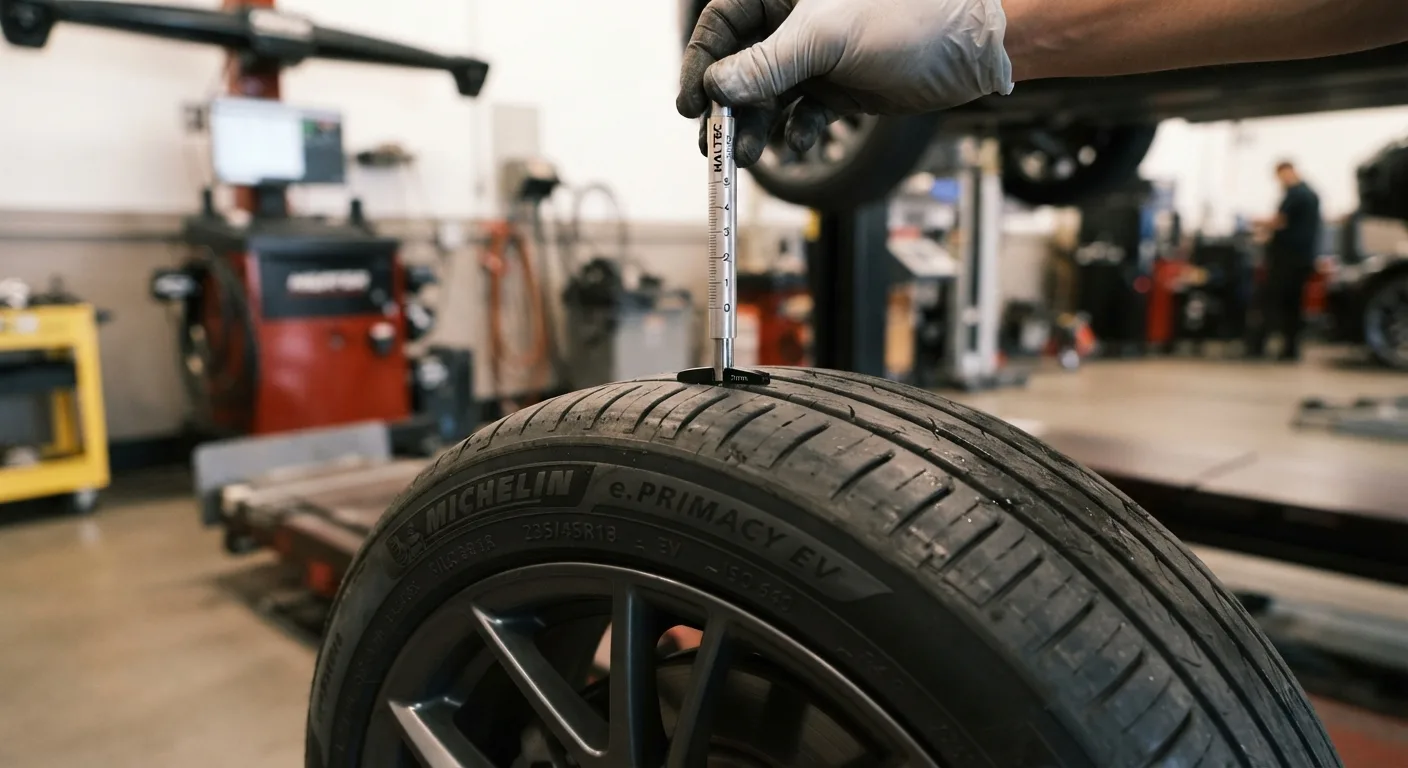
Two quiet killers can undo all your good habits: misalignment and waiting too long to replace.
If you spot uneven wear one edge of the tire balding faster than the other, or patchy tread patterns don’t just assume it’s normal. It often points to a wheel alignment issue or worn suspension components. EVs have unique chassis structures and weight distributions, so precise alignment matters more than you might think. A quick alignment check at every rotation or service can save you from prematurely replacing a tire that’s only worn on one shoulder.
Then there’s the tread-depth question. Legally, many regions allow tires down to 1.5–1.6 mm. But EV specialists strongly recommend replacing tires at around 3 mm, especially if you drive in wet conditions. Why? EVs place more load on each tire, so having enough tread to clear water is critical for wet-weather grip and braking. Squeezing the last millimetre of legal tread is a false economy if it compromises safety.
Your 5-Minute EV Tire Longevity Checklist

Let’s turn everything into a quick, actionable list you can actually use.
- Monthly (5 minutes): Check all four tires with a reliable gauge when cold. Adjust to the door-jamb PSI. Don’t rely solely on TPMS it only alerts at dangerously low pressure.
- Every 6,000–8,000 km (or per manufacturer): Rotate tires front-to-rear (or side-to-side if staggered). This is the single biggest lever for even wear.
- Every drive: Be smooth with the throttle. Roll onto power, anticipate stops, and let regenerative braking work gradually.
- Every 10,000–15,000 km: Inspect tread depth (aim to replace at ~3 mm), look for uneven wear, and check alignment if anything looks off.
- At replacement time: Match or exceed the original load index. Choose EV-specific or XL-rated tires for the best balance of durability, range, and quietness.
The Bottom Line: Your EV Doesn’t Have to Be a Tire-Eating Monster

Yes, EVs are harder on tires. The weight is real, the torque is real, and the wear data doesn’t lie. But the narrative that EV tires are doomed to disappear in 20,000 km is a myth if you stay proactive. The owners who get 50,000 km or more from a set aren’t doing anything magical. They’re checking pressure, rotating on time, driving smoothly, and choosing the right rubber.
Your EV already saves you money on fuel and maintenance. A little tire TLC means it can save you money on rubber, too. And that’s a win worth sharing.
Share this with an EV owner who’s staring down a tire bill it might just save them hundreds.