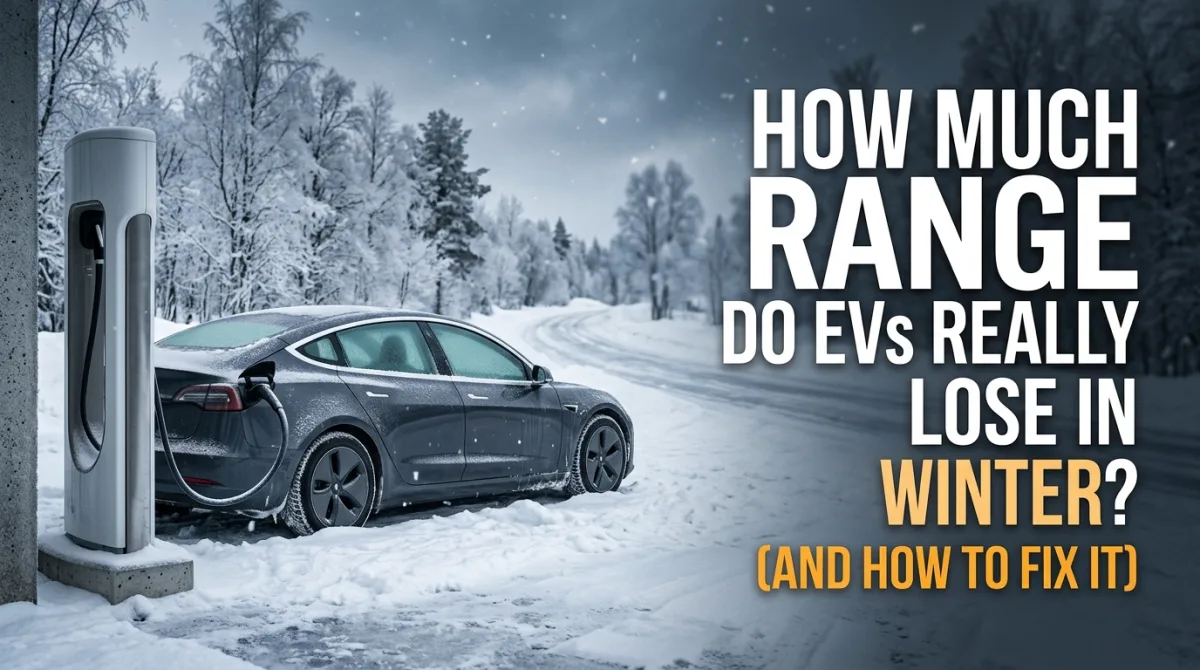
Winter is the EV owner's annual test. The same car that shows 300 miles of range in July can display 220 in January. But how much range you actually lose varies hugely — and most of it is recoverable.
Here are the real numbers, straight from the data.
How much range do EVs lose in winter?
| Outside temperature | Typical range loss vs summer | Driving pattern |
|---|---|---|
| 20°C (68°F) | 0–5% | Baseline |
| 10°C (50°F) | 5–10% | Cool day |
| 0°C (32°F) | 15–25% | Cold, city driving |
| -10°C (14°F) | 25–35% | Cold, mixed |
| -20°C (-4°F) | 35–45% | Severe cold |
Two key caveats:
- Short trips lose proportionally more — each trip spends a big share of energy heating a cold battery and cabin
- Highway driving loses more absolute range than city driving in the cold
The honest headline: expect 20–30% loss at typical winter temperatures (around 0°C), and up to 40% in extreme cold.
Why does cold kill EV range?
Three compounding effects:
- Battery chemistry slows down — cold reduces ion mobility, cutting usable capacity (10–15% impact)
- Cabin heating consumes energy — unlike a gas car, an EV has no waste heat to recycle; the heater draws from the battery (5–15%)
- Tire and air resistance increase — cold air is denser and cold tires roll less freely (smaller effect)
How to recover most of the lost range
- Preheat while plugged in — warm the cabin and battery from the grid, not your range. This alone can recover 5–15%.
- Use seat/steering wheel heaters instead of full cabin heat — far more efficient
- Set the cabin to 20°C, not 24°C — each degree costs range
- Use eco mode — softens heating and acceleration
- Check tire pressure — cold air deflates tires, increasing rolling resistance
- Park in a garage if you have one
> Simulate your exact loss with the winter range calculator.
The good news about cold weather
- Winter range loss is temporary — capacity returns fully in warm weather
- Cold doesn't degrade the battery — it's a reversible chemical slowdown
- LFP batteries lose slightly more in cold but degrade far less over time (see LFP vs NMC)
FAQ
How much range does an EV really lose in winter? Typically 20–30% at freezing temperatures, up to 40% in severe cold. Short trips and highway driving lose the most.
Does cold damage the EV battery? No — it's temporary. Cold slows chemistry; capacity returns when it warms. Extreme cold is much less harmful than extreme heat for long-term health.
Do all EVs lose range in winter? Yes, but some less — cars with heat pumps (standard in most new EVs) and preconditioning lose noticeably less than older models with resistive heaters.
The bottom line
Plan for 20–30% winter range loss and you'll never be caught out. Preheat while plugged in, use seat heaters, and you'll recover most of it. Winter EVs are no longer a hardship — just slightly less efficient ones that give the range back in spring.