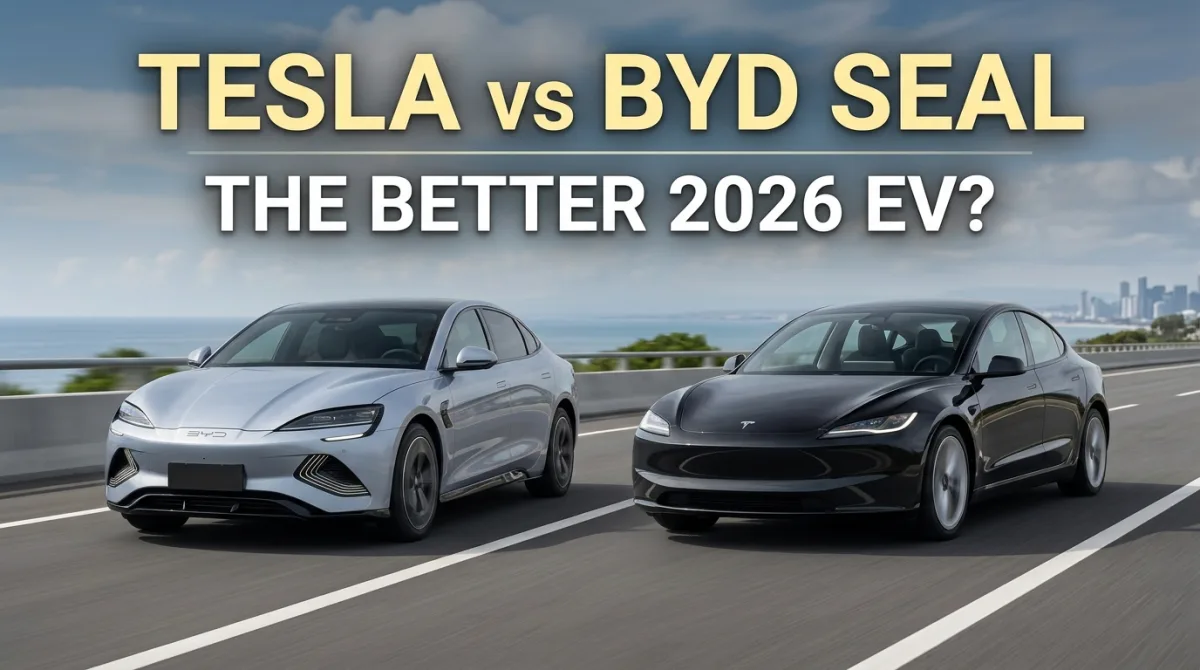
Two of the world's best-selling electric cars, aimed squarely at the same buyer. The Tesla Model 3 — the American benchmark that defined the mid-size EV. The BYD Seal — the Chinese challenger that undercuts it on price. In 2026, this is the rivalry that matters most.
Here's the full comparison, and our verdict.
At a glance
| Tesla Model 3 | BYD Seal | |
|---|---|---|
| Typical price | ~$38,000 | ~$36,000 |
| Range (WLTP) | ~390 mi | ~360 mi |
| Real-world range | ~360 mi | ~330 mi |
| Peak charging | 250 kW | 150–230 kW |
| 0–100 km/h | ~4.9s (RWD) | ~5.9s (RWD) |
| Battery | NMC / LFP (by trim) | LFP / Blade |
| Charging network | Supercharger | Open networks |
> Prices are indicative and vary by market/trim. Compare the exact specs with the interactive comparator.
Where the Tesla Model 3 wins
- Charging network. The Supercharger network is the single biggest practical advantage in EVs. Reliable, plentiful, and now open to many other brands — but Tesla owners get the best rates and integration.
- Efficiency. The Model 3 is one of the most efficient EVs on sale (~4.5 mi/kWh on the Long Range), meaning more real miles per dollar.
- Software & updates. OTA updates keep adding features for years. The UI, voice control and app remain class-leading.
- Resale value. Model 3s hold their value remarkably well — see how EVs depreciate.
Where the BYD Seal wins
- Price. Typically $2,000–$4,000 cheaper for comparable range, and often more.
- Build quality & materials. The Seal feels more premium inside — better fit and finish than many Teslas.
- Ride comfort. The Seal's suspension is more comfortable, with a quieter cabin.
- The Blade battery (LFP). Safe, durable, charge-to-100%-daily-friendly — a real ownership advantage (see LFP vs NMC).
The charging reality check
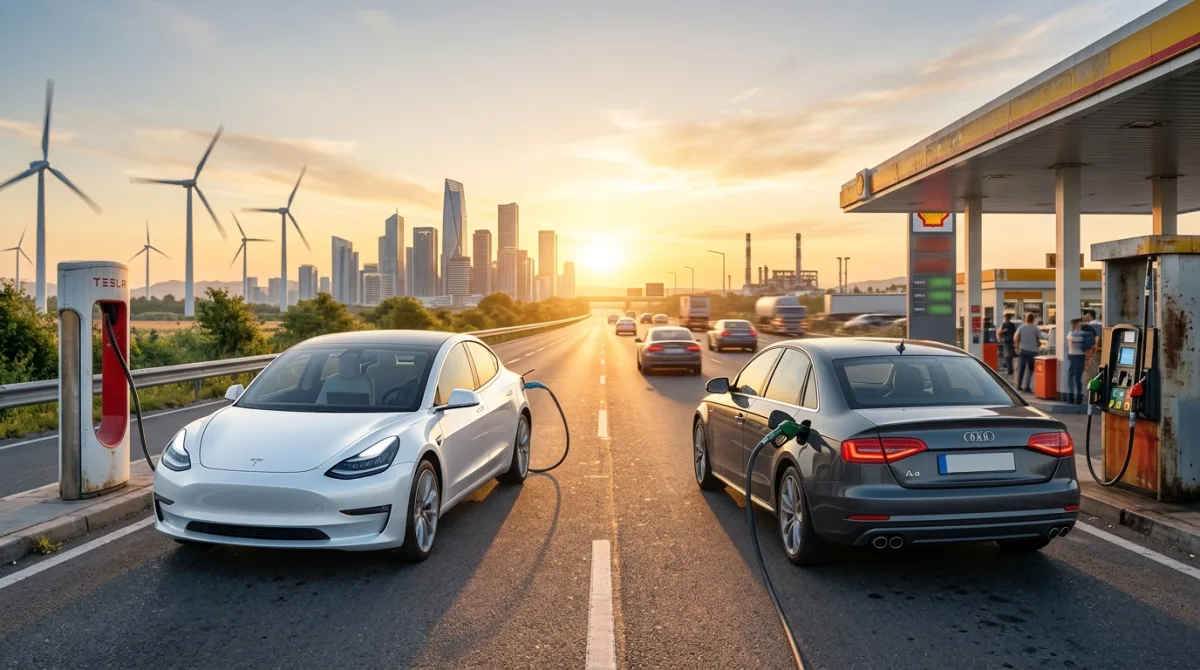
- Tesla: Supercharger network = road trips are effortless. V3/V4 chargers deliver 250 kW.
- BYD: relies on open networks (CCS2 in Europe, etc.), which are improving but more variable in reliability and price.
If you road-trip regularly, this alone can justify the Tesla premium. If you mostly charge at home, the advantage shrinks.
Ownership costs compared
| Tesla Model 3 | BYD Seal | |
|---|---|---|
| Insurance | Moderate | Slightly higher (newer brand) |
| Efficiency | Better | Good |
| Service network | Huge | Growing, patchier |
| Resale | Strong | Unknown/unproven |
| Warranty | 4yr/50k + 8yr battery | 6–8yr + 8yr battery |
The Seal's unproven resale is its biggest financial risk; the Model 3's proven value is its comfort. Check total cost of ownership with your local prices.
Our verdict
- Buy the Tesla Model 3 if you road-trip, want the best charging experience, software and resale — and don't mind a simpler interior.
- Buy the BYD Seal if you value price, comfort and build quality, mostly charge at home, and can accept a less proven brand.
The winner for most buyers? The Tesla Model 3 — narrowly. The Supercharger network, efficiency and resale value edge it out for general use. But for city drivers who charge at home, the Seal's price and comfort make it the smarter value. You genuinely can't lose with either.
FAQ
Is the BYD Seal as good as the Tesla Model 3? It's close — better comfort and value, but weaker charging network and resale. For home-chargers, it's arguably better value; for road-trippers, Tesla wins.
Which has more range? The Model 3 Long Range leads both on paper (~390 mi vs ~360 mi WLTP) and in real-world efficiency.
Which EV is cheaper to own? The Seal is cheaper upfront; the Model 3 typically wins on insurance, efficiency and resale over 5 years. Run the EV vs gas calculator for your numbers.
The bottom line
The Tesla Model 3 vs BYD Seal is the defining EV battle of 2026 — and there's no bad answer. Tesla wins on charging, efficiency and resale; BYD wins on price, comfort and build quality. Decide based on how much you road-trip, and you'll pick the right one.