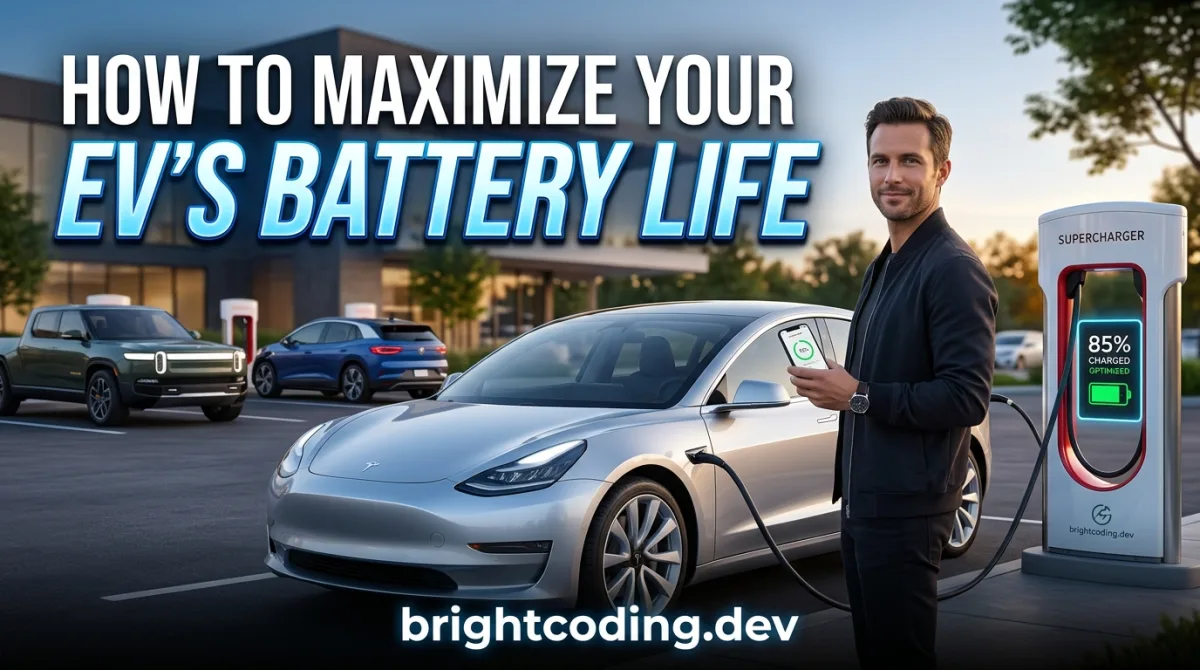
The Silent Worry Every EV Owner Shares
You pulled into your driveway last night with 40% charge. This morning, it reads 38%. Not a big deal—until you notice it happening every week. Then the range estimate starts dropping faster than it used to. Suddenly, that "300-mile" EV feels more like 250. And the worst part? You have no idea if you're doing something wrong, or if this is just how batteries age.
If that thought has crossed your mind, you're not alone. Battery degradation is the single most common concern among electric vehicle owners, and for good reason: the battery is the most expensive component in your car. Replacing one can cost anywhere from $5,000 to $20,000 depending on the model. The good news? Most degradation is preventable—or at least dramatically slowable—if you understand how lithium-ion chemistry actually works and adjust a few daily habits.
In this guide, we'll break down exactly what causes EV battery degradation, which charging and driving habits help or hurt, and how to build a simple routine that keeps your battery healthy for the long haul.
The Problem: Why Your EV Battery Is Losing Range Faster Than Expected
Battery degradation is the gradual loss of a battery's ability to hold a charge. In EVs, this translates directly into reduced driving range. A car that once showed 300 miles on a full charge might show 280 after a few years, then 260, and so on.
Here's what's actually happening inside the pack: lithium-ion batteries store energy by shuttling lithium ions between a cathode and an anode through an electrolyte. Over time, tiny chemical side reactions create barriers on the electrode surfaces, trap lithium ions permanently, and in some cases, grow microscopic metallic structures called dendrites. Each of these processes permanently reduces the amount of usable energy the cell can store.
Who is affected? Every EV owner, but especially those who:
- Charge to 100% every night
- Regularly use DC fast chargers
- Live in extremely hot or cold climates
- Let their battery sit at very low charge levels for days
- Drive aggressively with frequent hard acceleration
The mistake most people make is treating their EV battery like a smartphone battery. Your phone is designed to be charged to 100% daily and replaced every two to three years. Your EV battery is engineered to last a decade or more—but only if you treat it differently.
Why It Happens: The Science Behind Battery Wear
Understanding why batteries degrade helps you make smarter daily decisions without becoming obsessive. Here are the four primary drivers:
1. High State of Charge (SoC)
When a lithium-ion battery sits at or near 100% charge, the voltage stress on the cathode accelerates unwanted chemical reactions. Think of it like inflating a balloon to its absolute limit—the material is under tension, and over time, that tension causes damage. This is why EV manufacturers typically build in a "buffer" at the top of the battery, but even with that buffer, routinely charging to 100% accelerates wear.
2. Deep Discharge
Letting your battery drop below 10% regularly is similarly harmful. At very low voltages, the anode can become unstable, and the electrolyte may break down. If you leave your EV parked for weeks at 5% charge, you risk entering a state where the battery management system (BMS) cannot safely recover the pack.
3. Heat
Temperature is the silent killer. Lithium-ion batteries are happiest between roughly 60°F and 80°F (15°C–27°C). Prolonged exposure to temperatures above 95°F (35°C), especially while charging or driving hard, speeds up every degrading chemical reaction inside the cell. This is why EVs have thermal management systems—but those systems can only do so much if you habitually fast-charge in Arizona summer heat.
4. Fast Charging
DC fast charging (Level 3) pushes enormous electrical current into the battery in a short time. This generates heat and causes lithium ions to plate onto the anode surface rather than inserting smoothly into the graphite layers. Occasional fast charging is fine. Doing it three times a week, every week, adds measurable wear over the years.
The Solutions: Proven Ways to Extend Your EV Battery Life
There is no single magic trick. Battery longevity comes from stacking several small habits. Here are the most effective approaches, ranked by impact and practicality.
Solution 1: Charge to 80% for Daily Driving
What it is: Setting your EV's charge limit to 80% instead of 100% for everyday use.
How it works: By avoiding the high-voltage stress zone at the top of the battery, you dramatically reduce the rate of cathode degradation.
Advantages: Most modern EVs let you set this limit in the app or on the center screen. It requires zero extra effort once configured. For the average commuter, 80% charge still provides more than enough daily range.
Disadvantages: You need to remember to raise the limit before long road trips. Some older EVs lack this feature entirely.
When it makes sense: For everyone who doesn't need maximum range every single day. If your commute is under 60 miles round-trip, 80% is a no-brainer.
Cost: Free.
Solution 2: Avoid Letting the Battery Drop Below 20%
What it is: Treating 20% as your "empty" mark for daily use.
How it works: Staying out of the deep-discharge zone protects the anode and electrolyte from voltage-related stress.
Advantages: Simple mental rule. Most EVs have plenty of warning systems as you approach low charge.
Disadvantages: Requires slightly more planning if you have an unpredictable schedule or limited home charging access.
When it makes sense: Always. Even on road trips, try not to arrive at a charger with less than 10% if you can help it.
Cost: Free.
Solution 3: Use Level 2 Charging at Home Whenever Possible
What it is: Installing a 240V Level 2 home charger (or using the one that came with your EV) instead of relying on DC fast chargers.
How it works: Level 2 charging typically delivers 6–11 kW, which is gentle on the cells and gives the BMS time to balance the pack properly. It also generates far less heat than DC fast charging.
Advantages: Better for the battery, more convenient, and usually cheaper per kWh than public fast charging.
Disadvantages: Requires a home with accessible parking and electrical capacity. Upfront installation costs range from $200 to $2,000 depending on your electrical panel and wiring distance.
When it makes sense: For anyone with a garage, carport, or dedicated parking spot near their home.
Cost: $200–$2,000 for installation; electricity costs vary by region but are typically lower than public charging rates.
Solution 4: Precondition the Battery in Extreme Weather
What it is: Using your EV's app to warm up or cool down the battery while still plugged in before you drive.
How it works: Heating or cooling the battery uses significant energy. If the car does this while unplugged, it drains the pack. If it does it while plugged in, it uses grid power and starts your drive with the battery already at its ideal temperature.
Advantages: Protects the battery, improves efficiency, and gives you a comfortable cabin from the moment you get in.
Disadvantages: Requires planning. You need to remember to start preconditioning 15–30 minutes before departure.
When it makes sense: Essential in climates where temperatures regularly drop below freezing or rise above 90°F (32°C).
Cost: Minimal increase in electricity usage; far cheaper than battery degradation.
Solution 5: Drive Smoothly and Use Regenerative Braking
What it is: Avoiding aggressive acceleration and making the most of your EV's regenerative braking system.
How it works: Hard acceleration pulls high current from the battery, generating internal heat. Regenerative braking recaptures energy and reduces wear on the mechanical brakes.
Advantages: Extends battery life, improves range, and makes for a more comfortable ride.
Disadvantages: Takes some adjustment if you're used to spirited driving. One-pedal driving modes can feel unfamiliar at first.
When it makes sense: Always. Even occasional hard acceleration is fine—just don't make it your default driving style.
Cost: Free.
The Best Choice: Which Strategy Should You Prioritize?
The honest answer depends on your situation.
If you have home charging: Focus on Solutions 1 and 2 first—set your charge limit to 80% and don't let it drop below 20%. Add Solution 3 (Level 2 charging) if you haven't already. These three habits alone will cover 80% of your battery protection.
If you rely on public charging: You have less control, but you can still make a difference. Avoid fast-charging above 80% (the last 20% is the slowest and most stressful anyway). Try to find Level 2 chargers for overnight or workday top-ups. And if you're planning a road trip, tools like those at whattodoincaseof.com offer practical guides on finding charging stations and handling low-battery situations calmly.
If you live in an extreme climate: Prioritize preconditioning (Solution 4). Heat and cold do more damage than almost any charging habit. Starting your drive with a thermally stable battery is one of the highest-ROI moves you can make.
For a deeper dive into how different EV models handle these challenges—and how battery technology varies between brands—ev.brightcoding.dev provides detailed comparisons and technical breakdowns that can help you understand your specific vehicle better.
Step-by-Step Action Plan: Your Weekly Battery Care Routine
Here's a simple checklist you can start using today:
- Set your charge limit to 80% in your EV's app or vehicle settings. Only raise it to 100% before long trips.
- Plug in when you hit 20–30% rather than waiting for the low-battery warning.
- Use Level 2 charging at home for daily needs. Reserve DC fast charging for road trips and emergencies.
- Precondition your battery 15–30 minutes before driving in very hot or cold weather—while still plugged in.
- Check your tire pressure monthly. Underinflated tires force the battery to work harder, reducing range and increasing heat.
- Schedule long-term parking at 50–60% charge if you're leaving your EV unused for more than two weeks.
- Review your driving style. Smooth acceleration isn't just safer—it protects your pack.
Common Mistakes to Avoid
- Charging to 100% every night "just in case." Unless you genuinely need the range tomorrow, this is the single most damaging daily habit.
- Letting the battery sit at 0% or 100% for extended periods. Both extremes cause chemical stress. If you're storing the car, aim for 50–60%.
- Fast-charging to 100% repeatedly. The combination of high current and high voltage is especially harsh. Most EVs slow down charging speed above 80% for this exact reason.
- Ignoring software updates. Manufacturers often release BMS improvements that optimize charging curves and thermal management. Keep your car updated.
- Skipping preconditioning in winter. Driving with a cold battery reduces range and accelerates wear. It's a double penalty.
- Assuming all EVs degrade at the same rate. Battery chemistry varies. LFP (lithium iron phosphate) batteries, found in some Tesla and BYD models, tolerate 100% charging much better than NMC (nickel manganese cobalt) packs. Know what you have.
Expert Takeaway
The most important lesson is this: your EV battery is not fragile, but it is not invincible either. Small, consistent habits matter far more than any single dramatic action. Charging to 80%, avoiding deep discharges, and keeping the battery thermally comfortable will compound into years of extra range and thousands of dollars in avoided replacement costs. You don't need to obsess over every percentage point. You just need to stop treating your $50,000 EV battery like a $20 smartphone power bank.
FAQ
How long does an EV battery typically last?
Most modern EV batteries are designed to retain at least 70–80% of their original capacity after 8 years or 100,000 miles. With proper care, many owners see minimal degradation even after 150,000 miles.
Is it bad to charge my EV every day?
Not if you keep the charge level moderate. Charging to 80% daily is perfectly healthy. What matters is how full you charge, not how often.
Does DC fast charging really damage the battery?
Occasional use is fine. The concern is habitual fast charging, especially to 100% and especially in hot weather. Think of it like eating fast food: once in a while won't hurt you, but a steady diet will.
Should I charge to 100% before a road trip?
Yes—this is exactly when you should charge to 100%. The key is not making it a daily habit. For trip planning and charging station logistics, whattodoincaseof.com has practical step-by-step guides for EV road trips.